Israel approves international force entry into Gaza as crypto markets eye geopolitical risk
The ISF's success in stabilizing Gaza could ease geopolitical tensions, impacting global markets and reducing regional conflict risks. The post Israel approves international force entry into Gaza as crypto markets eye geopolitical risk appeared first on Crypto Briefing.

Israel approves international force entry into Gaza as crypto markets eye geopolitical risk The security cabinet's green light for up to 20,000 troops in Gaza adds another variable to an already complex macro backdrop for digital assets. Share Add us on Google by Editorial Team Jul. 26, 2026 Israel’s security cabinet has approved allowing a proposed International Stabilization Force to enter parts of Gaza not currently under Israeli military control, marking the most concrete step yet in a US-backed peace plan that’s been in the works since October 2025.
What happened and why it matters The approval, announced on July 26, clears the way for a multinational force authorized under UN Security Council Resolution 2803, which was adopted on November 17, 2025. The force is expected to include up to 20,000 troops and police personnel, with Major General Jasper Jeffers of the US designated as commander. Advertisement The ISF’s mandate covers stabilization, training local Palestinian police, and supporting demilitarization in areas where Israel doesn’t maintain direct control.
It operates under the guidance of a “Board of Peace” overseen by US President Donald Trump. Delays in securing commitments from other countries have complicated the deployment timeline, creating a transition period that’s anything but tidy. What crypto investors should watch The troop contribution delays are the most actionable signal right now.
A force authorized for 20,000 personnel that can only muster a fraction of that number creates a credibility gap. If the ISF deployment stabilizes Gaza and reduces the risk of broader regional conflict, that removes a tail risk that has been sitting in the background of every macro model since late 2023. Conversely, if the deployment stalls or the security situation deteriorates during the transition period, expect the familiar playbook: a brief risk-off move in crypto, followed by recovery as traders buy the dip.
Disclosure: This article was edited by Editorial Team. For more information on how we create and review content, see our Editorial Policy. MACRO Israel approves international force entry into Gaza as crypto markets eye geopolitical risk The security cabinet's green light for up to 20,000 troops in Gaza adds another variable to an already complex macro backdrop for digital assets.
by Editorial Team Jul. 26, 2026 Share Add us on Google Israel’s security cabinet has approved allowing a proposed International Stabilization Force to enter parts of Gaza not currently under Israeli military control, marking the most concrete step yet in a US-backed peace plan that’s been in the works since October 2025. What happened and why it matters The approval, announced on July 26, clears the way for a multinational force authorized under UN Security Council Resolution 2803, which was adopted on November 17, 2025.
The force is expected to include up to 20,000 troops and police personnel, with Major General Jasper Jeffers of the US designated as commander. Advertisement The ISF’s mandate covers stabilization, training local Palestinian police, and supporting demilitarization in areas where Israel doesn’t maintain direct control. It operates under the guidance of a “Board of Peace” overseen by US President Donald Trump.
Delays in securing commitments from other countries have complicated the deployment timeline, creating a transition period that’s anything but tidy. What crypto investors should watch The troop contribution delays are the most actionable signal right now. A force authorized for 20,000 personnel that can only muster a fraction of that number creates a credibility gap.
If the ISF deployment stabilizes Gaza and reduces the risk of broader regional conflict, that removes a tail risk that has been sitting in the background of every macro model since late 2023. Conversely, if the deployment stalls or the security situation deteriorates during the transition period, expect the familiar playbook: a brief risk-off move in crypto, followed by recovery as traders buy the dip. Disclosure: This article was edited by Editorial Team.
For more information on how we create and review content, see our Editorial Policy.
Đọc thêm từ Tiền số / Crypto
John Thune says Clarity Act lacks votes to pass before August recess
The delay in passing the Clarity Act prolongs regulatory uncertainty for the crypto industry, impacting market stability and growth prospects. The post John Thune says Clarity Act lacks votes to pass before August recess appeared first on Crypto Briefing.

Clarity Act stalls in Senate, won’t pass before August recess
The delay in passing the Clarity Act may hinder U.S. crypto market regulation, affecting investor confidence and legislative momentum. The post Clarity Act stalls in Senate, won’t pass before August recess appeared first on Crypto Briefing.

CEX spot trading volume plunges as crypto markets enter extended hibernation
The decline in CEX spot trading volume highlights a shift towards derivatives, increasing market susceptibility to volatility and liquidation risks. The post CEX spot trading volume plunges as crypto markets enter extended hibernation appeared first on Crypto Briefing.
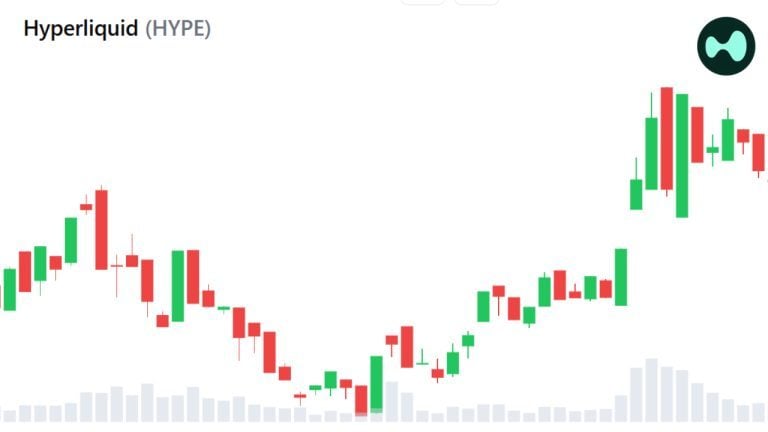
Crypto Bull Market Signals Emerge as Hyperliquid and Robinhood Push Finance Onchain
Bitwise CIO Matt Hougan says stronger bitcoin momentum, ETF demand, and institutional adoption could signal the early stages of a new crypto bull market driven by tokenization, stablecoins, and blockchain-based financial markets. Bitcoin Recovery Sparks New Crypto Bull Market Deb