Israel and Lebanon to sign framework agreement after US mediation
The US-mediated framework agreement highlights ongoing regional instability and the challenges of achieving lasting peace amid entrenched tensions. The post Israel and Lebanon to sign framework agreement after US mediation appeared first on Crypto Briefing.
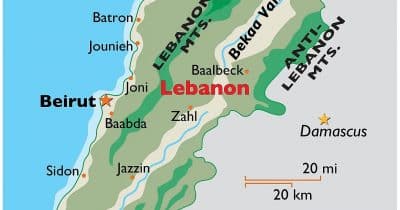
Israel and Lebanon to sign framework agreement after US mediation The conditional ceasefire deal demands Hezbollah withdraw south of the Litani River, but the group has already called the whole thing a 'farce' Share Add us on Google by Editorial Team Jun. 26, 2026 Israel and Lebanon have reached a framework agreement for a conditional ceasefire, the product of months of US-mediated negotiations that represent the most significant diplomatic engagement between the two countries since the 1990s. The agreement, announced on June 3-4, 2026, centers on a cessation of hostilities tied to specific conditions, including Hezbollah’s withdrawal of forces south of the Litani River and the establishment of new border security protocols.
What the deal requires, and why Hezbollah isn’t buying it The framework lays out terms that would be familiar to anyone who has followed Israeli-Lebanese tensions over the past two decades. Hezbollah pulls its fighters back behind the Litani River, roughly 30 kilometers north of the Israeli border. Border security mechanisms get formalized.
Hostilities wind down. US Secretary of State Marco Rubio was directly involved in the discussions, underscoring how central Washington has been to the process since at least April 2026. Advertisement Hezbollah leader Naim Qassem rejected the framework outright on June 4-5, calling it a “farce” and demanding a complete Israeli withdrawal as a precondition for any ceasefire the group would consider valid.
The rejection wasn’t exactly a surprise. The framework follows a 45-day extension of hostilities that began in April 2026, a period during which tensions escalated steadily despite ongoing diplomatic efforts. A ceasefire built on the ruins of a previous one A previous agreement was established on November 27, 2024, and it was supposed to serve as a foundation for lasting stability along the border.
That agreement was continuously violated. The escalation throughout early 2026 effectively rendered it meaningless, which is why the US pushed for a new round of talks in the first place. Washington’s continuous diplomatic involvement since April 2026 suggests the foreign policy apparatus views the Israel-Lebanon border as a priority stability concern, particularly given the broader regional dynamics at play.
What this means for crypto markets Bitcoin’s reaction to the announcement was, to put it mildly, not enthusiastic. The price fell below $80,000 following the framework’s announcement, reflecting trader skepticism about the deal’s viability. There’s a separate, quieter story playing out in Lebanon itself.
The country’s ongoing economic instability has driven increased local interest in stablecoins as a hedge against currency volatility. Lebanese residents, facing a financial system that has been in crisis for years, are increasingly turning to dollar-pegged digital assets to preserve purchasing power. Tether and Circle have both seen growing adoption in economically distressed regions, and Lebanon fits squarely into that pattern.
Disclosure: This article was edited by Editorial Team. For more information on how we create and review content, see our Editorial Policy. MACRO Israel and Lebanon to sign framework agreement after US mediation The conditional ceasefire deal demands Hezbollah withdraw south of the Litani River, but the group has already called the whole thing a 'farce' by Editorial Team Jun.
26, 2026 Share Add us on Google Israel and Lebanon have reached a framework agreement for a conditional ceasefire, the product of months of US-mediated negotiations that represent the most significant diplomatic engagement between the two countries since the 1990s. The agreement, announced on June 3-4, 2026, centers on a cessation of hostilities tied to specific conditions, including Hezbollah’s withdrawal of forces south of the Litani River and the establishment of new border security protocols. What the deal requires, and why Hezbollah isn’t buying it The framework lays out terms that would be familiar to anyone who has followed Israeli-Lebanese tensions over the past two decades.
Hezbollah pulls its fighters back behind the Litani River, roughly 30 kilometers north of the Israeli border. Border security mechanisms get formalized. Hostilities wind down.
US Secretary of State Marco Rubio was directly involved in the discussions, underscoring how central Washington has been to the process since at least April 2026. Advertisement Hezbollah leader Naim Qassem rejected the framework outright on June 4-5, calling it a “farce” and demanding a complete Israeli withdrawal as a precondition for any ceasefire the group would consider valid. The rejection wasn’t exactly a surprise.
The framework follows a 45-day extension of hostilities that began in April 2026, a period during which tensions escalated steadily despite ongoing diplomatic efforts. A ceasefire built on the ruins of a previous one A previous agreement was established on November 27, 2024, and it was sup
Đọc thêm từ Tiền số / Crypto

Securitize Goes Public on NYSE July 2 With $400M From SPAC Merger
Securitize, the tokenization platform behind BlackRock's BUIDL fund, is set to begin trading on the NYSE on July 2 under the ticker SECZ after a SPAC merger with Cantor Equity Partners II that raised over $400 million, including an oversubscribed $225M PIPE.

StablecoinX Begins Nasdaq Trading as First Public ENA Treasury Vehicle
StablecoinX Inc. (Nasdaq: USDE) began trading Friday after closing its SPAC merger with TLGY Acquisition Corp., becoming the first publicly listed company holding approximately 3.03 billion ENA tokens and building infrastructure for the Ethena ecosystem.

Croatia vs Ghana World Cup match sparks $500K in crypto prediction market volume
The surge in crypto prediction market activity during the World Cup highlights growing mainstream engagement and potential for future market expansion. The post Croatia vs Ghana World Cup match sparks $500K in crypto prediction market volume appeared first on Crypto Briefing.

Israel and Lebanon sign trilateral framework agreement in Washington as Hezbollah rejects key terms
The agreement's success hinges on Lebanon's control over Hezbollah, impacting regional stability and risk asset markets, including crypto. The post Israel and Lebanon sign trilateral framework agreement in Washington as Hezbollah rejects key terms appeared first on Crypto Briefin