Iron Age Celtic chariot, weapons, gold unearthed at ‘princely grave’ in Germany
Burial unearthed during construction of a solar park near the city
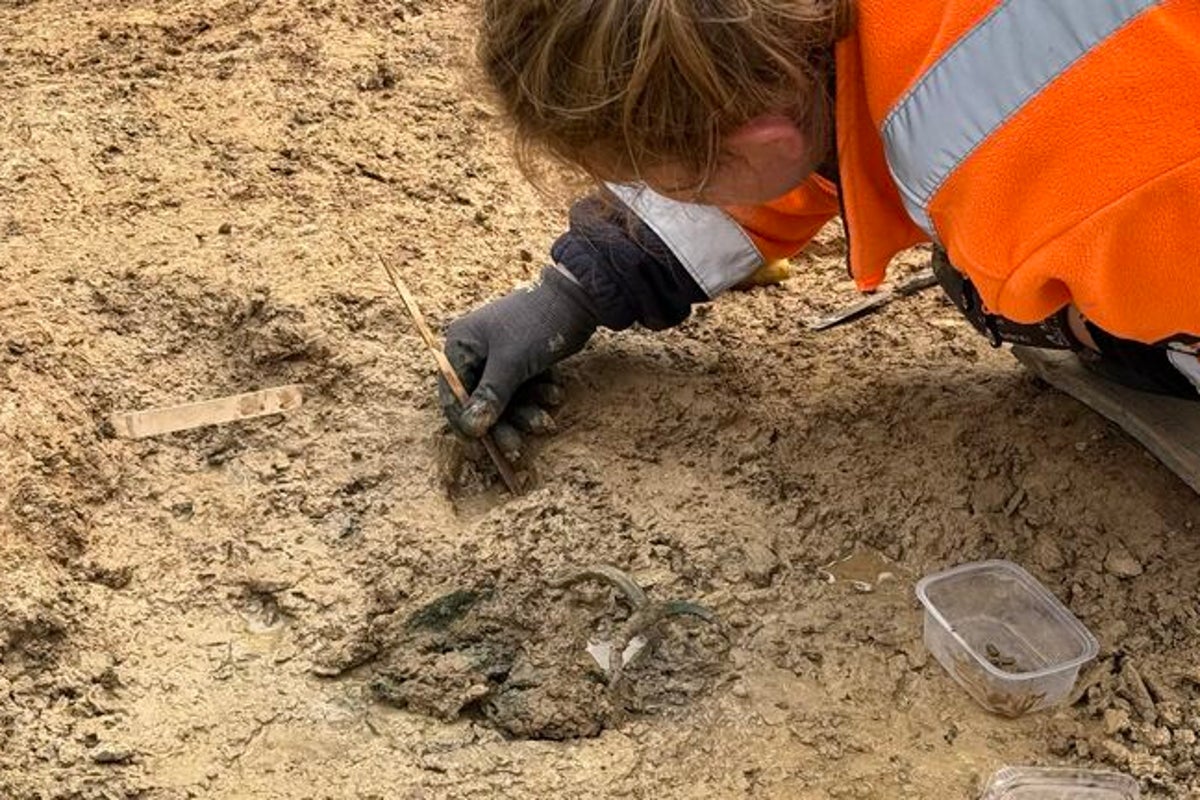
Archaeologists have unearthed the remains of a Celtic warrior who lived 2,400 years ago, along with fragments of his chariot, weapons, and gold at a “princely grave”.The buried artefacts in Bad Camberg, including weapons, gold jewellery, and a bronze jug traced to present-day Italy, suggest that the individual belonged to high levels of Germany’s Iron Age Celtic society, say researchers from the Limburg-Weilburg district.These findings, unravelled during the construction of a solar park near the city, mark the only known presence of a local Celtic elite to date, they say."
Even after the geophysical survey of the planned area, we speculated about the possible presence of a Celtic elite grave,” district archaeologist Kai Mückenberger said in a statement.“However, nobody expected that we would ultimately find not only a princely grave, but even a chariot burial," Dr Mückenberger said.The region is long known to have had Celtic cultural presence.
open image in galleryRemains found at Iron Age archaeological site in Germany (Hessian Ministry of Science and Research, Art and Culture NEWS)With the latest find, researchers say there are now clear parallels to other well-known Celtic princely tombs in Central Europe.“The new finding can broaden this picture: It promises new insights into social elites, craftsmanship, supra-regional contacts and burial customs in the recent Iron Age,” scientists say.Researchers drew comparisons of the elite buried at the grave to the Prince of Glauberg, a prominent Celtic figure who lived in Hesse around this time.
“The comparison to the Celtic prince of Glauberg is obvious with the already known spectrum of finds,” they wrote.open image in galleryGold jewellery unearthed at Iron Age archaeological site in Germany (Hessian Ministry of Science and Research, Art and Culture)At the site, archaeologists found remnants of a two-wheeled chariot, including hub fittings, axle cap fittings made of non-ferrous metal and iron wheel tire fittings.All these point to the Celtic warrior being buried with his vehicle, they say."
Already after the geophysical prospecting of the over-planned area, we speculated about the possible existence of a Celtic elite tomb,” Dr Mückenberger said.“The fact that we could actually find not only a princely grave, but even a wagon burial in the end, no one had expected,” he said.Wagon burials are rare in Hesse, with only a handful previously found.
But none of the previous finds is of the quality of the Bad Camberger, researchers say.“As a contemporary of the Prince of Glauberg, the Prince of Bad Camberg certainly played an important role in the Celtic history of our country,” they said.Archaeologists are currently excavating other sections of the grave to study any potential objects inside and gain more understanding of the elite Iron Age person.
Join our commenting forumJoin thought-provoking conversations, follow other Independent readers and see their repliesComments
Đọc thêm từ Thế giới

Brazilian police say woman who rope jumped to her death was not tied by instructors
The three instructors have been arrested and could face manslaughter charges

JTBC files for corporate rehabilitation as costly World Cup, Olympics deals push JoongAng Group into crisis
A court froze the assets of five JoongAng Group subsidiaries and affiliates, Monday, after they filed for corporate rehabilitation amid a financial crisis driven largely by the Korean media conglomerate's costly bids for exclusive broadcasting rights to major international sporti

US-Iran peace deal unlikely to cool BOK's rate-hike bets
A tentative ceasefire agreement between the United States and Iran has fueled hopes of lower oil prices, but expectations for a Bank of Korea (BOK) rate hike remain largely unchanged as inflation risks persist, analysts said Tuesday. The BOK has maintained a hawkish tone in recen

KOSPI climbs for 4th session on ceasefire optimism, though momentum weakens
KOSPI continued its upward trajectory Tuesday, following news of a ceasefire agreement between the United States and Iran, though the pace of gains slowed compared with the previous session. The country’s benchmark index opened at 8,696.55, up 150.57 points, or 1.76 percent, exte