Iranian president and foreign minister cut short Khamenei funeral visit in Najaf as US strikes hit southern Iran
The abrupt departure highlights Iran's internal power struggles and potential global oil market disruptions amid escalating US-Iran tensions. The post Iranian president and foreign minister cut short Khamenei funeral visit in Najaf as US strikes hit southern Iran appeared first o
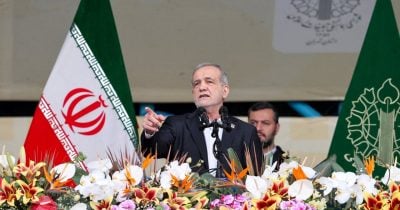
Iranian president and foreign minister cut short Khamenei funeral visit in Najaf as US strikes hit southern Iran Renewed US military operations targeting over 80 sites in southern Iran forced top Iranian officials to leave Iraq's holy city early, deepening an already volatile geopolitical crisis. Share Add us on Google by Editorial Team Jul. 8, 2026 Iranian President Masoud Pezeshkian and Foreign Minister Abbas Araghchi left Najaf, Iraq, after attending funeral proceedings for Ayatollah Ali Khamenei, cutting their visit short as the United States launched a fresh wave of strikes across southern Iran.
Khamenei, who was 86, was killed during US-Israeli airstrikes on February 28, 2026. His funeral processions, which began in Tehran around July 4-6, moved through key Iranian cities including Qom before crossing into Iraq’s most significant Shiite holy sites in Najaf and Karbala. The burial is ultimately planned for Mashhad, Iran.
What happened in Najaf Pezeshkian and Araghchi had traveled to Najaf to participate in the mourning ceremonies. Najaf is home to the Imam Ali Shrine, one of the holiest sites in Shiite Islam, and holding part of Khamenei’s funeral there was designed to underscore Iran’s spiritual and political influence across the broader Shiite world. Advertisement US Central Command launched strikes on over 80 targets in southern Iran beginning July 7, 2026, forcing the Iranian delegation to depart Najaf earlier than planned.
The strikes were described as retaliatory, targeting Iranian military infrastructure in response to Iranian assaults on commercial vessels transiting the Strait of Hormuz. The Strait of Hormuz is the narrow waterway through which roughly a fifth of the world’s oil supply passes daily. Political fractures on display The funeral processions themselves have become a window into Iran’s internal power struggles.
As massive crowds gathered across Tehran, Qom, and now Najaf, reports indicate that hardline factions within the crowds directed chants against Pezeshkian and Araghchi. In a moment when national unity is typically the only acceptable posture, public dissent against the sitting president and his top diplomat suggests the post-Khamenei power vacuum is already being contested in real time. Pezeshkian, who came to office as a relative moderate by Iranian standards, now faces pressure from two directions simultaneously.
Hardliners blame his diplomatic approach for failing to prevent the strikes that killed Khamenei in the first place. Meanwhile, the ongoing US military campaign makes any opening toward negotiation politically toxic domestically. What this means for markets and global stability The Strait of Hormuz dimension is what keeps energy traders up at night.
Iranian attacks on commercial vessels in that waterway were the stated justification for the US strikes, and any further escalation there could disrupt oil flows at a scale that moves global prices meaningfully. Investors watching this space should pay close attention to three things. First, whether the US strikes trigger a direct Iranian military response or whether Tehran absorbs the blow while managing its succession.
Second, whether shipping through the Strait of Hormuz faces further disruption in the coming days. Third, how quickly Iran’s internal power struggle resolves, because the identity of Khamenei’s successor will shape the trajectory of this conflict. Disclosure: This article was edited by Editorial Team.
For more information on how we create and review content, see our Editorial Policy. MACRO Iranian president and foreign minister cut short Khamenei funeral visit in Najaf as US strikes hit southern Iran Renewed US military operations targeting over 80 sites in southern Iran forced top Iranian officials to leave Iraq's holy city early, deepening an already volatile geopolitical crisis. by Editorial Team Jul.
8, 2026 Share Add us on Google Iranian President Masoud Pezeshkian and Foreign Minister Abbas Araghchi left Najaf, Iraq, after attending funeral proceedings for Ayatollah Ali Khamenei, cutting their visit short as the United States launched a fresh wave of strikes across southern Iran. Khamenei, who was 86, was killed during US-Israeli airstrikes on February 28, 2026. His funeral processions, which began in Tehran around July 4-6, moved through key Iranian cities including Qom before crossing into Iraq’s most significant Shiite holy sites in Najaf and Karbala.
The burial is ultimately planned for Mashhad, Iran. What happened in Najaf Pezeshkian and Araghchi had traveled to Najaf to participate in the mourning ceremonies. Najaf is home to the Imam Ali Shrine, one of the holiest sites in Shiite Islam, and holding part of Khamenei’s funeral there was designed to underscore Iran’s spiritual and political influence across the broader Shiite world.
Advertisement US Central Command launched strikes on over 80 targets in southern Iran beginning July 7, 2026, forcing the Iranian delegation to depart Najaf earlie
Đọc thêm từ Tiền số / Crypto

OpenAI lands GPT-5.6 approval as traders rush pre-IPO futures
OpenAI has secured U.S. government clearance for its GPT-5.6 model, removing a key regulatory hurdle as traders turn their attention to the company’s pre-IPO perpetual futures market. Axios first reported that the U.S. Department of Commerce has granted general permission…

OpenAI’s deployment arm plans to acquire Northslope as enterprise AI push accelerates
OpenAI's strategic acquisitions signal a robust expansion into enterprise AI, potentially reshaping industry standards and competitive dynamics. The post OpenAI’s deployment arm plans to acquire Northslope as enterprise AI push accelerates appeared first on Crypto Briefing.

Stocks vs crypto: Comparing two popular investment options
DOGEBALL is drawing interest from investors comparing traditional stocks with crypto presales as they seek higher-growth digital asset opportunities. Many retail investors stand at a financial crossroads trying to decide where to allocate capital. Traditional stock markets have o

Bitwise Solana ETF Filing Keeps SOL In The Institutional Product Queue
Solana’s ETF story keeps gaining weight. The latest Bitwise-linked filing puts SOL more firmly into the institutional product conversation, even if approval is still a separate and much harder question. The useful way