Iran pushes competing versions of a proposed deal as US sticks to timeline
A major discrepancy hinged on how much financial relief Iran would get immediately or in the future.
TEHRAN – Iran circulated competing versions of a proposed interim agreement with the US, even as President Donald Trump stuck to his timeline on June 14 to sign a deal. stuck to his timeline on June 14 All of the texts – there were at least three – include similar elements around reopening the vital Strait of Hormuz waterway, giving Iran sanctions relief and opening the door to longer-term negotiations around its nuclear programme. include similar elements around reopening the vital Strait of Hormuz waterway But they diverge in key respects, making it difficult to assess how much of a win the deal will be for either side.
A major discrepancy hinged on how much financial relief Iran would get immediately or in the future – a concern for Iran hawks in the US who don’t want Trump to give away too much. The White House declined to comment even with time running out for an agreement to be signed by June 14 – Trump’s 80th birthday – as the president had promised. On June 14, Fox News cited Trump as saying a deal would be signed in two to three hours.
At one point earlier in the day, the likelihood of a signing appeared to grow more remote after Israel’s military hit the Lebanese capital, saying it was targeting Hezbollah after the Iranian-backed group fired more projectiles into northern Israel. Iran later vowed that a response was on the way. Israel’s military hit the Lebanese capital In a subsequent social media post, Trump said that Israel should stop attacking Lebanon.
“We are very close to a Deal that will bring peace to the region, including to Lebanon, and all sides should stand down,” Trump wrote on social media. “This could be the beginning of a long and beautiful peace – Let’s not blow it!” The competing drafts only exacerbated days of confusion around the prospects for a deal to end the fighting that began with US and Israeli missile attacks against Iran on Feb 28.
That campaign has killed thousands of people, roiled the Middle East and spiked the price of oil. Trump has said many times over the weeks of the conflict that the two sides were close to a deal. That claim was given credence this time by similar statements from Iranian officials and Pakistani mediators that a deal was near.
But Iran also didn’t like the symbolism of signing the deal on Trump’s birthday. The multiple versions have several things in common. The Strait of Hormuz would reopen quickly and Iran would get sanctions relief to sell oil.
A deal would start the clock ticking on weeks of negotiations around the future of Iran’s nuclear programme. But they diverge in important ways. A version of the text seen by Bloomberg News suggests the US and “regional partners” create a programme for the reconstruction and economic development of Iran with minimum funding of US$300 billion (S$385 billion) if a final deal is reached.
Iran’s nuclear programme will be the subject of the later talks, according to the draft. Reuters, citing an unidentified Iranian official, reported that a draft of the MOU includes the US allowing the release of US$25 billion of frozen assets. The version seen by Bloomberg contained no such stipulation.
reported that a draft of the MOU And on June 12, Iran’s semi-official Mehr news agency said any final negotiations wouldn’t begin until half of Iran’s frozen funds are released, oil sanctions are suspended, and the naval blockade is lifted. Reconciling the competing claims was made more difficult by the fact that the Trump administration, while talking about timing of a deal, has so far declined to give many details about what it would look like. Crucially, it’s not clear whether Iran will demand tolls from ships crossing the strait, and the various versions didn’t mention the issue.
will demand tolls from ships crossing the strait That reflects the challenge faced by the US president – he is eager to bring the war to an end yet has been unwilling so far to agree to Iranian demands – such as sanctions relief, releasing frozen Iranian funds, and a promise not to attack again – that Iran hawks at home have argued would mark a major victory for Tehran. A senior US official, speaking to reporters on June 12, said the deal would reopen the Strait of Hormuz and send the US and Iran into negotiations on bigger issues around the country’s nuclear programme. It would involve a sequence of steps that would see Iran receive rewards as it meets certain US demands.
Here’s an abbreviated version of the 14 points in the latest Persian-language draft: Iran and the US, along with their allies in the conflict, by signing this memorandum of understanding, declare the immediate and permanent cessation of this war on all fronts, including in Lebanon. They commit from now on not to initiate any war against each other, and to refrain from the threat or use of force against each other. The final agreement will confirm the permanent cessation of the war and the remaining provisions of this clause.
Iran and the US will respect each other’s soverei
Đọc thêm từ Thế giới
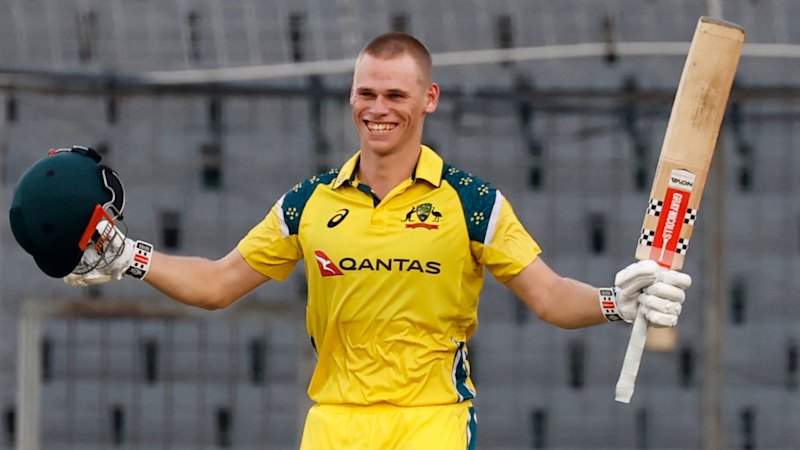
Connolly’s maiden ton delivers Australia much-needed win in Bangladesh
Australia’s faith in the young batsman was rewarded, as he fought the heat to produce a match-winning innings against Bangladesh.
Daichi Kamada's late header gives Japan 2-2 draw with Netherlands in Group F World Cup opener
Daichi Kamada scored on a header off Koki Ogawa's corner kick in the 88th minute, sending the Samurai Blue fans into a frenzy and giving Japan a 2-2…

S. Korean duo finishes 2nd at LPGA team event
SEOUL, June 15 (Yonhap) -- The South Korean duo of Choi Hye-jin and Kim Hyo-joo ...
'그래도 웸반야마 시대는 온다' ESPN의 단언 '리더십 엄청난 성장. 필요한 교훈, 이번 파이널에서 얻었다'
[스포츠조선 류동혁 기자] '그래도 웸반야마의 시대는 온다!' 올 시즌 NBA 플레이오프는 극적이었다. 서부 파이널. 리그 최강 오클라호마시티 선더가 무너졌다. 디펜딩 챔피언의 2연패는 무산됐다. 오클라호마시티의 아성을 무너뜨린 팀은 괴물 빅터 웸반야마가 이끄는 샌안토니오 스퍼스였다. 서부 왕좌를 일찌감치 차지한 샌안토니오는 거칠 것이 없어 보였다. 하지만