Inside On’s tech lab, where robots build running shoes in 3 minutes and can eliminate up to 300 hours of human work
The $18 billion Swiss sportswear company On says its robot-powered manufacturing process can build shoes faster, reduce hundreds of hours of human work, and reshape the future of footwear.
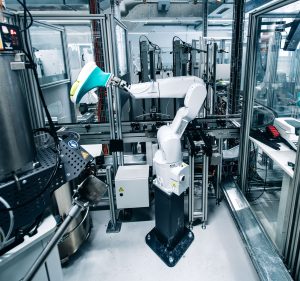
At first glance, the machine looks almost underwhelming. Inside a brightly lit laboratory at On’s Zurich headquarters, a robotic arm rotates a plastic model of a human foot. At the same time, a nozzle continuously sprays 1.
5 km (0.93 miles) of thin molten plastic with almost hypnotic precision. Layer by layer, the filament wraps itself around the foot mold, gradually forming the upper of a running shoe.
The entire process takes about three minutes. In the sportswear industry, shoes have long been assembled through labor-intensive processes involving cutting, stitching, gluing, and sewing together as many as 200 individual components. On says its LightSpray manufacturing technology reduces a shoe’s construction to seven parts while eliminating an estimated 200 to 300 hours of human work across the traditional development and production cycle.
Many manufacturers have introduced automation into existing production lines. On says it’s taken a different approach, designing a manufacturing process around robotics from the outset. “We’re not trying to rebuild an existing style with robots,” cofounder and co-CEO Caspar Coppetti told Fortune during a tour of the company’s manufacturing lab.
“We designed a technology that can only be done by robots.” LightSpray is the latest example of an engineering-first approach that has shaped On since its founding. The company filed roughly 200 patents last year alone, spanning footwear, apparel, and manufacturing technologies.
That culture of experimentation dates back to its earliest days, says cofounder and co-CEO David Allemann, when the prototype looked more like a garage experiment than the foundation of one of the world’s fastest-growing sportswear companies. Former professional triathlete Olivier Bernhard had grown frustrated with running shoes that forced athletes to choose between cushioning and speed, so he began attaching pieces of garden hose to the bottom of an existing shoe. He showed the prototype to future co-founders Al
Đọc thêm từ Kinh doanh

Trump Sends Blue Jays Message After Wager With Canada PM Mark Carney
The Toronto Blue Jays found themselves at the center of attention from U.S. President Donald Trump during a recent address.

Why Bill Gates Scheduled Time to Do Nothing but Think
A packed calendar is not a badge for productivity.
Samsung, SK and Nvidia join $700bn US-Korea AI push
South Korean President Lee Jae Myung, center, hosted AI Summit, which brought together leading U.S. and South Korean business figures, including Nvidia CEO Jensen Huang, fourth from left, and Samsung Chairman Lee Jae-yong, third from left, on July 24 in San Francisco.

If You’re Solving the Same Problem Twice, Your Business Has a Systems Issue
Every repeat mistake is a process asking for attention.