Insects survive 1,213 feet of pressure under water, defying physics
Lake flies challenge the explanation of why there are no insects in the open ocean. The post Insects survive 1,213 feet of pressure under water, defying physics appeared first on Popular Science.
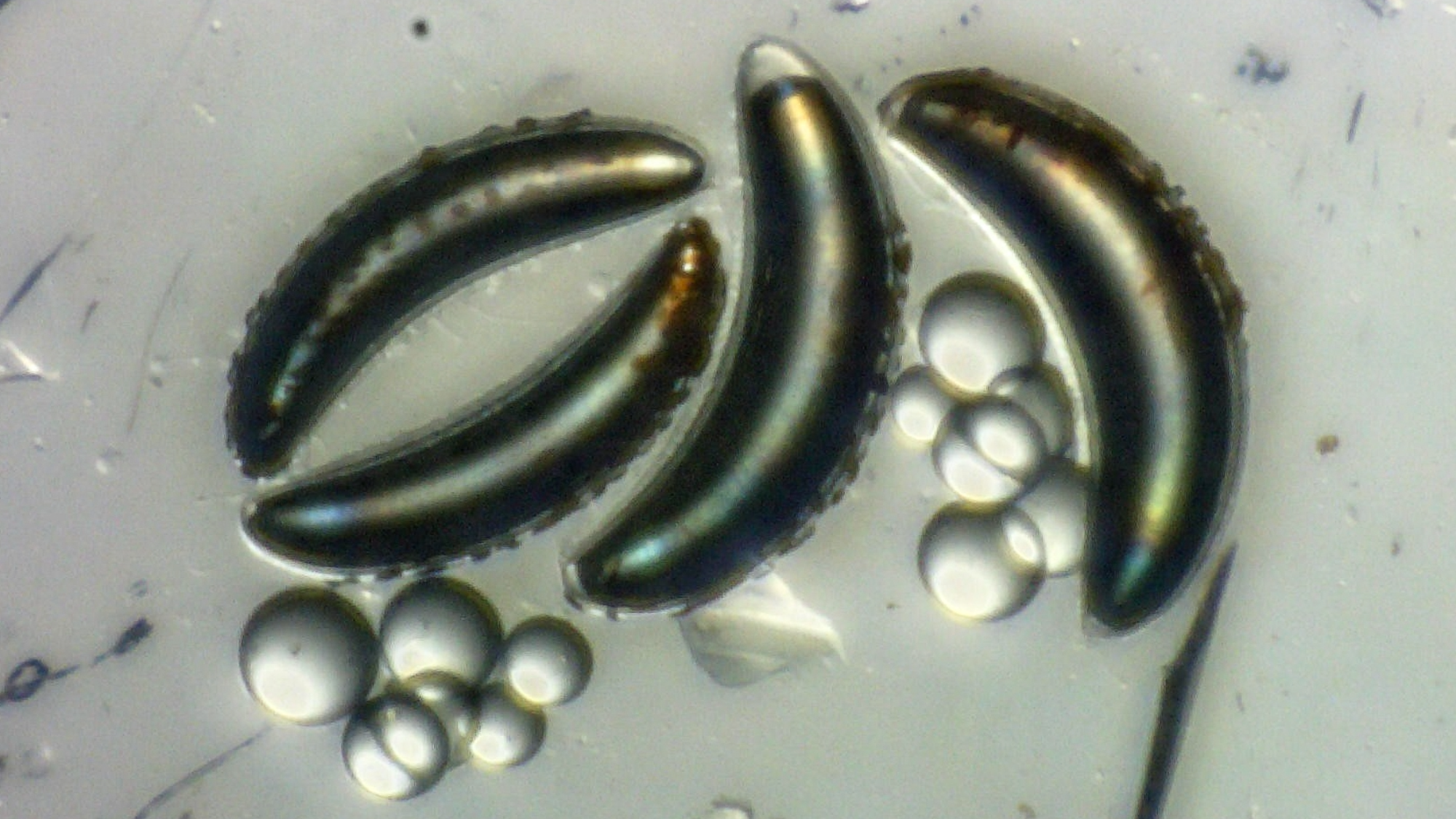
Like it or not, insects are everywhere, including places where you may not want them to be. Yet there is one environment that they don’t call home—the open ocean. An enduring explanation for this absence is that deep water pressure would fill their tiny respiratory systems with air and they would then cave in.
But one particular insect larva is challenging this idea. Meet lake flies (Chaoborus edulis). In East Africa’s Lake Malawi, billions of their larvae spend their days over 656 feet (200 meters) below the surface of the water before coming back up to feed at night.
“Uniquely, Chaoborus midge larvae have modified their respiratory system into two pairs of air-filled sacs which they use to control their buoyancy,” Philip Matthews, a co-author of the study and a researcher who studies insects’ respiratory adaptations at the University of British Columbia tells Popular Science. “By regulating the pH of the air sacs’ walls, they cause them to expand or contract via a distinct ‘chemo-mechanical’ system.” Matthews and his team were intrigued by how this mechanism works, but realized that using air sacs to regulate buoyancy while diving presents a problem.
“The gas inside an air sac is not pressurized (it is roughly the same as the atmospheric pressure at the water’s surface),” he explains. “This begged the question: how deep can these insects dive before their air sacs cannot expand against the pressure? And at what depth do they fail completely and implode?”
The team decided to investigate this in Lake Malawi’s Chaoborus edulis larva, to solve this puzzle. The findings, detailed in a study published today in the journal Science, trace the larva’s daily diving routine with a sonar system, and look at what is going on at the biological level. The walls of C.
edulis’ air sacs have resilin, a substance that grows or shrinks in volume according to the wall’s pH. This dynamic gives the larvae the ability to change their buoyancy. A swarm of the lake fly larvae over Lake Mal
Đọc thêm từ Khoa học

Lithium ions sprint up to 10,000 times faster when their molecular cages briefly open
An international collaborative research group led by Professor Bong June Sung of the Department of Chemistry at Sogang University and Professor Shinji Saito of the Institute for Molecular Science (IMS), National Institutes of Natural Sciences (NINS), and the Graduate University f

Neutral catalysts achieve chalcogen-bonding asymmetry
Chemists have demonstrated that neutral chalcogen-bond donors can induce asymmetry in chemical reactions, addressing a challenge that has limited the development of chalcogen-bonding catalysis.

Zebrafish rebuild damaged 'second brain' networks in nine days, offering clues for nerve repair
Why can zebrafish regenerate damaged gut nerves while humans largely cannot? Michigan State University researchers have developed a new research tool that allows them to remove gut neurons in zebrafish and watch them regenerate in real time, helping scientists investigate one of

Yeast survives after all 300 known spliceosomal introns are removed
Spliceosomal introns are noncoding DNA sequences located between exons in many eukaryotic protein-coding genes. Most are removed post-transcriptionally by RNA splicing and do not encode proteins, but they have been implicated in various regulatory processes, including gene transc