Individual diversity and synchronization make fly groups stronger: Pursuing the role of "individuality" through gene-level analysis
I have loved living things since I was a young child. I had pets, and I would catch insects and lizards in nearby vacant lots just to watch them. I particularly liked the praying mantis.
Sato DaikiAssistant Professor at the Institute for Advanced Academic Research, Chiba University. Q1. What inspired you to become a researcher? A1.
I loved observing living creatures. I have loved living things since I was a young child. I had pets, and I would catch insects and lizards in nearby vacant lots just to watch them.
I particularly liked the praying mantis. I was impressed by how it instantly switches into hunting mode the moment it spots prey, showing its natural animal instincts. There was no specific, single moment when I consciously decided to become a researcher.
Perhaps because there were very few conventional office workers around me growing up, I never really had a clear image of getting a job at a company. Instead, I naturally assumed that university was simply the place you went to become a researcher. Driven by my interest in living things, I enrolled in the Department of Biology within the Faculty of Science at Tohoku University, and I have walked the path of research ever since.
I enjoy taking photographs as a hobby. The fact that the same thing can look different depending on its orientation or how it's framed might be relevant to research. Q2.
What research are you currently working on? A2. Verifying the mitigation of "freezing" behavior. Using the fruit fly (Drosophila melanogaster) as a model, I am studying the mechanisms of collective animal behavior and how diversity among individuals affects the group at a genetic level.
Humans experience "emotional contagion," a phenomenon where watching an anxious person makes you feel anxious as well. A similar phenomenon can be observed even in organisms with relatively simple nervous systems, such as insects and fish. The starting point of my research was the desire to unravel what kind of role "individuality" plays within a group.
When fruit flies perceive a threat from a natural enemy, such as a jumping spider, they enter a "freezing" state where they become paralyzed with fear, before starting to move again after some time. When we conducted experiments to examine how flies respond to the visual stimulus of an approaching predator, we found that a single fly tested in isolation shows prolonged freezing behavior. In contrast, flies tested in groups quickly break out of freezing by matching the movements of the individuals around them.
In other words, their fear response is mitigated through synchronization with other individuals. Using this discovery as a clue, we virtually simulated the movements of flies on a computer and created a model where the freezing duration could be set differently for each individual. We then verified how these "virtual flies" should move to avoid being attacked, using real spiders in the experiment.
The results revealed that under conditions where individual freezing durations were diverse and the individuals synchronized their behaviors with each other, they were less likely to be attacked by spiders and were able to travel longer distances. However, we cannot directly know what a fly is thinking when it acts. Therefore, we record their movements on video and attempt to decipher their emotions from their trajectories.
To achieve this, we utilize a machine learning technique called "inverse reinforcement learning," which estimates the underlying rules and goals from behavioral trajectories. Furthermore, we aim to clarify these mechanisms by using a method called optogenetics, which allows us to manipulate specific neurons by applying specific wavelengths of light, to control the emotional contagion and collective behavior of the flies. This shows the setup when measuring behavior by placing fruit flies into experimental containers.
Q3. What is your message to aspiring researchers? A3. Sometimes, leave it up to "connections" and "luck."
I believe the greatest appeal of being a researcher is that as long as you have curiosity and motivation, you have the freedom to do anything. Personally, I have conducted research using a wide variety of organisms other than flies. My personality is such that the moment I think of something I want to do, I want to try it out immediately.
My goal is to describe the diverse organisms and vital phenomena that exist in this world, while also connecting microscopic genes to macroscopic ecosystems, thereby uncovering universal laws that transcend individual biological species. Lastly, during the year I took my university entrance exams, I experienced the Great East Japan Earthquake. After various twists and turns, I ultimately entered Tohoku University.
The encounters I had at the university have directly led to the research I am doing today. While having a clear goal is undoubtedly important, I also believe it is vital to maintain a flexible attitude, never forgetting to appreciate those around you, and occasionally letting yourself be guided by unexpected "connections" and "luck." (Article: Yasuhiro Hatabe) Profile Sato Daiki Assistant Professor at the Institute
Đọc thêm từ Khoa học
Graphene fabricated into mesh pattern, enhancing thermal conductivity for successful thermal control: Anritsu
Anritsu, a manufacturer of measuring instruments, has successfully increased the thermal conductivity of "graphene," which is a material composed of carbon atoms arranged in a honeycomb lattice, by periodically creating hexagonal holes to form a mesh pattern.
"The real battle starts here," Shinya Yamanaka speaks ahead of 20th anniversary of iPS cell papers
Ahead of the 20th anniversary of the publication of his papers on the generation of induced pluripotent stem cells (iPS cells), Kyoto University Professor Shinya Yamanaka gave a lecture on May 27 at the Japan National Press Club in Tokyo.
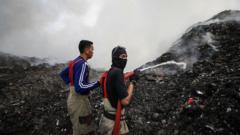
A mountain of rubbish in Indonesia has been on fire for more than a week
Environmental activists say the blaze is a symptom of the country's growing waste crisis.
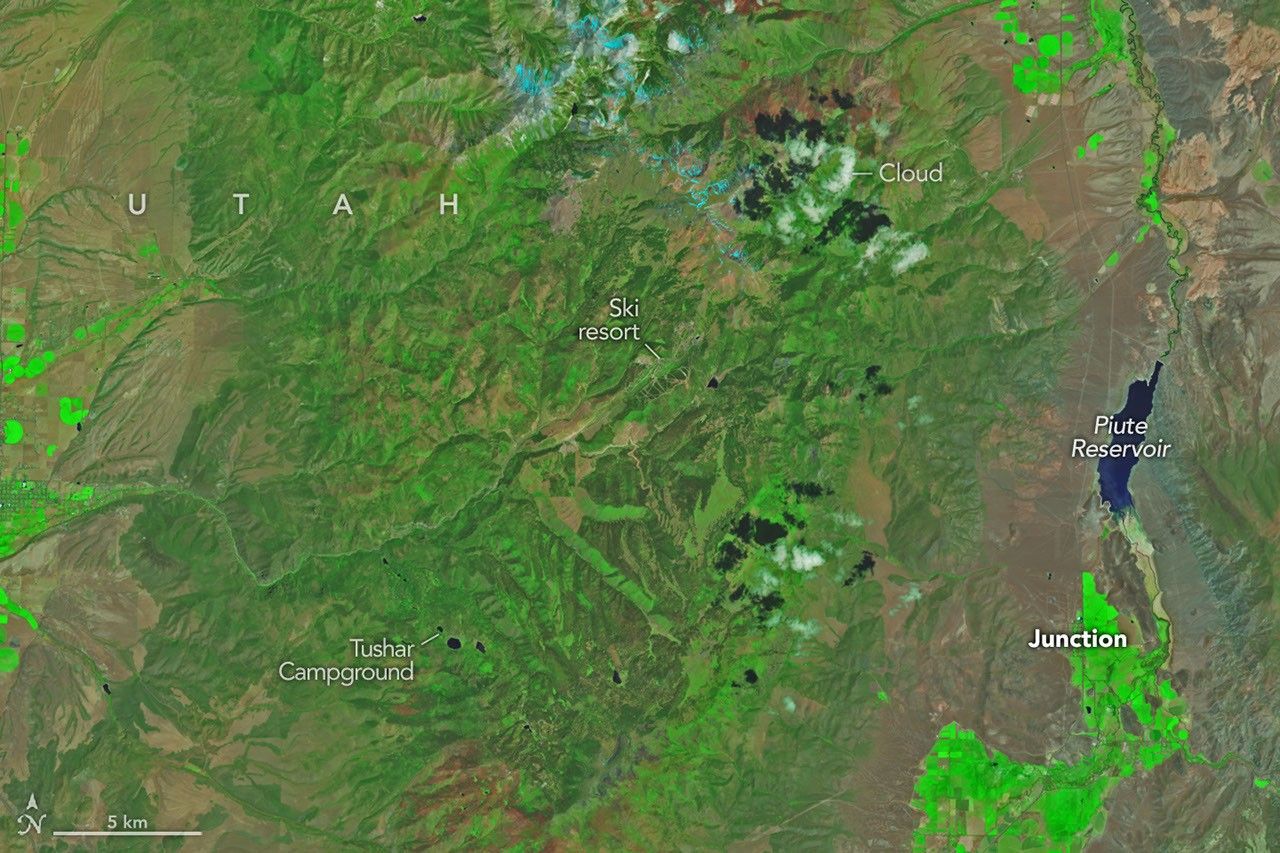
Cottonwood Fire Chars Utah
The blaze burned more than 150 square miles and swept through parts of a ski resort.