In occupied zone of Lebanon, Israeli military veterans see shadow of past wars
ISRAEL-LEBANON BORDER, July 15 - Israeli leaders describe the territory now occupied in Lebanon as a war gain, but some military veterans see the so-called \"buffer zone\" as a deadly replay of a doomed strategy they experienced first-hand.
In occupied zone of Lebanon, Israeli military veterans see shadow of past warsSign up now: Get ST's newsletters delivered to your inboxPublished Jul 15, 2026, 06:36 PMUpdated Jul 15, 2026, 06:36 PMSet as preferred sourceISRAEL-LEBANON BORDER, July 15 - Israeli leaders describe the territory now occupied in Lebanon as a war gain, but some military veterans see the so-called "buffer zone" as a deadly replay of a doomed strategy they experienced first-hand.Gil Shely recalls being told daily by his commanders in the late 1980s, in what was known then as the southern Lebanon "security strip", that he was protecting Israel's north."Looking back, it was all fairy tales," he said.
Israel withdrew from that strip in 2000. Its troops are now back, occupying a swath of southern Lebanon about 10 km (six miles) deep. The aim, Israel says, is to protect its border towns from Hezbollah, the powerful Iran-backed Lebanese militia.
The new zone was announced in late March while Israel and Hezbollah were engaged in intense battle as the Iran war raged. It followed similar belts created in Gaza and Syria, reflecting Israel's strategic shift after the Hamas-led attack on southern Israel on October 7, 2023.For Shely, it was a moment of dread."
When I hear news that a soldier has been killed there, I am crushed. My heart screams out for the unnecessary sacrifice," said Shely, 56, whose youngest son is soon to enlist in Israel's conscript military.Israel has lost dozens of soldiers since March, when Hezbollah launched missiles at Israel, prompting an Israeli offensive that displaced a million people and killed thousands in Lebanon, including hundreds of civilians.
Hezbollah does not disclose fatality figures.Veterans looking back three and four decades describe a grinding routine in southern Lebanon — clearing explosives, staging ambushes and clashing with fighters who used Israel's occupation to hone guerrilla tactics."I lost many friends in Lebanon," said Erez, 51, who served there in the 1990s and asked to be identified only by his forename for privacy reasons.
His son is now deployed in the new buffer zone. "We hoped we would never have to go back."NETANYAHU SAYS BUFFER KEEPS HEZBOLLAH FROM BORDERPrime Minister Benjamin Netanyahu, facing an October election and struggling in opinion polls, listed the buffer zone as a big achievement when visiting troops on June 30."
These security zones are a paradigm shift. It means we no longer allow an army of terrorists to have a foothold on our border. And we destroy, above ground and underground, anything that served as a means of attacking us," he said.
The zone is mostly empty of Lebanese civilians who fled villages that are now all but destroyed.From the Israeli side of the border, military vehicles can be seen patrolling through piles of rubble and blown-out houses that line the roads. Sounds of detonations are sometimes heard as smoke rises up from the hills.
Israeli towns and villages, hit by Hezbollah missiles and drones, are in direct sight.A volunteer in Israel's reserve forces was back this month after serving as a young conscript not long before the 2000 withdrawal.He said the amount of weapons and the breadth of Hezbollah's groundwork since then is alarming, but that ultimately, military action alone cannot guarantee security."
What's the purpose? What are you doing it for? You're fighting, risking yourself, it's not clear, they don't make it clear to the soldiers.
It's vague and frustrating," said the reservist, speaking on condition of anonymity."WE WANT PEACE"Israel's 2000 withdrawal was preceded by a public campaign that intensified as casualties mounted. Its leading voices were mothers of fallen and serving soldiers, who formed the Four Mothers — Leave Lebanon in Peace movement."
Then — our children, and now our grandchildren," said Rachel Madpis Ben-Dor, a Four Mothers founder and chairperson. "We are making the same mistake now."A resident of the north, she said soldiers can protect her town from the border, adding: "We don't want to see villages wiped out.
We want peace with Lebanon and we need the world's support."But Israel cannot afford to be naive, said politician Benny Gantz, a former defence chief who as a brigadier-general in 2000 closed the border-fence gate behind Israel's withdrawing troops.His son was recently on the front line in Lebanon, he said."
We have no choice but to create a buffer," Gantz said. "We can't look at reality as we want to see it. We have to look at reality as it is and try to shape it.
It will have to be a combination of military, security and diplomacy."Israel and Lebanon are holding U.S.
-backed talks in Rome this week, based on an initial framework agreement that aims to see Hezbollah disarmed, a demand rejected by the group, and an eventual peace accord reached."If the agreement is truly implemented then we can go home, I hope those days will come," Gantz said. REUTERSSee more onHezbollahIsraelLebanon
Đọc thêm từ Thế giới

이 대통령 질타에도…식약처, 임신중지약 ‘입법 우선’ 입장 고수
본문사회의료·건강이 대통령 질타에도…식약처, 임신중지약 ‘입법 우선’ 입장 고수신소윤기자수정 2026-07-15 20:30펼침0:00Your browser does not support theaudio element.구글 선호 매체 등록이재명 대통령이 14일 청와대에서 열린 국무회의에서 발언하고 있다.
124→122표 차…충주시장 선거 재검표, 당락 안 바뀌었다
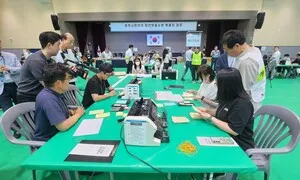
본문전국충청124→122표 차…충주시장 선거 재검표, 당락 안 바뀌었다오윤주기자수정 2026-07-15 20:32펼침0:00Your browser does not support theaudio element.구글 선호 매체 등록충북선관위 15일 재검표 124표차에서 122표 차로 2표 줄어충청북도선거관리위원회가 15일 오후 한국교통대 다목적광장에서 충주시장 당선 무효 소청과 관련한 재검표를 진행했다.

Why the US House voted to make Daylight Saving Time permanent?
Learn about Daylight Saving Time, the reasons behind the House’s decision to adopt it and its implications.

An anthem for a vanishing craft: Thazhappattu makes it to school curriculum
Screwpine art, which involves transforming simple leaves into green, sustainable thazhappas (mats) — a craft that was once a thriving cottage industry in Thazhava but has slowly declined due to modern challenges – receives a significant tribute in the form of Thazhappattu, a song