‘I thought, I’ve tried everything else, why not give AI a shot?’: the long-lost family reunited by ChatGPT
Avtar spent decades wondering what happened to the mother he never got to know. Thousands of miles away, Nicci was haunted by the story of a half-brother given away before she was born. How did a chatbot bring them together?As a small boy growing up in Amritsar, India, in the 196
Video: Courtesy of Nicci Dhamu / Guardian Design‘I thought, I’ve tried everything else, why not give AI a shot?’: the long-lost family reunited by ChatGPTAvtar spent decades wondering what happened to the mother he never got to know. Thousands of miles away, Nicci was haunted by the story of a half-brother given away before she was born.
How did a chatbot bring them together? As a small boy growing up in Amritsar, India, in the 1960s, Avtar Singh used to hear whispers. Your mum isn’t really your mum, the rumours would say.
Your mum lives abroad. Avtar didn’t really pay any attention to it. “I thought, the neighbours are just making up stories.”
But the stories were true: the woman raising Avtar was actually his grandmother. When he was too young to remember it, his father had emigrated to Canada to work as a teacher, leaving Avtar in the care of his paternal grandparents. His grandfather, a police officer, was a fearsome authoritarian, but his grandmother brought him up with tenderness, as if he were her own son.
She called him by his nickname, Titu. He felt loved.When Avtar was around eight years old, he was told about his family in Canada: his dad, his mum and a little brother were waiting for him there, and he would soon travel to join them.
Just after his ninth birthday, Avtar found himself sitting on a plane, dressed in a three‑piece suit and tie. He was travelling alone. He had never flown before.
He didn’t speak a word of English. He landed in Halifax, Nova Scotia, on Christmas Eve, 1968; his family met him at the airport and took him home. “I didn’t know what to think,” Avtar, now 66, tells me in a video call from his home in Abbotsford, British Columbia.
“Before I knew it, it was the first week of January, and I was put in school.”View image in fullscreenAvtar with his grandmother in the mid-60s in Amritsar, India (above), and (below) aged 10, in 1969, the year after he moved to Canada. Courtesy of Avtar SinghUnable to communicate with any of the other pupils, Avtar watched what they did and followed along, storing his snow boots in the cloakroom, standing up to sing the Canadian national anthem and God Save the Queen.
But with his long hair tied in the topknot often worn by Sikh boys, he stood out. His parents offered to buy him a hockey stick and a pair of ice skates if he agreed to get his hair cut. He learned English.
His nickname changed from Titu to the more Canadian “Tito”. He began to blend in.But Avtar didn’t fit in at home.
He was much paler than everyone else – “the white sheep of the family,” he jokes. And they treated him like an outsider, an afterthought. When he was 14, his family went on holiday without him, leaving Avtar home alone for two weeks.
He got on well enough with his father, but didn’t gel at all with his mother. “She didn’t have any of the warmth that my grandma had. She absolutely hated me.”
She seemed much more like a stepmother than a mother.That feeling was confirmed when Avtar got married and his grandparents flew over to stay with him and his new wife, Rosie. His grandma “whispered into my wife’s ear” that Avtar was the product of his father’s first marriage.
“She didn’t say what my mother’s name was. She just said, ‘Her family was from Africa, and she left the child with us and went back to Africa. She might have gone to live in the UK.’
That’s it.” It didn’t feel right to ask his grandparents for more information: this was clearly a family secret that no one wanted to discuss with Avtar.View image in fullscreenWhen his son was set a school assignment to complete his family tree, Avtar felt emboldened to approach his father.
“I said, ‘Dad, you’ve got to tell me at least what my mother’s name was.’” His dad eventually relented: her first name was Savinder. But he would not give Avtar any more information, no matter how many times he asked.
“I was stonewalled.” Avtar had no idea why his parents had split up. “All I really understood was that my mother’s family encouraged her to give up custody of me so it would be easier for them to remarry her.”
He thought about his mother constantly. When Rosie was pregnant with their daughter, there were anomalies in some of the antenatal tests, and Rosie and Avtar were referred to a geneticist. Avtar was asked about his parents’ medical history.
“I couldn’t tell them anything about my mother’s family history. It hit me right in the heart. That’s when I thought, I’ve got to do something.”
He Googled and Facebooked, but there was almost nothing to go on; Savinder is a fairly common Punjabi Sikh name. In 2009, Avtar flew to London to visit the National Archives at Kew with the hope of finding immigration or marriage records that might lead him to his mother. “I couldn’t find anything at all.”
On a later visit to London, he emailed Sunrise Radio, a British Asian station, asking if they could put out an appeal to find his mother, but they told Avtar they don’t do that kind of thing, out of respect for people’s privacy. That gave Avtar
Đọc thêm từ Công nghệ

Prise en main Samsung Galaxy Z Flip8 : rendez-vous manqué
Le dernier smartphone pliable sous format clapet de la marque bénéficie d'une amélioration bienvenue au niveau de la batterie, mais c'est à peu près tout…

Pas d'Android Auto dans votre voiture ? Voici comment y remédier pour pas cher
Pas besoin d'un véhicule récent pour profiter d'Android Auto voici deux solutions pour l'installer dans une vieille voiture, dont une à moins de 20 euros.
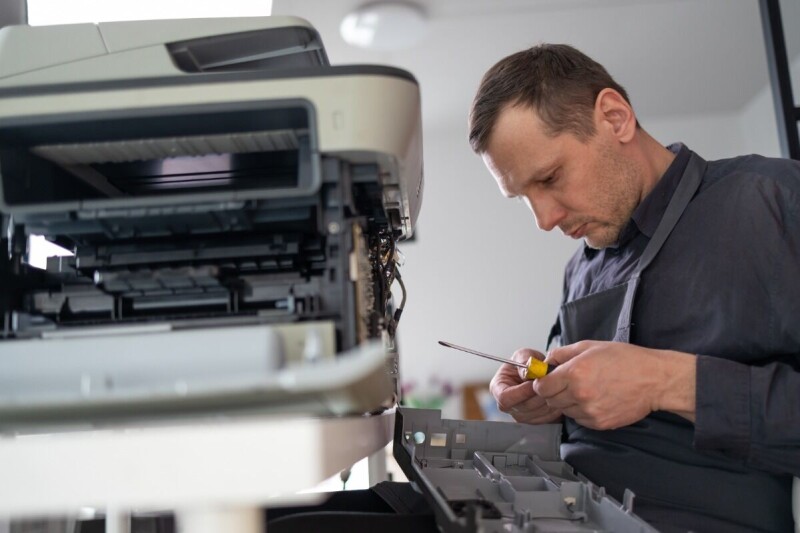
BOFH: This printer engineer knows every trick in the book
But so does this customer
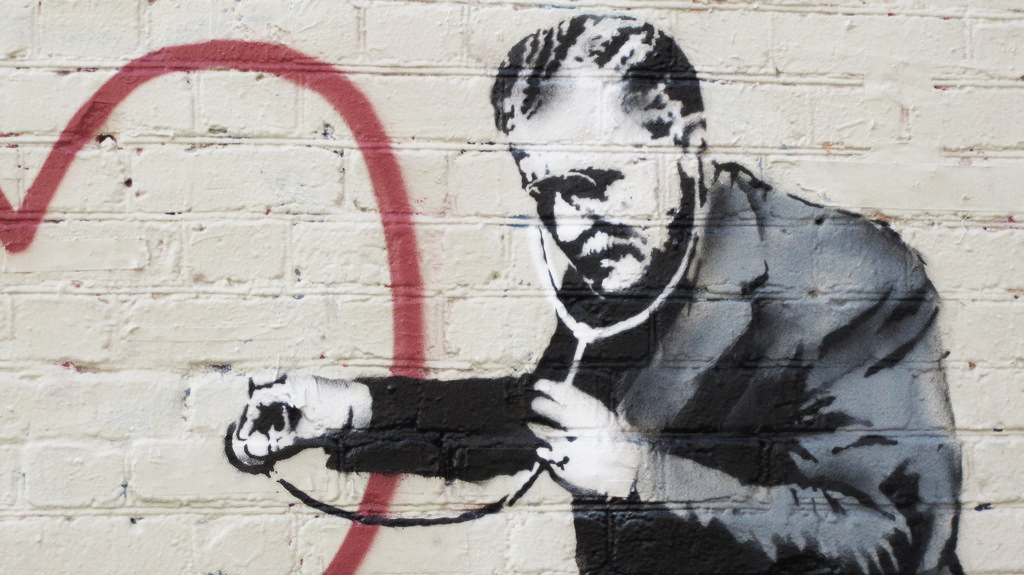
Series SEA: Who’s investing in the region’s health startups?
We've compiled a list of investors that are pouring money into Southeast Asia’s health startups.