Humanoid Robot Climbs 6,000-Meter Peak for the First Time, Next Stop: Everest
A modified Unitree G1 humanoid robot named Pemba summited Ecuador's Chimborazo volcano at 6,310 meters, demonstrating the potential of legged robots for environmental monitoring.
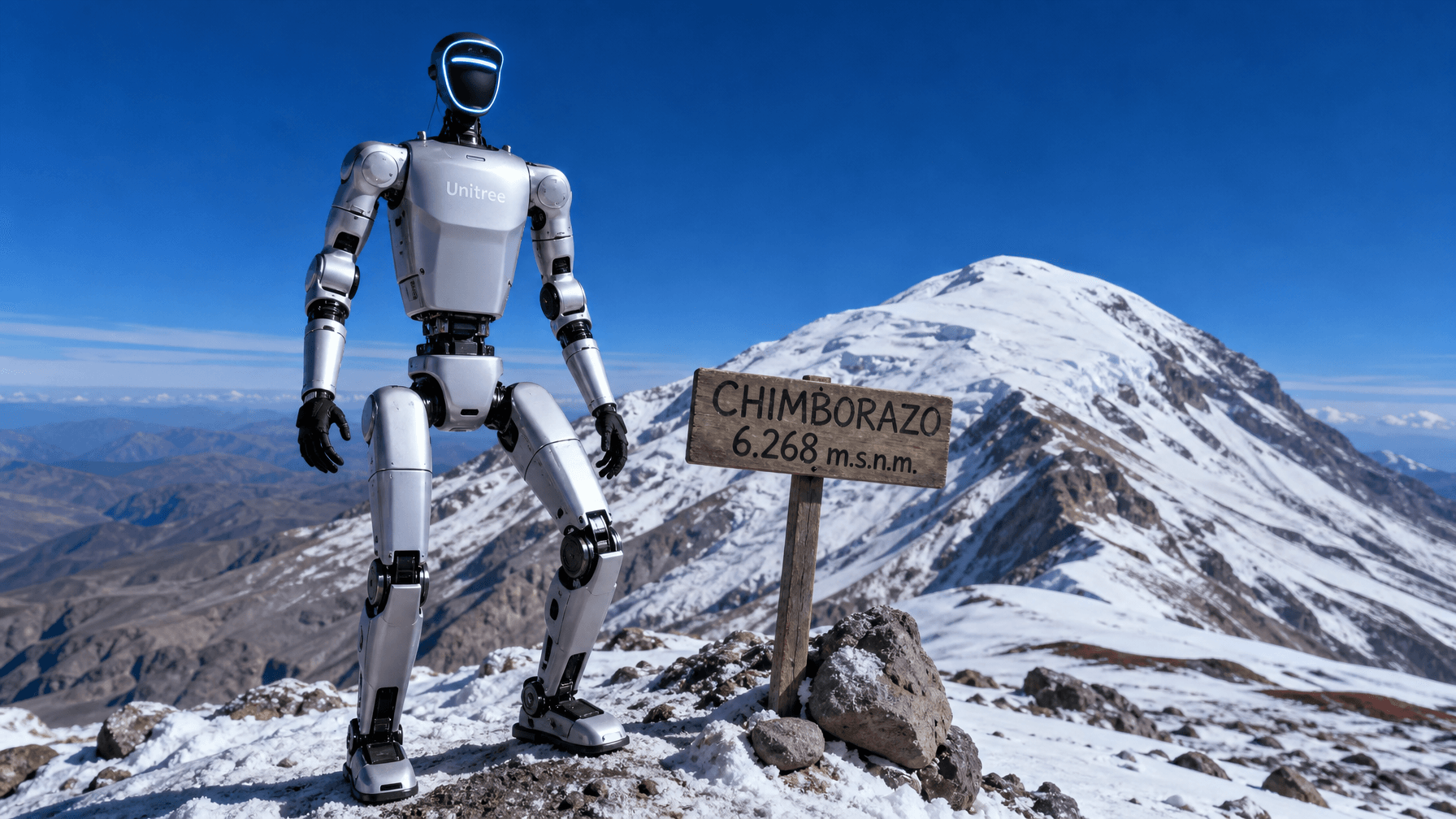
Humanoid Robot Climbs 6,000-Meter Peak for the First Time, Next Stop: Everest In early June 2026, a modified Unitree G1 humanoid robot named Pemba successfully summited Chimborazo volcano in Ecuador at 6,310 meters, marking the first time a humanoid robot has reached a 6,000-meter peak. The 16-hour ascent was organized by US startup Geologic Dome, founded by 23-year-old Pablo Berlanga Boemare. Pemba's name carries symbolic meaning — "Pemba" means Saturday in Sherpa (its assembly day), "José" is a common Ecuadorian male name, and "Lani" means heaven in Hawaiian, reflecting the team's "triple crown" plan to summit Chimborazo, Mauna Kea (Hawaii), and ultimately Mount Everest.
The robot underwent practical modifications for extreme mountain conditions, including a professional mountaineering jacket, gaiters, micro-spiked climbing shoes on its feet, and a custom ventilation system in its waist compartment to keep batteries at optimal temperature. Unitree had previously tested the G1 in near -50°C conditions in Xinjiang's Altai region, providing valuable reference data. Before the climb, the team conducted 72 hours of motion imitation training where the team leader wore a VR headset and ankle trackers to demonstrate balancing and walking motions for the robot to learn.
The climb itself was a hybrid of autonomous and assisted movement: Pemba walked independently on slopes under 30 degrees, while steeper sections required the robot to be carried by four guides. The summit push took approximately 5.5 hours, comparable to human climbers, with total expedition time reaching 16 hours including campsite rotations and descent.
The underlying motivation extends beyond mountaineering spectacle. Berlanga, a former WWF employee who worked on remote monitoring in Congo's Salonga National Park, envisions legged robots replacing fixed camera traps for environmental monitoring. "Give cameras legs," he explains, allowing them to navigate dense rainforest canopies where drones fail.
The pr
Đọc thêm từ Công nghệ

Hostinger - Journée mondiale des PME : aider les petites entreprises à publier un site sans dépendre d’une DSI
À l’occasion de la Journée mondiale des PME, de nombreuses petites structures cherchent à gagner en visibilité sans pour autant disposer d’une équipe informatique en interne. Créer un site, gérer son hébergement ou assurer sa sécurité demande du temps et certaines compétences tec

10 signes qui montrent que quelqu'un surveille ou accède à vos comptes en ligne – comment y mettre fin
Apprenez à repérer les signes indiquant que votre compte est surveillé ou piraté, et reprenez le contrôle.

Android : pourquoi vous devriez remplacer Gboard par ce clavier open source
Votre clavier Android collecte peut-être plus de données que vous ne le pensez. Voici deux façons de reprendre le contrôle de votre vie privée.

16 Best Greens Powders (2026): Taste-Tested for Months
I did the research and taste-testing to find the best greens powders worth your money. Bloom Nutrition’s Superfood Greens Powder is my tried-and-true pick.