How Trump’s call for Asia-Pacific allies to raise defence spending may backfire on US
Donald Trump’s demands that American allies in the Asia-Pacific region share more of the defensive burden have renewed questions about how far they can rely on the United States to help deter the likes of China and North Korea. Such concerns have led to an increasing focus on dev
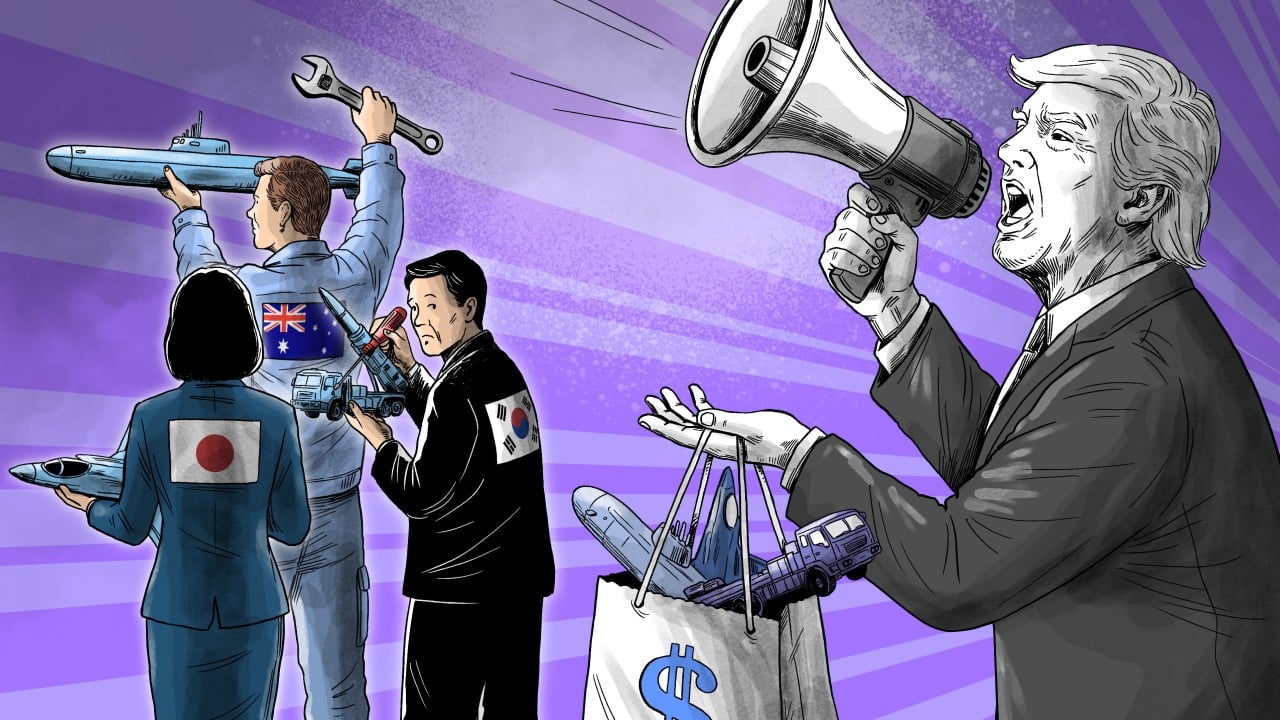
AdvertisementDefenceChinaMilitaryHow Trump’s call for Asia-Pacific allies to raise defence spending may backfire on USThe president hopes his demands will benefit the US defence industry but analysts believe local arms makers may be the main beneficiaries6-MIN READ6-MIN ListenSeong Hyeon ChoiPublished: 6:00am, 30 Jul 2026Updated: 6:09am, 30 Jul 2026Donald Trump’s demands that American allies in the Asia-Pacific region share more of the defensive burden have renewed questions about how far they can rely on the United States to help deter the likes of China and North Korea.Such concerns have led to an increasing focus on developing their own defence industries – but analysts have said that may eventually weaken American dominance in the global arms trade.Questions over Washington’s commitmentIn the National Security Strategy released in December, the Trump administration urged allies such as Japan and South Korea to spend more on collective defence to strengthen their ability to deter “aggression”.
It said this was “necessary to deter adversaries and protect the first island chain”, a series of islands and archipelagos that runs from Japan to the Philippines and Borneo.The chain stands between mainland China and the Pacific and has been identified as a strategic barrier that could be used to block access to the open waters.Its significance is heightened by the fact that Taiwan sits at its heart.
Beijing regards the island as part of China and has never renounced the use of force to bring it under its control.AdvertisementSelect VoiceSelect Speed0.8x0.
9x1.0x1.1x1.
2x1.5x1.75x00:0000:001.
00x