Foxconn drops VMware, adopts hyperconverged upstart Arcrfra for workloads including AI
PLUS: New CEO for Infosys; China fines Trip.com; India demands GitHub remove Jack Dorsey's distributed social network; And more!
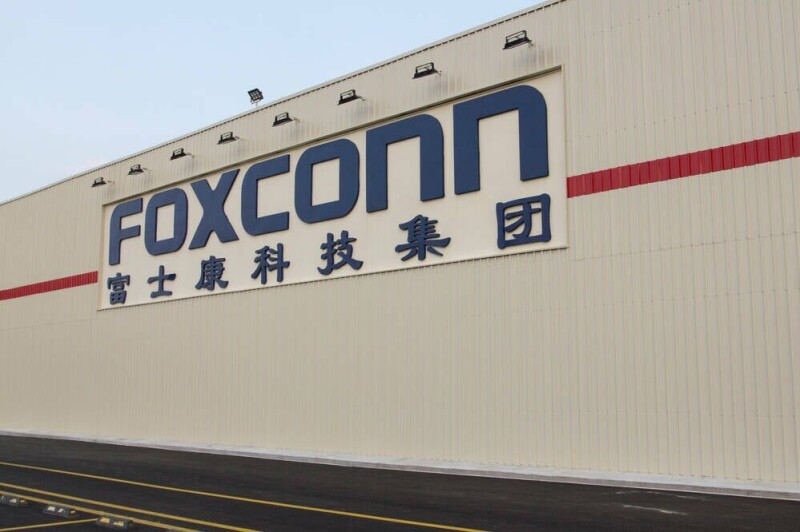
ASIA IN BRIEF Taiwanese mega-manufacturer Foxconn has adopted Singaporean hyperconverged infrastructure vendor (HCI) Arcrfra for some GPU virtualization workloads and to replace VMware in some remote offices. Arcfra launched in 2024 and the next year earned a place on analyst firm Gartner’s Market Guide for Full-Stack HCI Software. Last week, Arcfra launched an update to its Neutree model-as-a-service platform, adding native GPU virtualization and model governance capabilities.
The company said Foxconn has adopted Neutree “to modernize distributed factory infrastructure and improve how AI models were delivered, managed, and observed across environments.” The Taiwanese giant has also used Neutree to “accelerate model deployment, improve operational visibility, and build a scalable foundation for future AI and intelligent manufacturing workloads.” Foxconn considers AI a critical part of its plans: The Register last year heard chairman Young Liu hail generative AI’s potential to vastly improve the company’s factories.
The Register asked Arcfra to detail its relationship with Foxconn and the HCI upstart pointed us to this case study that states “Foxconn's global branch companies relied on traditional VMware virtualization for their IT systems. This legacy setup was becoming increasingly difficult to manage and scale across a distributed global footprint [and] led to high construction costs and a significant increase in operations and maintenance overhead.” Foxconn apparently deployed Arcfra “across its branch factories in Mainland China, Taiwan, Vietnam, and North America” and uses the Singaporean platform for critical intranet, manufacturing management, ERP and production line management systems.
Arcfra also hosts Foxconn's DevTest environments and Virtual Desktop Infrastructure workloads. “The legacy VMware virtualization + SAN storage architecture was successfully replaced, providing a modern, scalable foundation ready to accommodate future business growth and techno
Đọc thêm từ Công nghệ

AI’s double role in cybersecurity
AI can both hack and defend. We look at what Asia should prepare for. Plus: the US goes after Kimi K3, and how AI coding gives solo founders an edge.

Southeast Asia’s fintech apps don’t have a literacy problem, they have a fear problem
For nearly a decade, the pitch behind Southeast Asia’s fintech boom has stayed remarkably consistent: put a bank in everyone’s pocket, simplify the interface, and financial inclusion follows. Billions of dollars in funding, dozens of e-wallets, and a wave of micro-investing apps

Who’s investing in India’s fintech startups?
We've compiled a list of investors pouring money into India’s fintech startups.

How do you finance a first nuclear reactor for a data centre? The deal structure is finally coming together
The technology question around small modular reactors in Southeast Asia is largely resolved. The engineering works. The safety case is well-established. The capacity factor, roughly 90 per cent, compared to 20–25 per cent for solar, makes SMRs the only credible clean baseload tec