FIFA eyes 64-team World Cup after 2026, and the sports betting market is paying attention
The potential expansion to a 64-team World Cup could significantly boost the sports betting and crypto markets, driving fan engagement globally. The post FIFA eyes 64-team World Cup after 2026, and the sports betting market is paying attention appeared first on Crypto Briefing.

FIFA eyes 64-team World Cup after 2026, and the sports betting market is paying attention The beautiful game keeps getting bigger, and the intersection of global football expansion with crypto-powered sports betting markets makes this a story worth watching. Share Add us on Google by Editorial Team Jul. 13, 2026 FIFA President Gianni Infantino has confirmed the organization will consider expanding the men’s World Cup from 48 teams to 64 for the 2030 tournament.
The announcement, made in mid-July 2026 as the current 48-team World Cup plays out, signals that football’s governing body isn’t done supersizing its flagship event. What FIFA is actually proposing The idea originated from a March 2025 FIFA Council meeting, where CONMEBOL representative Ignacio Alonso formally floated the expansion. Infantino has since indicated that formal discussions will begin after the 2026 World Cup wraps up.
A 64-team format would mean more than 30% of FIFA’s 211 member associations could qualify. That’s a meaningful jump from the 48-team setup debuting in 2026, which itself was an expansion from the 32-team format used since 1998. Advertisement The 2030 tournament is provisionally awarded to Spain, Portugal, and Morocco as primary hosts.
Uruguay, Argentina, and Paraguay hold centenary celebration ties to the event, adding a historical wrinkle to the hosting arrangement. Why crypto and blockchain markets care about football expansion Fan tokens, the cryptocurrency-adjacent assets tied to football clubs and national teams, have become a meaningful segment of the digital asset market. Platforms like Socios.
com and Chiliz have built entire ecosystems around the idea that fans will pay for tokenized engagement with their favorite teams. More qualifying nations means more national team fan bases with skin in the game, literally. Platforms like Polymarket and Azuro have demonstrated massive volume spikes around major sporting events.
A 64-team World Cup, with its expanded bracket of matches and upset potential, would be a content engine for decentralized prediction markets. The bigger picture for tokenized sports FIFA itself has flirted with blockchain technology. The organization launched an NFT platform during the 2022 World Cup in Qatar, and various FIFA partners have explored tokenization of ticketing, merchandise authentication, and broadcast rights.
The expansion still needs to clear formal FIFA Council approval, and logistical questions about tournament format, scheduling, and host capacity remain unresolved. Investors in fan tokens and sports-adjacent crypto projects should treat this as a strong directional signal rather than a done deal. Disclosure: This article was edited by Editorial Team.
For more information on how we create and review content, see our Editorial Policy. SOCCER FIFA eyes 64-team World Cup after 2026, and the sports betting market is paying attention The beautiful game keeps getting bigger, and the intersection of global football expansion with crypto-powered sports betting markets makes this a story worth watching. by Editorial Team Jul.
13, 2026 Share Add us on Google FIFA President Gianni Infantino has confirmed the organization will consider expanding the men’s World Cup from 48 teams to 64 for the 2030 tournament. The announcement, made in mid-July 2026 as the current 48-team World Cup plays out, signals that football’s governing body isn’t done supersizing its flagship event. What FIFA is actually proposing The idea originated from a March 2025 FIFA Council meeting, where CONMEBOL representative Ignacio Alonso formally floated the expansion.
Infantino has since indicated that formal discussions will begin after the 2026 World Cup wraps up. A 64-team format would mean more than 30% of FIFA’s 211 member associations could qualify. That’s a meaningful jump from the 48-team setup debuting in 2026, which itself was an expansion from the 32-team format used since 1998.
Advertisement The 2030 tournament is provisionally awarded to Spain, Portugal, and Morocco as primary hosts. Uruguay, Argentina, and Paraguay hold centenary celebration ties to the event, adding a historical wrinkle to the hosting arrangement. Why crypto and blockchain markets care about football expansion Fan tokens, the cryptocurrency-adjacent assets tied to football clubs and national teams, have become a meaningful segment of the digital asset market.
Platforms like Socios.com and Chiliz have built entire ecosystems around the idea that fans will pay for tokenized engagement with their favorite teams. More qualifying nations means more national team fan bases with skin in the game, literally.
Platforms like Polymarket and Azuro have demonstrated massive volume spikes around major sporting events. A 64-team World Cup, with its expanded bracket of matches and upset potential, would be a content engine for decentralized prediction markets. The bigger picture for tokenized sports FIFA itself has flirted with blockchain technology.
The organ
Đọc thêm từ Tiền số / Crypto

US attacks IRGC sites on Kish Island amid regional tensions
The attack risks escalating U.S.-Iran tensions, potentially destabilizing the region and impacting global markets and diplomatic relations. The post US attacks IRGC sites on Kish Island amid regional tensions appeared first on Crypto Briefing.
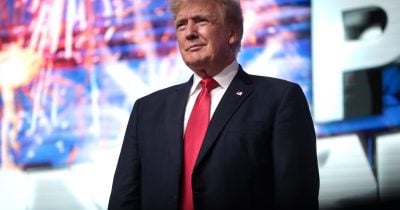
US launches new airstrikes in Iran despite Trump hinting at possible deal
The U.S. airstrikes may exacerbate regional instability, impacting Iran's political future and complicating diplomatic efforts. The post US launches new airstrikes in Iran despite Trump hinting at possible deal appeared first on Crypto Briefing.

Bahrain claims interception of Iranian air attacks amid regional tensions
The interception claim, if true, may stabilize regional tensions, reducing the likelihood of Iran closing its airspace amid ongoing conflicts. The post Bahrain claims interception of Iranian air attacks amid regional tensions appeared first on Crypto Briefing.

Gold declines as US rate hike expectations rise amid Strait of Hormuz tensions
Rising US rate hike expectations amid geopolitical tensions could weaken gold's appeal, impacting global markets and inflation dynamics. The post Gold declines as US rate hike expectations rise amid Strait of Hormuz tensions appeared first on Crypto Briefing.