Expert identifies trigger for next ‘severe global recession’
A sustained surge in oil prices above $120 per barrel could be the catalyst for the next global recession, according … Continue reading The post Expert identifies trigger for next ‘severe global recession’ appeared first on Finbold.
A sustained surge in oil prices above $120 per barrel could be the catalyst for the next global recession, according to energy analyst Josef Schachter. Speaking about the risks surrounding the Strait of Hormuz and global energy supplies, Schachter said the world economy can likely absorb crude prices in the $100 to $110 range, in an interview with David Lin published on July 11. However, he warned that prices moving into the $120 to $130 range would begin to significantly reduce fuel demand and slow economic activity.
According to Schachter, higher energy costs would force consumers and businesses to cut spending, creating what economists refer to as demand destruction. As fuel becomes more expensive, households drive less, companies reduce transportation activity, and overall economic output weakens. He argued that the risk becomes substantially greater if oil prices climb toward $140 or $150 per barrel.
“If the price of oil gets up above $120 or $130, I think we’re going to see significant demand destruction and probably a global recession. If we got above $150 or $140, you will be in a severe recession. <…
> I can see the economy handling a $100, maybe $110, a barrel,” Schachter said. Under that scenario, the resulting demand destruction could remove between 5 million and 8 million barrels per day from global consumption, potentially pushing the global economy into a severe recession. Strait of Hormuz of tensions The warning comes as investors continue to monitor tensions around the Strait of Hormuz, one of the world’s most important oil transit routes.
Roughly one-fifth of global oil shipments pass through the strategic waterway, making any disruption a major concern for energy markets and economic growth. Schachter expects market forces to eventually stabilize prices through alternative shipping routes, pipeline adjustments, strategic petroleum reserve releases, and lower demand from major importers such as China. Recent Strait of Hormuz disruptions have demonst
Đọc thêm từ Tiền số / Crypto

Goldman Sachs releases competitive framework for Chinese AI models, signaling major shift in global tech race
China's cost-effective AI models could reshape global tech dynamics, challenging US dominance and accelerating AI adoption worldwide. The post Goldman Sachs releases competitive framework for Chinese AI models, signaling major shift in global tech race appeared first on Crypto Br

Israeli drone strike kills two Palestinians in Gaza City, violating ceasefire
The drone strike exacerbates regional instability, potentially leading to increased geopolitical tensions and impacting future ceasefire efforts. The post Israeli drone strike kills two Palestinians in Gaza City, violating ceasefire appeared first on Crypto Briefing.
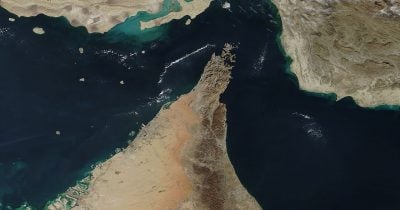
Iran closes Strait of Hormuz, maritime traffic plummets
The closure exacerbates regional tensions, disrupts global oil supply chains, and heightens geopolitical uncertainty, impacting global markets. The post Iran closes Strait of Hormuz, maritime traffic plummets appeared first on Crypto Briefing.
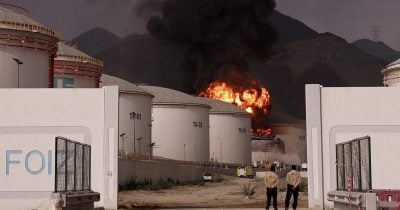
Strait of Hormuz instability threatens global energy supply amid US-Iran tensions
Global energy markets face heightened volatility and potential price surges due to ongoing geopolitical tensions and supply disruptions. The post Strait of Hormuz instability threatens global energy supply amid US-Iran tensions appeared first on Crypto Briefing.