EU opens accession talks with Ukraine after Hungary lifts veto
Ukraine's EU accession talks mark a pivotal step towards integration, promising economic reforms and financial support, yet fraught with risks. The post EU opens accession talks with Ukraine after Hungary lifts veto appeared first on Crypto Briefing.

EU opens accession talks with Ukraine after Hungary lifts veto New Hungarian prime minister ends two-year blockade with a bilateral deal on minority rights, clearing the path for formal negotiations Share Add us on Google by Editorial Team Jun. 15, 2026 Ukraine’s long-stalled path toward European Union membership just cleared its biggest roadblock. Hungary lifted its veto on EU accession talks with Ukraine, ending a blockade that lasted roughly two years under former Prime Minister Viktor Orbán.
Formal negotiations are set to begin around June 15, 2026, under the Cypriot EU Council presidency. Moldova will join Ukraine at the table, with the first cluster of discussions focused on what the EU calls “fundamentals,” covering rule of law and human rights. What changed in Budapest The short answer: new leadership.
Hungary’s new Prime Minister Péter Magyar facilitated a bilateral agreement with Ukraine that addressed the status of ethnic Hungarians living in Ukrainian territory. The deal covers education, language, and cultural rights for the Hungarian minority community. The veto’s removal also unblocked several related EU mechanisms.
Portions of a proposed 40 billion euro defense fund and sanctions packages had been caught in the same diplomatic logjam. Those can now proceed as well. Advertisement Why this matters beyond Kyiv EU accession is not a quick process.
Countries spend years, sometimes decades, aligning their legal frameworks, economic policies, and institutional structures with EU standards. Turkey applied in 1987. It’s still waiting.
But the formal opening of negotiations is more than symbolic. It locks Ukraine into a structured reform process with concrete benchmarks, EU oversight, and, critically, access to financial support mechanisms designed to help candidate countries modernize their economies and institutions. The first negotiation cluster on “fundamentals” is deliberately front-loaded with the hardest stuff.
Rule of law, judicial independence, anti-corruption measures, human rights protections. Brussels wants to see progress on these before opening discussions on trade, agriculture, or market access. What this means for investors The EU’s Markets in Crypto-Assets (MiCA) framework is now the governing regulatory structure for digital assets across member states.
Ukraine was already expected to align with EU virtual asset regulations as part of its broader reform agenda. Formal accession negotiations give that timeline more structure and urgency. There were no direct references to cryptocurrency or blockchain in the reporting around Hungary’s veto lift.
This is a geopolitical story, not a crypto story. The connection to digital assets is indirect, running through the broader channel of regulatory harmonization. The 40 billion euro defense fund and sanctions packages that were also unblocked by Hungary’s veto removal speak to the broader financial architecture being built around Ukraine’s integration.
The risk side is equally important. Accession negotiations can stall, reverse, or collapse entirely. Political changes in any EU member state could produce new vetoes.
And Ukraine’s wartime circumstances introduce variables that no previous candidate country has faced. Disclosure: This article was edited by Editorial Team. For more information on how we create and review content, see our Editorial Policy.
POLITICS EU opens accession talks with Ukraine after Hungary lifts veto New Hungarian prime minister ends two-year blockade with a bilateral deal on minority rights, clearing the path for formal negotiations by Editorial Team Just now ago Share Add us on Google Ukraine’s long-stalled path toward European Union membership just cleared its biggest roadblock. Hungary lifted its veto on EU accession talks with Ukraine, ending a blockade that lasted roughly two years under former Prime Minister Viktor Orbán. Formal negotiations are set to begin around June 15, 2026, under the Cypriot EU Council presidency.
Moldova will join Ukraine at the table, with the first cluster of discussions focused on what the EU calls “fundamentals,” covering rule of law and human rights. What changed in Budapest The short answer: new leadership. Hungary’s new Prime Minister Péter Magyar facilitated a bilateral agreement with Ukraine that addressed the status of ethnic Hungarians living in Ukrainian territory.
The deal covers education, language, and cultural rights for the Hungarian minority community. The veto’s removal also unblocked several related EU mechanisms. Portions of a proposed 40 billion euro defense fund and sanctions packages had been caught in the same diplomatic logjam.
Those can now proceed as well. Advertisement Why this matters beyond Kyiv EU accession is not a quick process. Countries spend years, sometimes decades, aligning their legal frameworks, economic policies, and institutional structures with EU standards.
Turkey applied in 1987. It’s still waiting. But the formal opening of negotiations is more
Đọc thêm từ Tiền số / Crypto
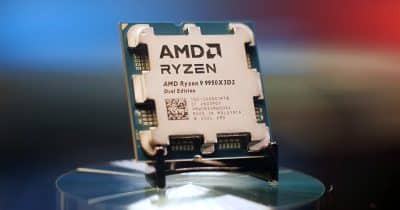
AMD removes memory encryption from consumer CPUs, users react
AMD's removal of memory encryption from consumer CPUs raises security concerns, especially for crypto users and data center operators. The post AMD removes memory encryption from consumer CPUs, users react appeared first on Crypto Briefing.

Fox Corporation acquires Roku for $22B, targeting $400M in synergies
Fox's acquisition of Roku highlights the ongoing consolidation in media, aiming to enhance competitive positioning through strategic synergies. The post Fox Corporation acquires Roku for $22B, targeting $400M in synergies appeared first on Crypto Briefing.

Mika Kuusisto steps down as ENCE CEO after seven years, signaling broader esports financial strain
The restructuring at ENCE highlights the vulnerability of esports organizations to fluctuating sponsorship landscapes, especially in crypto. The post Mika Kuusisto steps down as ENCE CEO after seven years, signaling broader esports financial strain appeared first on Crypto Briefi

Portugal faces DR Congo in 2026 World Cup opener as crypto remains sidelined from FIFA’s biggest stage
The sidelining of crypto in the 2026 World Cup highlights a shift back to traditional sponsorships, reflecting caution in digital asset ventures. The post Portugal faces DR Congo in 2026 World Cup opener as crypto remains sidelined from FIFA’s biggest stage appeared first on Cryp