Elite families ruled nomadic Scythian society 2,500 years ago, DNA analysis reveals
Nomads of the Eurasian steppe were ruled by elite dynastic families, including women, a large-scale genetic analysis reveals.
10Member Features 24/7Access Available 25K+Active Members Exclusive Newsletters Science news direct to your inbox Member Competitions Win exclusive prizes Exclusive Content Premium articles & videos Early Access First to see new features Private Forums Connect with members Monthly Rewards Surprise gifts & perks GET LIVE SCIENCE PLUS It's quick and easy to access Live Science Plus, simply enter your email below. We'll send you a confirmation and sign you up for our daily newsletter, keeping you up to date with the latest science news. Contact me with news and offers from other Future brands By submitting your information you agree to the Terms & Conditions and Privacy Policy and are aged 16 or over.
FIND OUT ABOUT OUR MAGAZINE Want to subscribe to the magazine? Click the button below to find out more information. Find out more 10Member Features 24/7Access Available 25K+Active Members Exclusive Newsletters Science news direct to your inbox Member Competitions Win exclusive prizes Exclusive Content Premium articles & videos Early Access First to see new features Private Forums Connect with members Monthly Rewards Surprise gifts & perks GET LIVE SCIENCE PLUS It's quick and easy to access Live Science Plus, simply enter your email below.
We'll send you a confirmation and sign you up for our daily newsletter, keeping you up to date with the latest science news. Contact me with news and offers from other Future brands By submitting your information you agree to the Terms & Conditions and Privacy Policy and are aged 16 or over. FIND OUT ABOUT OUR MAGAZINE Want to subscribe to the magazine?
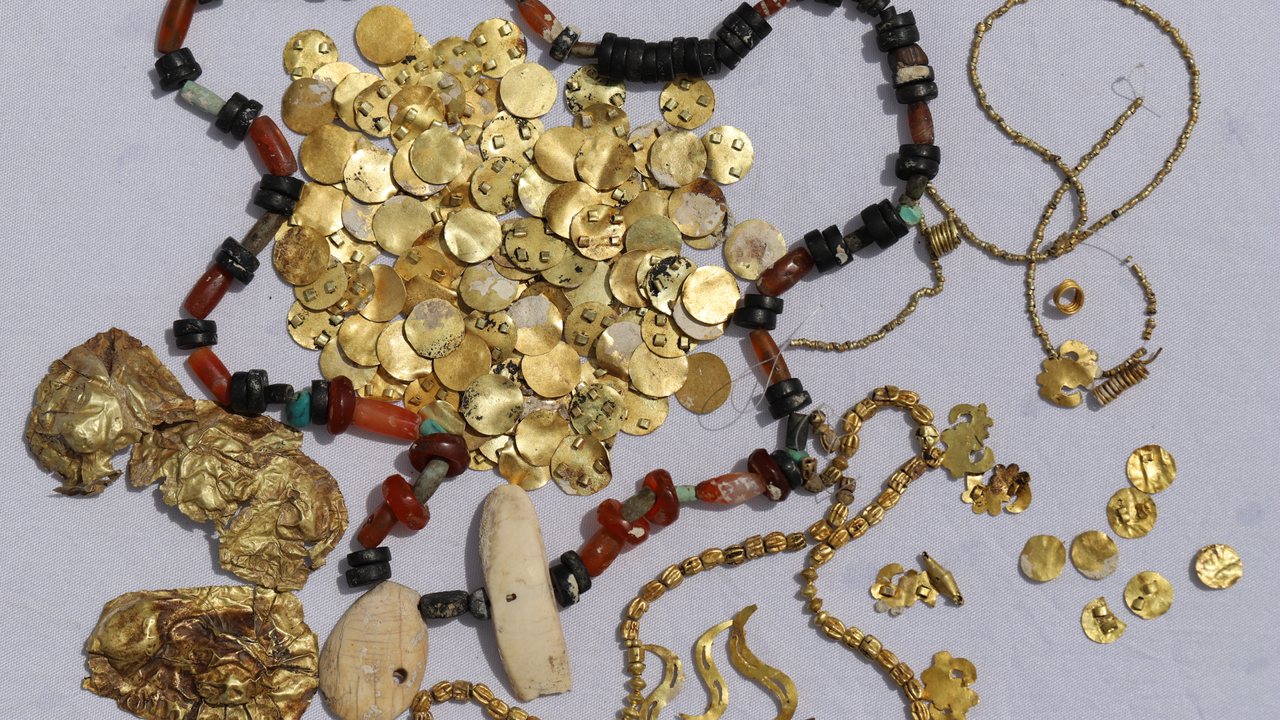
Click the button below to find out more information. Find out more Gold artifacts from the elite burial mound of Eleke Sazy in eastern Kazakhstan. (Image credit: Zainolla Samashev) Copy link Facebook X Reddit Pinterest Flipboard Share this article 0 Join the conversation Follow us Add us as a preferred source on Google Newsletter Subscribe to our newsletter The enigmatic Scythians, a diverse group of nomadic tribes known for their ferocity in battle, were organized around elite dynasties of powerful men and women over 2,500 years ago, a new DNA study finds.
The results reveal that social inequality arose in these nomadic groups around 900 B.C., during the Iron Age.
Most of what archaeologists know about the Scythians comes from ancient Greek and Roman accounts of the accomplished equestrians and from their large, mound-shaped tombs, called kurgans, that dot the Eurasian steppe grassland. The Scythians' tattooed mummies and intricate, animal-themed jewelry were as well-known in ancient times as their women warriors, who may have inspired the myth of the Amazons. But the Scythians left no written records of their own and were likely absorbed by other cultural groups after suffering several military defeats around 200 B.
C.In a study published Friday (July 3) in the journal Science Advances, researchers sequenced DNA from 85 Iron Age Scythians to better understand how these geographically spread-out groups were related and how their society was politically structured. They discovered that elite family dynasties ruled the nomadic groups from centralized locations, revealing the origin of social inequality among the Scythians.
The researchers generated genomes from the skeletons of 38 elite and 47 non-elite people buried in kurgan tombs across 20 archaeological sites between 900 and 200 B.C. The non-elite tombs were smaller than the elite tombs, and they lacked the impressive weapons and gold artifacts of the elite tombs.
Based on DNA, the researchers discovered that elite people were 11 times more likely to be related to each other than they were to be related to non-elite people, suggesting there was a powerful extended family group that ruled the steppe nomads.Among the elite, they discovered two pairs of biological brothers, a brother and a sister, and a parent and child. In one case, the two brothers were buried at different sites some distance apart.
They also found two elite grandfathers and grandsons buried in different cemeteries. But the elite people were still buried closer together than the non-elite people were. One of the tombs, called a kurgan, prior to excavation.
(Image credit: Rinat Zhumatayev)"It is possible that this indicates some degree of geographic centralization of the elite burials being on average closer to each other," study co-author Ainash Childebayeva, a genetic anthropologist at the University of Texas at Austin, told Live Science in an email. "For example, in Siberia there is an area known as the 'Valley of the Kings' that contains many large mounds that are likely elite of the similar time period as in our study."Sign up for the Live Science daily newsletter nowGet the world’s most fascinating discoveries delivered straight to your inbox.
Contact me with news and offers from other Future brandsReceive email from us on behalf of our trusted partners or sponsorsThe researchers also investigated the historical
Đọc thêm từ Khoa học

As 'Terminator 2: Judgment Day' turns 35, it's time to accept the truth: Terminator shouldn't be back
The future has been written, and it's a dark fate for the Terminator franchise.

3 Nuclear Startups Hit a Big Milestone. Why It Matters—and Why It Doesn’t
The companies’ Fourth of July plans include celebrating new reactor designs coming online. But there’s still a long way to go before they deliver energy at a meaningful scale.

Could humans someday explore Saturn's moon Titan, or will humanoid robots do it for us?
Could humans ever set foot on Titan, or will AI-powered humanoid robots make the voyage instead?
Ancient ‘hobbits’ feasted on Komodo dragons’ leftovers
The hominins may have gone on adventures, but they lacked key skills of modern humans