Donald Trump calls for Israel to cease attacks in Lebanon, rattling markets and diplomacy
Trump's call for a ceasefire highlights the complex interplay between geopolitical tensions and market dynamics, affecting global risk perceptions. The post Donald Trump calls for Israel to cease attacks in Lebanon, rattling markets and diplomacy appeared first on Crypto Briefing
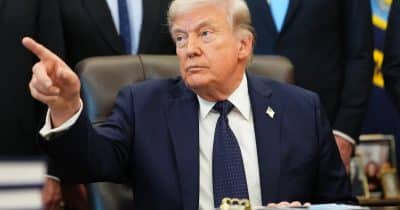
Donald Trump calls for Israel to cease attacks in Lebanon, rattling markets and diplomacy The president's public demand for Israeli restraint caught officials off guard and sent ripples through both geopolitical and crypto markets. Share Add us on Google by Editorial Team Jun. 14, 2026 President Donald Trump publicly called on Israel to stop military attacks in Lebanon, a move that caught Israeli officials off guard.
The demand, delivered via Truth Social, came as Israeli airstrikes targeted southern Beirut during a period of escalating confrontations between Israel and Hezbollah. Trump’s intervention was driven, at least in part, by a desire to protect ongoing US-Iran peace negotiations from collateral diplomatic damage. A fragile ceasefire in a long year of truces Trump announced a ceasefire agreement between Israel and Hezbollah on June 1-2, 2026, pledging that no Israeli troops would advance on Beirut.
Earlier in April 2026, Trump announced a 10-day ceasefire, followed by a three-week extension. Both were designed to tamp down hostilities that had persisted despite repeated diplomatic efforts. Advertisement This latest ceasefire followed intensive discussions between Trump and Israeli Prime Minister Benjamin Netanyahu, along with indirect communications with Hezbollah officials.
Trump’s approach has been to consistently limit military escalation while keeping both Israel and Iran at the negotiating table. Continued reports of military operations even after ceasefire announcements suggest those agreements have not held. Bitcoin reacts to the geopolitical chess match Bitcoin’s price fluctuated near $63,000 in early June 2026, rebounding to approximately $64,000 as ceasefire news broke.
Earlier in the year, when hopes for a lasting resolution in the Israel-Hezbollah conflict were higher, Bitcoin had peaked above $72,000. The more subdued market response to the June ceasefire, compared to earlier truces, suggests a degree of headline fatigue among crypto traders. There were also speculative discussions about potential oil toll payments in the Strait of Hormuz being linked to cryptocurrency transactions, though no confirmations emerged from any credible reporting.
What this means for investors Bitcoin’s sensitivity to ceasefire headlines and military escalation reveals something important about how the market currently views the asset: less as digital gold, more as a barometer of global risk appetite. When de-escalation looks credible, Bitcoin rallies. When it doesn’t, Bitcoin sells off.
Traditional safe havens like gold and US Treasuries tend to benefit when geopolitical risk rises, potentially drawing capital away from digital assets. Bitcoin’s inability to sustain its earlier highs despite multiple ceasefire announcements suggests that institutional investors may be rotating toward more conventional hedges. Disclosure: This article was edited by Editorial Team.
For more information on how we create and review content, see our Editorial Policy. MACRO Donald Trump calls for Israel to cease attacks in Lebanon, rattling markets and diplomacy The president's public demand for Israeli restraint caught officials off guard and sent ripples through both geopolitical and crypto markets. by Editorial Team Just now ago Share Add us on Google President Donald Trump publicly called on Israel to stop military attacks in Lebanon, a move that caught Israeli officials off guard.
The demand, delivered via Truth Social, came as Israeli airstrikes targeted southern Beirut during a period of escalating confrontations between Israel and Hezbollah. Trump’s intervention was driven, at least in part, by a desire to protect ongoing US-Iran peace negotiations from collateral diplomatic damage. A fragile ceasefire in a long year of truces Trump announced a ceasefire agreement between Israel and Hezbollah on June 1-2, 2026, pledging that no Israeli troops would advance on Beirut.
Earlier in April 2026, Trump announced a 10-day ceasefire, followed by a three-week extension. Both were designed to tamp down hostilities that had persisted despite repeated diplomatic efforts. Advertisement This latest ceasefire followed intensive discussions between Trump and Israeli Prime Minister Benjamin Netanyahu, along with indirect communications with Hezbollah officials.
Trump’s approach has been to consistently limit military escalation while keeping both Israel and Iran at the negotiating table. Continued reports of military operations even after ceasefire announcements suggest those agreements have not held. Bitcoin reacts to the geopolitical chess match Bitcoin’s price fluctuated near $63,000 in early June 2026, rebounding to approximately $64,000 as ceasefire news broke.
Earlier in the year, when hopes for a lasting resolution in the Israel-Hezbollah conflict were higher, Bitcoin had peaked above $72,000. The more subdued market response to the June ceasefire, compared to earlier truces, suggests a degree of headline fatigue among crypto trader
Đọc thêm từ Tiền số / Crypto

FIFA World Cup 2026 draws crypto markets into the action as Netherlands and Japan battle in Group F
The integration of crypto markets into the World Cup highlights the growing intersection of sports and digital finance, influencing fan engagement. The post FIFA World Cup 2026 draws crypto markets into the action as Netherlands and Japan battle in Group F appeared first on Crypt

Sui Blockchain Registers $65 Billion in Stablecoin Volume Following Major Fee Removal Protocol
The high-performance blockchain engineered for fast and cheap transactions has garnered attention, reaching large stablecoin volumes after making stablecoin movements fee-free at the protocol level. According to Certik, the network has settled nearly $65 billion in stablecoins si

Standard Chartered sees signs of Bitcoin bottom ahead of Strategy update
Institutional interest and new market structures could stabilize Bitcoin, potentially leading to a more resilient and mature crypto market. The post Standard Chartered sees signs of Bitcoin bottom ahead of Strategy update appeared first on Crypto Briefing.

Austria ends World Cup exile with victory over debutants Jordan
Austria's World Cup return after 28 years highlights the transformative impact of strategic coaching, offering hope for future successes. The post Austria ends World Cup exile with victory over debutants Jordan appeared first on Crypto Briefing.