Discovery of prehistoric female-only cemetery changes what we know about early human society
Evidence suggests very early development of prehistoric female cultural identity
Extraordinary new discoveries are suggesting, for the very first time, that archaic (non-Homo-sapiens) early human society was far more complex and advanced than previously thought.New scientific evidence is now revealing that, some 300,000 years ago, a little-known and now long-extinct species of hominid - Homo naledi - developed what appears to have been a very complex form of communal organisation, involving extreme sex-based cultural segregation and very strong female gender identity.The evidence strongly suggests that the species segregated dead males and females - and that potentially implies that the two sexes may well also have been socially and culturally segregated during their lives.
It suggests that the female of the species developed a form of very strong gender-based cultural identity that may, potentially in some respects, have been a form of prehistoric feminism.Ancient protein tests on their teeth have revealed that the species seem to have operated female-only cemeteries. What's more, some evidence strongly suggests that the individuals who transported those deceased females to their final resting place (a remote cave inside a hill) and then actually buried them, were themselves also female.
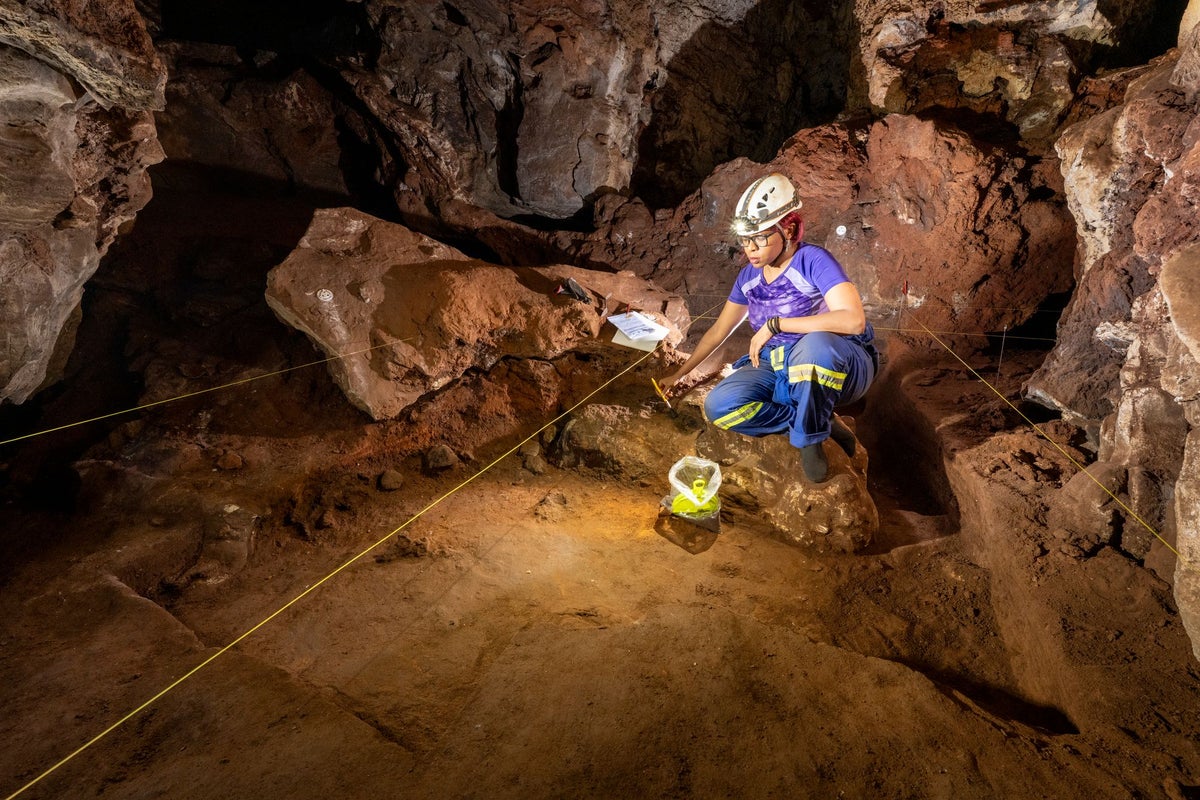
The species' males are archaeologically totally invisible. None have ever been found - and archaeologists have absolutely no idea what their role in society was or where they were buried.open image in galleryNational Geographic Explorer in Residence and paleoanthropologist Lee Berger in an entrance chamber of Rising Star Cave in South Africa.
(Photo by Robbie Shone/National Geographic)The female cave cemetery, located in Rising Star Cave, near Johannesburg, South Africa, is being investigated by a team of South African scientists, led by Professor Lee Berger, formerly of the University of the Witwatersrand and now with the US-based National Geographic Society.It is the world's first ever example of a prehistoric female-only cemetery. What's more, even in more modern times, gender segregation after death has been extraordinarily rare.
Apart from some cemeteries attached to a few all-female institutions like nunneries, the only known example of a women-only cemetery is in Rwanda, where women who died in childbirth used to be buried on special islands in a local lake. The South African cave cemetery not only represents a totally unexpected level of early societal complexity - but also shows the extraordinary lengths that the women of the species were prepared to go to in order to carry out their female-only rituals and traditions.To transport dead bodies into the cave cemetery, the probably female mourners would have had to spend at least an hour crawling through ultra-narrow passages and down difficult shafts.
Indeed most male hominids (of various species) have tended to be 15-50% larger than female ones - and Naledi males would therefore have almost certainly found it much more difficult or indeed impossible to reach the interior of the cave.Additionally, the probable females, escorting the female dead, would have had to use very long-lasting burning torches (and/or a series of cave-floor bonfires) to illuminate their journey to the underworld. What’s more, they are by far the oldest culture to have adopted the practice of burying their dead.
And last but not least, emerging evidence (due to be published shortly) strengthens the argument that the Naledi women created a form of geometric art which still adorns more than five square metres of the cave's walls.open image in galleryTwo female skulls of Homo naledi, the “Neo” skull from the Lesedi Chamber (left) and the DH3 skull from the Dinaledi Chamber (right). These represent the largest and smallest known Homo naledi skulls.
(Photo by the Rising Star program)But by far the biggest puzzle about the Naledi culture is the fact that (in terms of complex behaviour, culture, art, ritual, fire-making, etc) they were able to function in so many ways like anatomically modern humans (ie., Homo sapiens) - but did so with brains that were 54-63 percent smaller than ours.For the first time, anthropologists are now being forced to jettison their long-held belief that really complex primate culture requires a species’ members to have big brains.
Although, in terms of brain size, Naledi’s brain is not much bigger than a chimpanzee’s, endocasts (moulds) of the inside of their skulls have revealed that, in terms of brain architecture, they were not chimp-like at all - but human-like in their complexity.That suggests that in human evolution, brain architecture (especially a large frontal lobe) may well have been at least as important as overall brain size. And that, in turn, has implications for investigating and understanding the brain power of some of some of Homo sapiens' early ancestors - the so-called Australopithecines who lived in eastern and southern Africa between 4.
2 and 1.9 million years ago (and who had brains roughly the same size as those of the 300,000 year o
Đọc thêm từ Thế giới

The new frontier in the US-China AI race: Talent
Beyond chips, data and computing power, the battle between Beijing and Washington is increasingly being fought over the researchers, engineers and entrepreneurs shaping the technology's future.
![[사설] 정부 “보완수사권 폐지”, 국회서 최적 방안 찾아야](https://flexible.img.hani.co.kr/flexible/normal/300/180/imgdb/original/2026/0625/20260625503620.webp)
[사설] 정부 “보완수사권 폐지”, 국회서 최적 방안 찾아야
본문사설.칼럼사설[사설] 정부 “보완수사권 폐지”, 국회서 최적 방안 찾아야수정 2026-06-25 19:00펼침기사를 읽어드립니다Your browser does not support theaudio element.0:00김민석 국무총리가 25일 서울 종로구 정부서울청사에서 검찰개혁 관련 현안 브리핑을 하고 있다.

민주 최고위 선거, 당 대표 후보 ‘러닝메이트’ 보인다?
본문정치정치일반민주 최고위 선거, 당 대표 후보 ‘러닝메이트’ 보인다?고한솔기자수정 2026-06-25 19:15펼침기사를 읽어드립니다Your browser does not support theaudio element.0:00선출직 최고위원 5명 뽑아박선원·김영호 출마선언정청래 더불어민주당 대표와 김민석 국무총리가 지난 21일 국회 의원회관에서 열린 6·3 지방선거 단체장 당선자 워크숍에 참석했다.
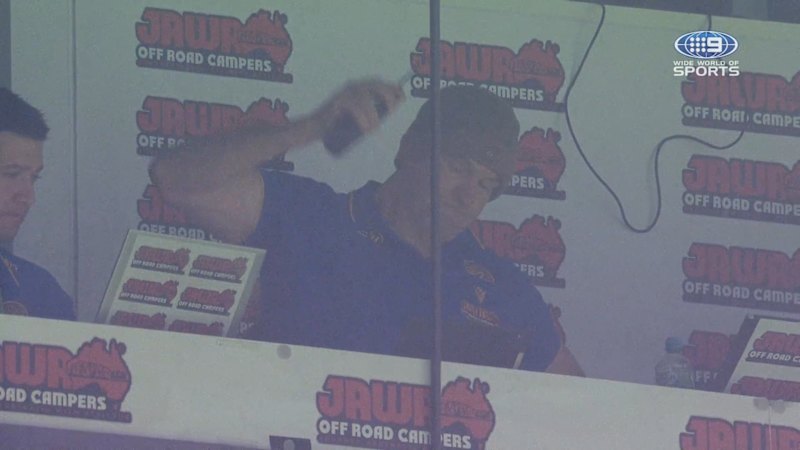
Ryles blows up in coach's box
Eels coach Jason Ryles is left fuming after Euan Aitken scores a try for South Sydney.