Dev productivity metrics suck. Ops reviews are key for AI-accelerated eng orgs
Article URL: https://www.cortex.io/drive Comments URL: https://news.ycombinator.com/item?id=48850428 Points: 8 # Comments: 1
AUTHORED BY Ganesh Datta Co-Founder & CTO at Cortex DRIVE is a framework for measuring engineering organizational health in the age of AI. It assesses organizational effectiveness across five pillars—Delivery, Reliability, Initiatives, Vigilance, and Efficiency—and the recurring review that turns those measurements into action. Software engineering is having its industrial revolution.
We've gone from writing code by hand to building software factories. The controls and frameworks that govern the accelerated output have not caught up, while the gap continues to widen as AI takes on more of the work. The engineer’s job is changing As agents automate more of the SDLC, engineering work increasingly shifts to designing and operating the systems that produce software.
The organization's hardest questions shift with them, into the operational layer. Velocity is outpacing the controls AI accelerates output, but the controls layer hasn’t kept pace. Without a counterweight, that pressure compounds.
The missing layer is organizational backpressure: the brakes and signals that hold the system stable. Organizational health needs its own framework Other engineering frameworks measure developer and team productivity. Whether the organization can sustainably turn customer needs into reliable software is a different question, at a different altitude.
DRIVE measures whether an organization is sustainably turning customer needs into reliable software. Delivery Are we shipping fast and is it sustainable? Reliability Are we delivering on our promises to customers?
Initiatives Are our org-wide engineering investments making progress? Vigilance Are we actively defending our systems and managing our acceptable risk? Efficiency Are we allocating resources to the right problems?
“Are we shipping fast and is it sustainable?” AI has eliminated the constraint on writing code, but every other bottleneck in the SDLC remains, and improving anything other than the binding constraint yields no real gain. This pillar measures both the structural and human capacity to sustain high performance.
CRITICAL METRICS Deploy frequency. Lead time for changes. On-call pager volume.
“Are we delivering on our promises to customers?” AI makes it easier to write automated tests that give you a false sense of confidence. The reliability pillar is grounded in reality through the customer’s experience and expectations.
CRITICAL METRICS Functional SLO status (binary pass/fail). Sev0 and Sev1 incident count. “Are our org-wide engineering investments making progress?”
With AI drastically changing how engineering teams operate, org-wide engineering-driven initiatives are becoming more critical than ever to take full advantage of the benefits AI has to offer. CRITICAL METRICS Tier 1 initiative milestone completion rate. OpEx action item completion rate.
“Are we actively defending our systems and managing our acceptable risk?” AI code generation is introducing vulnerabilities and expanding attack surfaces faster than ever, making systemic security risk harder to ignore. DRIVE tracks the security posture of your engineering organization so you can stay ahead of what matters most to your customers.
CRITICAL METRICS Open Critical and High fixable CVEs. Assets below the minimum compliance and security bar. Orphaned assets.
“Are we allocating resources to the right problems?” As teams adopt agentic workflows and ship AI-enabled products, token spend is climbing fast, reshaping how resources in dollars and engineering time are allocated. DRIVE tracks how capacity is split between innovation and maintenance.
CRITICAL METRICS Cloud spend versus budget. Internal AI and LLM token costs. Percentage of capacity spent on innovation.
The Operational Excellence review is the recurring leadership ritual that treats the engineering organization as a complex system, measures it against DRIVE, and reallocates time, people, and money to close the gaps. The practice has roots in manufacturing, where Operational Excellence emerged as a discipline for treating an entire factory as one observable, continuously improving unit. Many leading engineering organizations already run their own versions.
A weekly operational review that reaches the most senior engineering leadership. Facilitator-led reviews that shape resource decisions. API reliability sits above 99.
999%. Blameless production meetings that feed capacity planning. The review takes a different shape as an organization grows, from a single global review at smaller companies to separate local and org-wide reviews at enterprise scale.
Startup / mid-market One global review Weekly Enterprise Local team review Weekly or biweekly Org-wide review Weekly or biweekly Read the full framework to see a breakdown of each meeting format: attendees, agenda, and more. See how your organization measures up across the DRIVE pillars and get personalized recommendations. Powered by Scorecards for the metrics that matter Purpose-built workflows Track i
Đọc thêm từ Công nghệ
OpenAI's GPT-5.6 and ChatGPT Work aim to beat Anthropic on price, speed, and productivity
OpenAI's latest announcement looks like a lot more than a model upgrade.

Google will now tell you if an ad was made with AI
You can see if ads on Google Search, Google Discover, and YouTube were made or edited using AI from a new section in Google's "My Ad Center," as reported earlier by TechCrunch. The update, announced on Thursday, adds a "created or edited with AI" label under the "how this ad was

PitchBook: US venture funding hit $412.7B in H1 2026, up 30% on all of 2025, with AI startup funding accounting for 86%, or $355.9B; Q2 saw seven $1B+ rounds (Duncan Riley/SiliconANGLE)
Duncan Riley / SiliconANGLE: PitchBook: US venture funding hit $412.7B in H1 2026, up 30% on all of 2025, with AI startup funding accounting for 86%, or $355.9B; Q2 saw seven $1B+ rounds — U.S. venture capital deal value hit $412.7 billion in the first half of 2026, nearly 30% mo
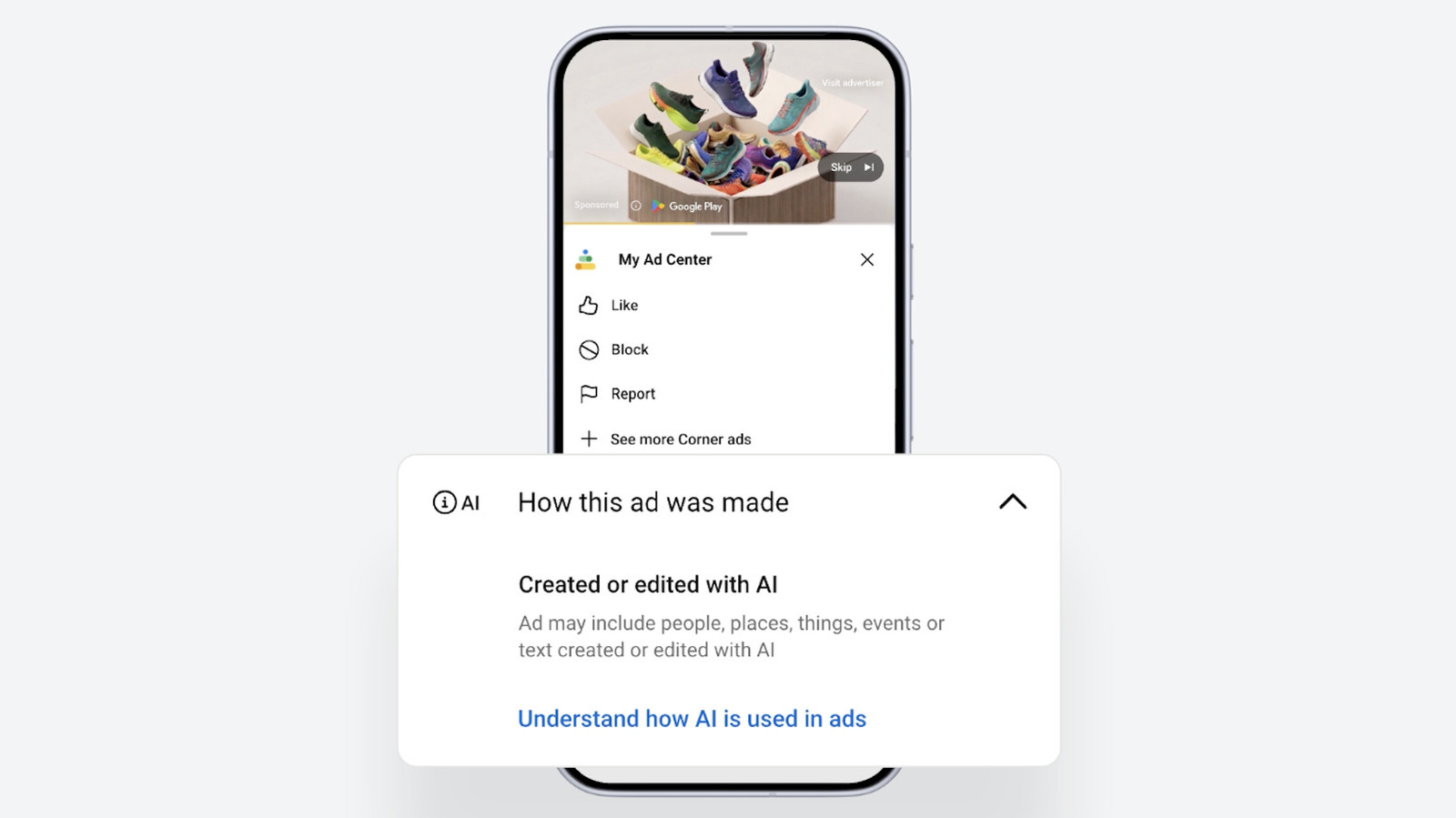
AI-generated ads on Google will hopefully get disclosures soon
If Google's AI tools are used, it will automatically be noted in My Ad Center.