Days disrupted: Across the world, Iran war's effects trickle into everyday life one human at a time
Across seven countries, seven people woke up to days that no longer looked the way they once did
Across seven countries, seven people woke up to days that no longer looked the way they once did.The war in Iran began months ago and thousands of miles away. But its effects quickly ricocheted across the world — oil markets first, sending fuel prices higher.
Then the shock moved outward — into farms, factories and family budgets. Into the fabric of life.The global economy remains tethered to fossil fuels that also drive climate change.
A severe shock to that system could push 45 million more people into poverty, the United Nations Development Program warned.For those far from the battlefield, the war arrived not as missiles or air raids, but through the disruptions of everyday life: businesses that no longer worked, goodbyes filled with fear, and livelihoods pushed closer to the edge. Here are a few of their stories.
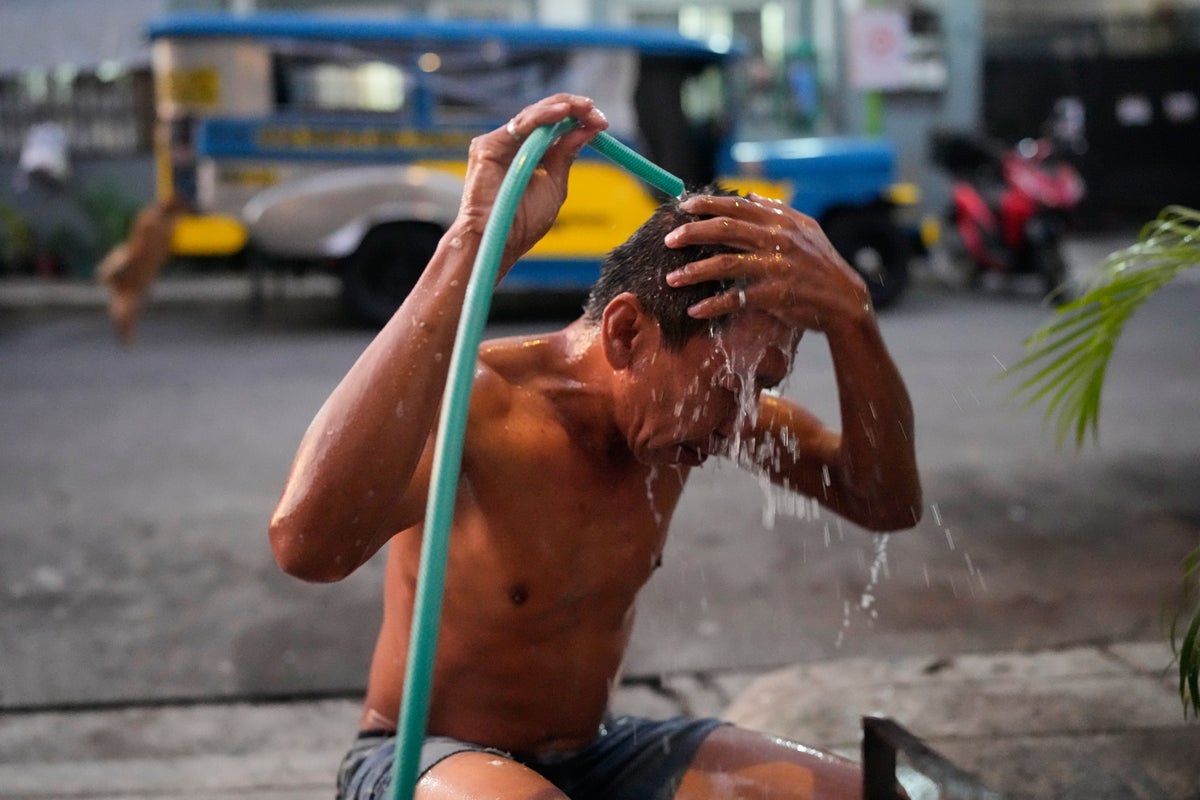
The Philippines: Bathing with laundry soap WHO/WHERE: Edgar Funelas, ManilaDAY OF DISRUPTION: April 10Funelas bathes beside his vehicle, moving quickly before the city wakes. He pours water over his head from a green pipe. Behind him, his jeepney stands still and worn.
His 10-year-old daughter is asleep inside.He uses laundry soap — harsher, but cheaper — to wash his body and his clothes in the same motion, stretching what little money he has. Even before the war in Iran, he was living on the margins.
A fire took their home and their belongings, forcing them to move into the brightly colored minibus he drove.He'd hoped to be able to rent a room by now. Then diesel prices surged and he could no longer afford the fuel to run his jeepney.
He hasn’t earned a single peso in days. There will be no breakfast. Hunger gnaws, but it’s the small rituals of privacy that he misses most: to be able to wash out of sight, to sleep behind walls, to keep his desperation from being laid bare.
That morning, after rinsing himself, he hopes to find work as a dispatcher at a nearby jeepney terminal — organizing the line of vehicles, calling drivers forward in turn, and packing passengers into each jeep.For weeks, he and his daughter have been eating only what others can spare. She has already left school.
At night, he drinks water and leaves the food for her, so she can go to bed with a full stomach.Before the war, he made about $8 a day driving, sometimes twice that on good days. Now, for each vehicle he fills, he will earn about 16 cents — barely enough to buy a piece of bread.
“This is what we do. Coping and hoping prices will get lower. Hoping that the war will end.
And to try to find ways to earn, so we can at least eat.” United States: Balancing budget and family WHO/WHERE: Marlyn Garcia, New YorkDAY OF DISRUPTION: June 30On a Tuesday morning, Garcia, 25, steps out of a food pantry with two bags filled with rice, pasta, fresh produce and other staples. The groceries will help feed her family through another week.
The food is free — a small reprieve for a household budget strained by higher gasoline prices after the war in Iran. But Garcia also has to calculate her days: doctor’s appointments, her 3-year-old son’s occupational therapy session, picking up her daughter, making dinner.And before any of that, there is parking.
Finding a street spot can take up to an hour. Each slow lap around the block burns fuel as the meter keeps ticking.She came to New York from the Dominican Republic as a child and spent part of her teens in the city’s shelter system with her mother.
Today she works part time as a breastfeeding peer counselor in the Bronx. Her partner, Steven Espaillat, lost his job as a legal assistant in March and now picks up Uber shifts while searching for permanent work.Their Toyota Camry has become indispensable.
Three adults share it. Garcia and Espaillat use it the first half of the week; her mother-in-law uses it the second. That Monday, she bought gas at $3.
97 a gallon ($1.05 per liter). With fuel prices in flux, every mile now has to be planned.
The family lives in a rent-stabilized apartment that costs $800 a month. Government food assistance helps fill the refrigerator. Higher gas prices are eroding their savings and she has begun taking every extra shift she can, especially those she can work from home.
Garcia still hopes to start graduate school, inspired by her son’s developmental needs to help families like hers. She reminds herself that others have it worse. But the arithmetic of survival keeps getting harder.
Still, she keeps making the numbers work because of the two small children waiting at home. “It’s summer so they always want an ice cream and I want to make sure I have that extra cash there for them," she says. “They shouldn’t be able to suffer because of whatever is going on around the world.”
Nigeria: Trying to keep the generator running WHO/WHERE: Oluwatosin Awodunmila, LagosDAY OF DISRUPTION: June 5Awodunmila and her husband, co-owners of a printing business in Somolu, a mixed-income residential suburb in central Lagos, arrive early as usual, after dropping their two children at school.The
Đọc thêm từ Thế giới
삼육대 서경현 교수, 세계응용심리학술대회서 기조강연
본문경제기업PR삼육대 서경현 교수, 세계응용심리학술대회서 기조강연수정 2026-07-27 17:22펼침0:00Your browser does not support theaudio element.구글 선호 매체 등록응용심리학 분야 최고 권위 학술대회 ‘일상 속 음악 활용의 심리적 효과’ 주제로 웰빙 증진 기제 발표서경현 삼육대 교수의 기조강연 (삼육대학교 제공)광고삼육대 상담심리학과 서경현 교수는 응용심리학 분야 최고 권위 학술대회인 제31회 세계응용심리학술대회(International Congre

서금원 “새도약기금 구제 대상서 빠졌던 미소금융도 참여 논의 시작”
본문경제금융·증권서금원 “새도약기금 구제 대상서 빠졌던 미소금융도 참여 논의 시작”조계완,안태호기자수정 2026-07-27 17:37펼침0:00Your browser does not support theaudio element.구글 선호 매체 등록서울 시내에 붙은 대출 광고. 연합뉴스광고기초생활수급자 등 우리 사회에서 가장 취약한 금융계층에게 1인당 수백만원씩 생계비 혹은 사업자금으로 대출해주는 ‘미소금융’ 장기 연체채권이 새도약기금의 매입·소각(빚 탕감·구제) 대상에서 빠져 있는 것으로 나타났다

18년간 바다를 지킨 2,500톤의 손길...포스코 클린오션 봉사단, '무인도서'까지 해양 정화 나서
본문경제기업PR18년간 바다를 지킨 2,500톤의 손길...포스코 클린오션 봉사단, '무인도서'까지 해양 정화 나서수정 2026-07-27 17:27펼침0:00Your browser does not support theaudio element.구글 선호 매체 등록- 포항·광양 지역 넘어 무인도서(無人島嶼)·제주도·울릉도·독도까지 해양정화 활동 확대- 해양환경공단, 울릉도·독도해양연구기지 등 민관 협력 강화…

중앙대, 서울 RISE 10 챌린지 최종 선정… AI 기반 탄소중립 도시 구현을 위한 장기 연구 본격화
본문경제기업PR중앙대, 서울 RISE 10 챌린지 최종 선정… AI 기반 탄소중립 도시 구현을 위한 장기 연구 본격화수정 2026-07-27 17:28펼침0:00Your browser does not support theaudio element.구글 선호 매체 등록중앙대 서울캠퍼스 정문 (중앙대학교 제공)광고중앙대학교(총장 박세현)가 서울특별시가 추진하는 2026 서울 지역혁신중심 대학지원체계(RISE) 'RISE 10 챌린지' 공모사업에 최종 선정됐다.