China's Aerospace-Grade Carbon Fiber Breaks Free from Foreign Dependency with Major Production Expansion
Zhongfu Shenying opens three high-performance carbon fiber production lines in Lianyungang, reducing China's dependence on Japanese Toray and US suppliers for critical aerospace materials.
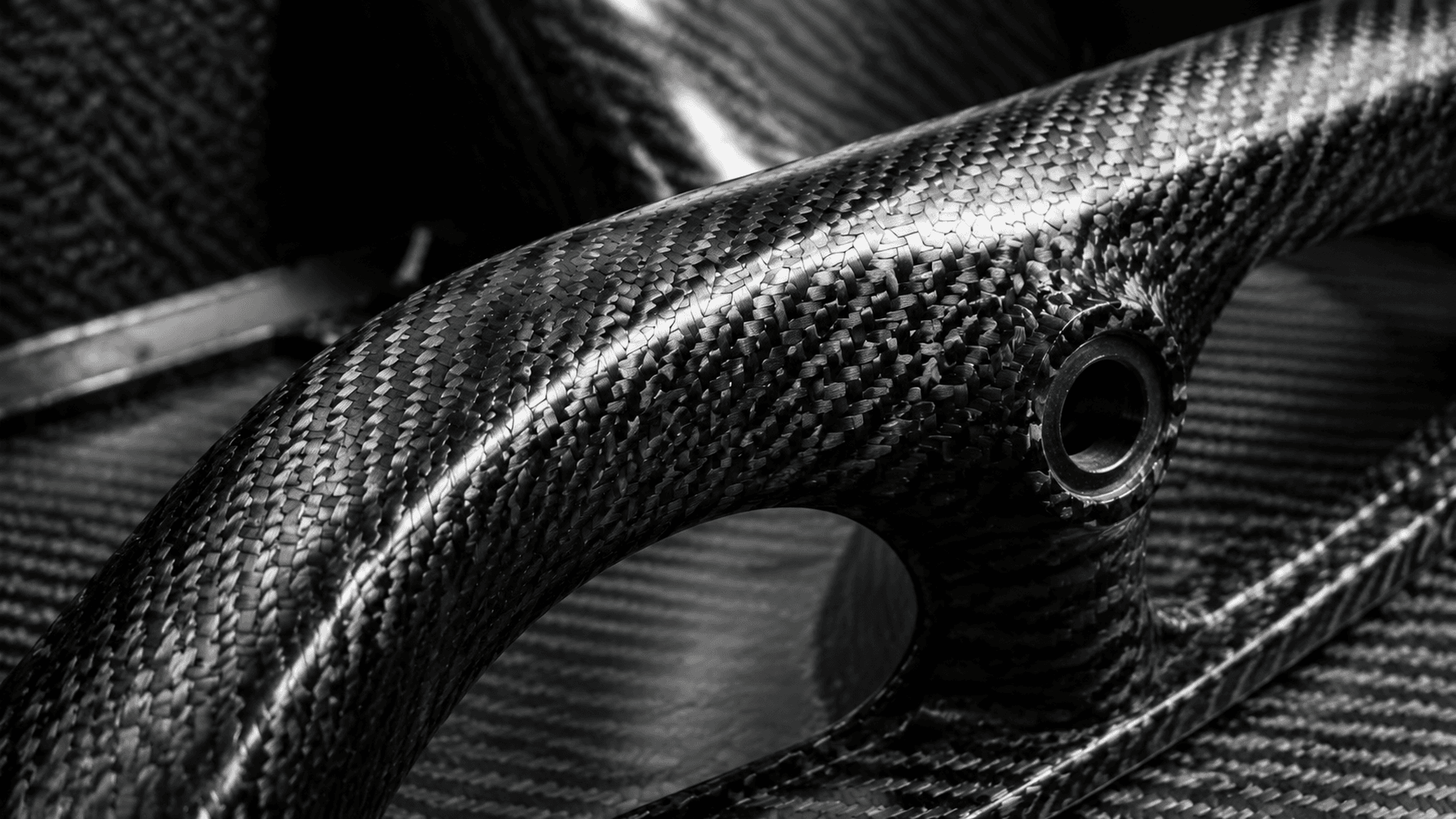
China has taken a major step toward self-sufficiency in aerospace-grade carbon fiber, as Zhongfu Shenying Carbon Fiber Co. inaugurated three high-performance production lines at its Lianyungang base on June 28, signaling a shift in the nation's ability to produce the critical composite material independently of foreign suppliers. The three new lines include a 5,000-ton large-tow carbon fiber line, a 1,000-ton T1100-grade line with 4-meter width capability, and a 600-ton high-modulus line.
Together, they address three fundamental barriers that have long constrained China's aerospace composites industry: cost, strength, and dimensional stability. For years, China's aerospace sector relied heavily on Japan's Toray Industries and US defense contractors for high-end carbon fiber. Toray's product numbering system — T300, T700, T800, T1100 — became the de facto global standard, and the company's material performance databases, built over decades with clients including Boeing, Lockheed Martin, and Bell, created a formidable barrier to entry.
As one industry observer noted, the situation was characterized as "notification-style pricing and rationed supply" — Chinese manufacturers had limited control over delivery schedules and pricing. High-end carbon fiber has been explicitly controlled under US export regulations alongside semiconductors and advanced software. Toray's T1100/3960 prepreg system, for instance, has entered the US Army's Future Long-Range Assault Aircraft supply chain, with Alabama-based T1100 capacity expansion publicly linked to national defense industrial base considerations.
China's challenge was never simply matching a single performance metric — the real barrier was building a complete composites industrial system encompassing precursor materials, furnace parameter control, surface treatment, prepreg manufacturing, and most critically, long-term engineering data accumulation across thousands of production batches. US and Japanese producers had decades of
Đọc thêm từ Công nghệ

3 méthodes simples pour dupliquer l'écran de votre smartphone Android sur la TV du salon
Votre smartphone Android est un formidable outil pour capter les diffusions officielles en haute définition. Mais hors de question de s'abîmer les yeux sur un petit écran de 6 pouces ! Voici les trois méthodes les plus efficaces et fiables pour dupliquer l'écran de votre smartpho
Prime Day is over, but these 5 deals are still live (and you don't want to miss them)
Amazon Prime Day is over, but some of my favorite offers are still available, including deals on the Ninja Slushi, Garmin Fenix 8 Pro, Walmart Plus, and more.

Shanghai-based Momenta, whose driver-assist tech is used by Toyota, Mercedes, and Audi in China, files for an IPO in Hong Kong, seeking to raise up to $751.1M (Reuters)
Reuters: Shanghai-based Momenta, whose driver-assist tech is used by Toyota, Mercedes, and Audi in China, files for an IPO in Hong Kong, seeking to raise up to $751.1M — Chinese self-driving technology firm Momenta Global launched its Hong Kong initial public offering on Monday …

Funded: I keep a notebook by my bed with one question about SEA climate
I keep a small notebook by my bed. Not for ideas. Just things I don’t want to forget. Last week I wrote: “What does this place look like in 2040?” Not for a deck. Not for a client. I don’t have kids. The usual anchors people use to think about the future, school fees, inheritance