Can Japan avoid a Liz Truss-style shock as its PM embarks on a giant spending spree?
Sanae Takaichi’s blueprint to inject £1.7tn and double economic growth leaves many investors fearfulInternational investors are asking where Japan’s prime minister will find the ¥370tn (£1.7tn) of extra cash that she wants to invest in 17 industrial sectors by 2040.Such is the sc
Sanae Takaichi, leader of the ruling Liberal Democratic Party, puts a red paper rose on the name of an elected candidate at February’s general election. Photograph: Kim Kyung-Hoon/ReutersView image in fullscreenSanae Takaichi, leader of the ruling Liberal Democratic Party, puts a red paper rose on the name of an elected candidate at February’s general election. Photograph: Kim Kyung-Hoon/ReutersCan Japan avoid a Liz Truss-style shock as its PM embarks on a giant spending spree?
Sanae Takaichi’s blueprint to inject £1.7tn and double economic growth leaves many investors fearfulInternational investors are asking where Japan’s prime minister will find the ¥370tn (£1.7tn) of extra cash that she wants to invest in 17 industrial sectors by 2040.
Such is the scale of spending by Sanae Takaichi’s coalition government that many in her own party fear she is about to blow up the Japanese economy, triggering a Liz Truss-style economic shock.Nerves are also jangling in financial markets, where investors are stunned by the plans of a usually sober Japanese government to rewrite previous budget rules and embark on a wide-ranging and unfunded shopping spree.The roots of Takaichi’s frustration date back to the financial crisis of 1991, when Japan’s property market bubble burst with spectacular effect.
Tokyo had become the world’s most expensive place to live following the country’s export boom, but within months of the crash, banks behind much of the lending were bust.Before the turn of the century, a second slump brought more turmoil when some of Tokyo’s largest financial institutions, unable to cope with the hangover of bad debts from the first crash, went under.In the late 1980s, Japan’s government debts were equal to about 60% of national income, or gross domestic product (GDP).
By the end of the 1990s, and after much of the financial sector had been bailed out, the debt to GDP ratio was 130%.Since the 2008 global financial shock, the economy has stagnated. In response, the government has regularly spent 10% more than it receives in tax receipts – much of it to cope with a rapidly ageing population – and debts have continued rising.
By 2020, the debt-to-GDP ratio had reached 260% before tighter budgets and a modest improvement in economic growth brought it below 230% in 2025.Takaichi has said her investment plan will lift the productive capacity of the economy, keep Japan at the forefront of the AI revolution, and free the economy from its increasing dependence on trade with China.The stock market has reacted with a succession of downward steps ever since the proposals were unveiled in June, though the renewal of hostilities in the Middle East and the prospect of higher oil prices have not helped.
Bank of Japan raises interest rates to 31-year high … of 1%Read moreMany investors sold up almost as soon as the government arrived in office, hitting the shares of the country’s biggest companies, among them Sony and Toyota Motor Corporation.Sony faces intense competition from rivals in South Korea and China while Toyota has stood out against all-electric cars, and now faces being crushed by a flourishing and highly subsidised Chinese car industry.
Graph of Japanese interest rate rises from before 2024 and forecast beyond 2026Domestic and international lenders have pushed up the interest rate on Japanese government bonds (JGBs) to 2.8% in recent months, the highest in 29 years.Waning international support for Japan’s economic outlook has also hit the value of the yen.
More recently it is Takaichi’s boldness, which like Truss’s is often characterised as recklessness, that has acted as a heavy weight on the currency, pushing it down to 163 to the US dollar, a four-decade low.Much of the blame for higher debt bills is connected to rising inflation, which has tracked upwards as the yen has fallen, largely because a low currency rate raises the price of imports of energy and raw materials.Although Japan’s core inflation has remained below the BoJ’s 2% target over the last four months, analysts a jump in the last quarter to the mid-2% range on higher oil prices following the Iran war.
Kelvin Lam, an Asia specialist at the consultancy Pantheon Macroeconomics, has said what the financial markets really fear is the lack of detail about where the fresh investment money will come from.“As long as you don’t say how you are going to finance your spending, you are on course for a Liz Truss moment,” he said, referring to the market response to the short-lived British prime minister’s plans for £45bn of unfunded tax cuts in September 2022.“The markets were already worried about Japan’s long term fiscal health and this plan hasn’t helped.”
View image in fullscreenSanae Takaichi, third from right, at the G7 summit in Evian-les-Bains, France, last month. Photograph: Thibault Camus/ReutersTakaichi’s conservative coalition secured victory last autumn with a slim majority that received a massive boost after she called February’s snap election, giving
Đọc thêm từ Tài chính

DeepSeek tells prospective investors of funding pause, Bloomberg News reports
Close Top Stories Asia East Asia Singapore World Commentary CNA Explains Sustainability Business Sport Latest News Insider TODAY Big Read Up Close In Pixels Ground Up Voices Adulting Mental Health Matters Watch Live TV News Reports Documentaries & Shows TV Schedule Listen CNA938
The IRA Donation Trick That Lowers Your Tax Bill and Never Touches Your Medicare Premium
Quick Read A Qualified Charitable Distribution (QCD) from an IRA counts toward the RMD but is excluded from MAGI, keeping it invisible to Medicare's IRMAA surcharge calculation. Routing just $10,000 of an RMD as a QCD can drop MAGI below the $109,000 single-filer IRMAA threshold,
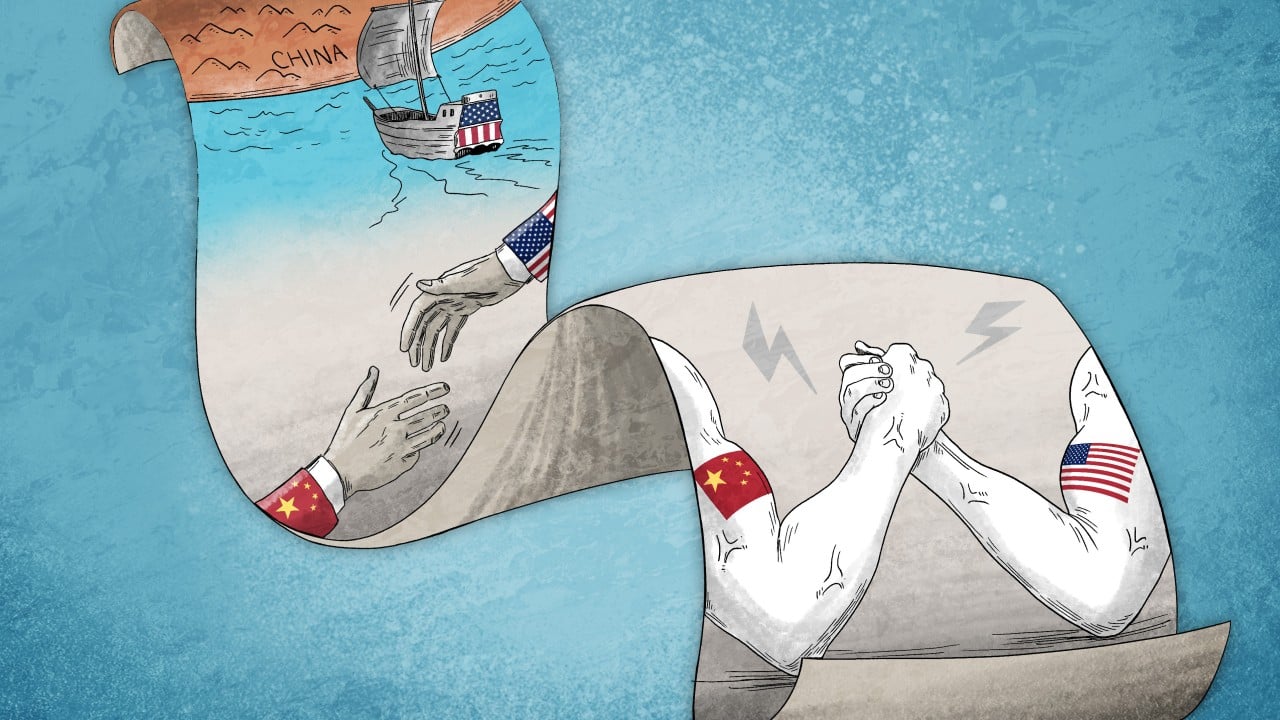
How America’s 250-year China dream became its greatest strategic challenge
One morning in February 1784, a converted privateer called the Empress of China sailed out of New York harbour. It was bound for a country almost no one aboard had ever seen – China, then ruled by the Qing dynasty. Six months later, it dropped anchor at Canton, the only port wher