Breakthrough treatment possibilities for little-known brain condition that affects millions
Cerebral small vessel disease (CSVD), which notably increases the risk of stroke and cognitive disorders, is estimated to affect more than 5 million people in France alone
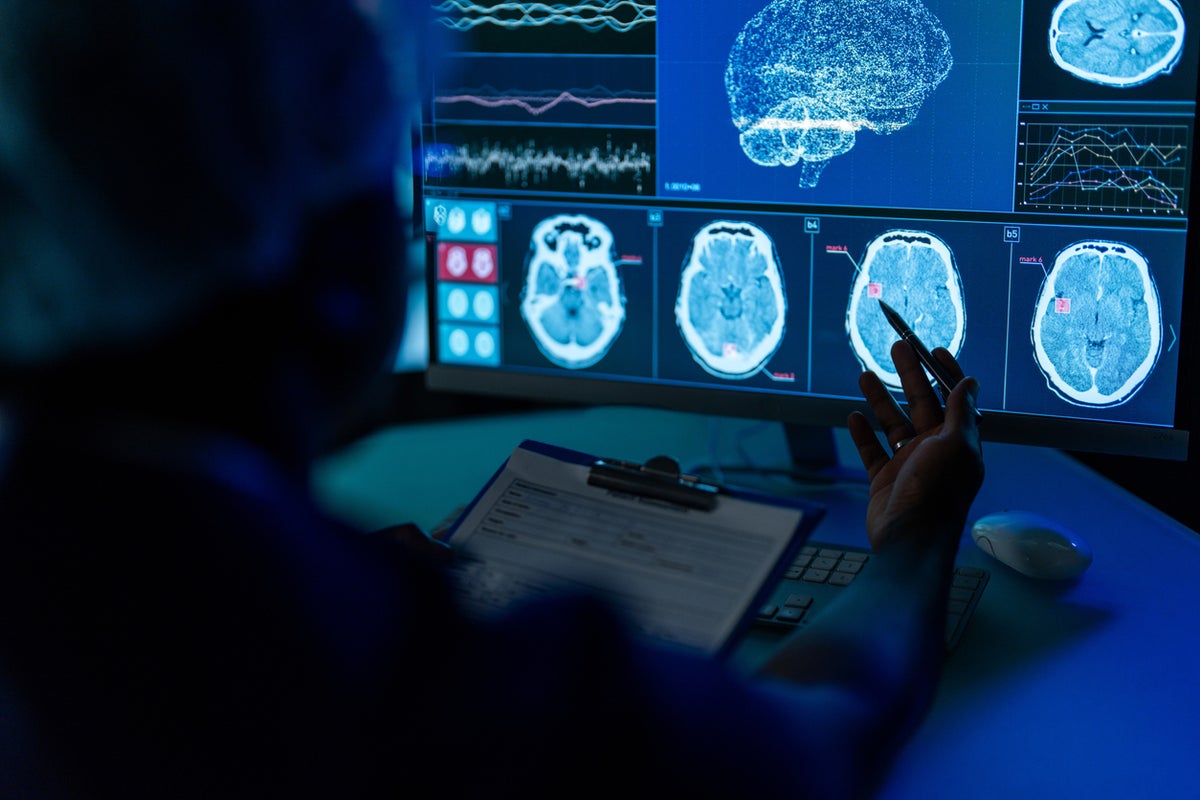
Cerebral small vessel disease (CSVD), which notably increases the risk of stroke and cognitive disorders, is estimated to affect more than 5 million people in France alone. In the absence of a curative treatment, the prevention of cardiovascular risk factors remains the most effective strategy today. However, promising new therapeutic avenues are being explored.
Cerebral small vessel disease is a chronic condition that affects the smallest arteries of the brain, those that continuously supply the deep regions essential for memory, attention, and coordination.Over time, these vessels become stiffer, thicken, or become more fragile and permeable. The consequences of this situation are far from insignificant, since cerebral small vessel disease promotes strokes, cognitive disorders, walking difficulties, as well as loss of independence.
In France, cerebral small vessel disease is estimated to affect more than 5 million people aged 65 and over. To date, no treatment is available to cure it.open image in galleryIn France, cerebral small vessel disease is estimated to affect more than 5 million people aged 65 and over (Getty Images)In Bordeaux at the Laboratory of Cardiovascular Disease Biology, directed by Thierry Couffinhal, and the Vascular Brain Health Institute (founded by Stéphanie Debette, now Director of the Brain and Spine Institute), we are trying to gain a better understanding of the origin of the disease.
Here is what we currently know about it.A disease that is difficult to detectWhen the small arteries supplying the brain are affected by cerebral small vessel disease, the brain receives less oxygen and fewer nutrients than it needs.In addition, the cells lining these blood vessels contribute to the formation of the blood-brain barrier (BBB), a structure that is essential for brain health.
This barrier normally acts as a highly selective filter between the blood and the brain. When it becomes more permeable, unwanted substances can enter the brain tissue and contribute to its gradual deterioration.Cerebral small vessel disease is often silent in its early stages.
It is not uncommon for it to progress for years without any striking signs, and the first indications of its presence may be subtle: slowed thinking and balance disorders, cognitive fatigue, or unusual forgetfulness. It can also lead to strokes.To detect it, brain magnetic resonance imaging (MRI) remains the reference tool today.
It makes it possible to observe characteristic lesions, sometimes present even before the first symptoms, such as microbleeds, lacunes (small cavities indicating previous small vessel damage), and above all white matter hyperintensities, in other words abnormalities that reflect chronic damage to brain tissue.As a reminder, white matter, which accounts for nearly half of the brain’s volume, is the part corresponding to the network of nerve fibres. These fibres can be viewed as ‘highways’ that allow electrical signals to travel between the different regions of the brain.
Treatments are still too limitedTo date, there is still no drug specifically designed to cure cerebral small vessel disease. However, lesions can be detected several years before symptoms appear, and their progression can be slowed through early management of cardiovascular risk factors.It is known that certain diseases, such as diabetes, cardiovascular disease, or chronic kidney disease, appear to promote the worsening of small vessel lesions in the brain.
No systematic screening is currently planned, mainly because the diagnosis relies essentially on MRI, an expensive examination that is difficult to extend to the entire population.Doctors mainly focus on the factors that scientific research has shown can influence the risk of developing the disease, including high blood pressure, diabetes, and cholesterol, as well as smoking and physical inactivity.Although prevention is essential, it does not directly target the biological mechanisms that damage the brain’s small blood vessels.
These mechanisms are still poorly understood, but among the main hypotheses proposed to explain the development of the disease are dysfunction of the cells lining the inside of blood vessels (endothelial cells), disruption of the blood-brain barrier, chronic inflammation, and oxidative stress. This latter phenomenon, which could be compared to “biological rust”, gradually damages blood vessels.It is precisely at this level that our research is focused.
Our recent work provides new insight into the mechanisms of the disease, opening up new therapeutic perspectives.A new avenue: protecting blood vessels from withinTo better understand cerebral small vessel disease, we have undertaken to dissect its mechanisms at the cellular and molecular levels. Our ambition is to move from preventive medicine to a form of medicine capable of directly repairing and protecting the brain’s microvessels.
Our research has led to the identification of a promising target called TRIM47 (TRIpartite Motif
Đọc thêm từ Thế giới
EU countries to restore interim measure on allowing Big Tech to fight online child pornography
BRUSSELS, July 23 - EU countries endorsed a proposal on Thursday to reintroduce a temporary measure allowing Google, Meta and other online platforms to detect and remove online child sexual abuse materials without breaching privacy rules.

Nanaimo ‘stranger homicide’ suspect previously convicted of assaulting teen in alleged abduction attempt
Cameron Compton was charged Monday with the second-degree murder of Sherry Shelley near Lantzville and interfering with human remains in Nanaimo from Nov. 13 to Nov. 14, 2025.

St. Thomas, Ont. man facing charges after woman kidnapped, sexually assaulted
A 44-year-old St. Thomas, Ont., man is facing charges after a woman was allegedly kidnapped and sexually assaulted in London last month.
UK says armed forces ready to defend country after Iran warning over US bombers
LONDON, July 23 - Britain said on Thursday its armed forces were ready to protect the country from any attack after Iran's Revolutionary Guards issued a warning over allowing U.S. bombers to fly from UK bases.