Blue Origin starts rebuilding launch pad damaged by New Glenn rocket explosion — and it will look very different when it's done
Blue Origin has started rebuilding the launch pad damaged by the explosion of its New Glenn rocket last month, but the company is working from a very different blueprint this time around.
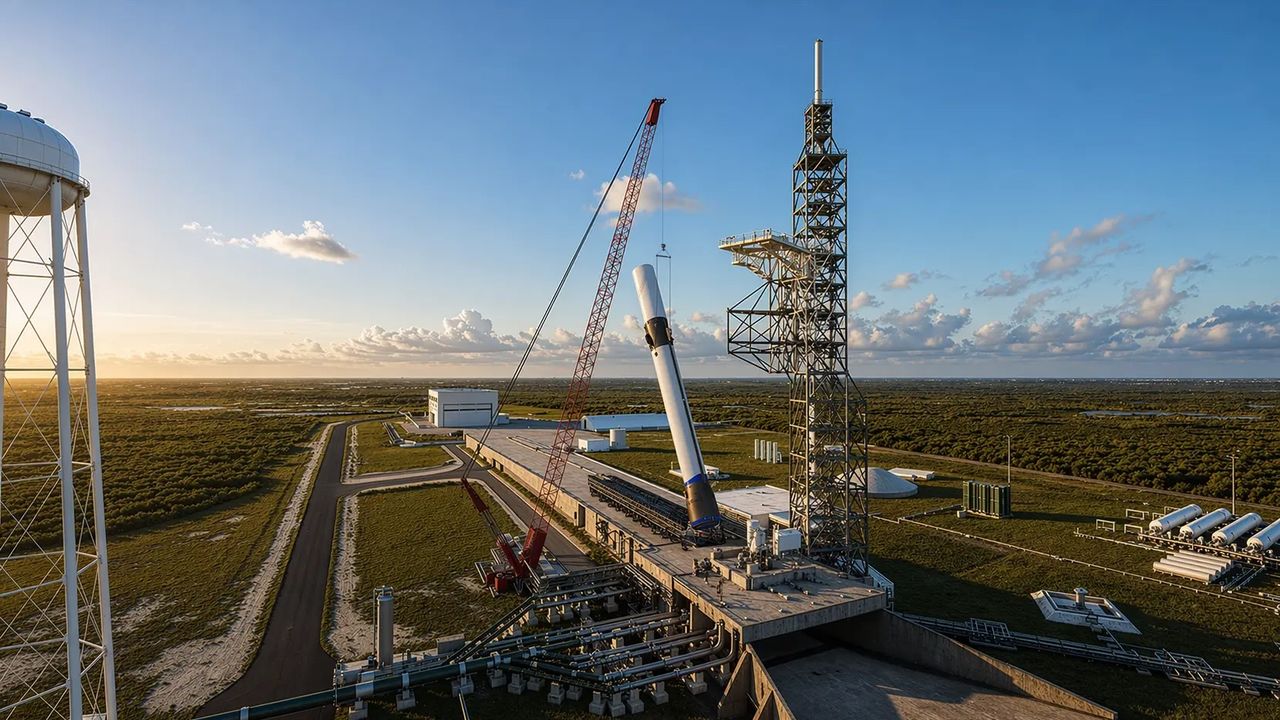
Skip to main content Click for next article Blue Origin plans to use a crane to lift its New Glenn rocket onto its rebuilt launch pad at Cape Canaveral Space Force Station in Florida. (Image credit: Blue Origin) Copy link Facebook X Whatsapp Reddit Pinterest Flipboard Email Share this article 0 Join the conversation Follow us Add us as a preferred source on Google Newsletter Subscribe to our newsletter Blue Origin has started rebuilding the launch pad damaged by an explosive accident last month, but the company is working from a very different blueprint this time around.The company's huge New Glenn rocket exploded on May 28 during a routine engine test at Launch Complex 36A (LC-36A) at Florida's Cape Canaveral Space Force Station.
The rocket was destroyed, as were some important pieces of pad infrastructure, including the lightning tower and the transporter-erector, which hauled New Glenn from its integration facility to the pad and raised it vertical upon arrival.Blue Origin has vowed to bounce back quickly, aiming to fly the 320-foot-tall (98-meter) New Glenn again by the end of the year. Getting LC-36A rebuilt is a high priority, for the pad is currently New Glenn's only jumping-off point.
And Blue Origin has made significant progress on this front the company announced today (June 30)."Hardware recovery and debris removal operations are complete, and reconstruction of the pad has started," the company's CEO, Dave Limp, said in a statement today.Reconstruction will not create a facsimile of the original LC-36A, however.
Blue Origin is building a new version of the pad, one that lines up with a new concept of operations (ConOps) for New Glenn launches."We're moving to a horizontal/vertical hybrid configuration to get us flying again this year at 36A," Limp said via X today. "Let me explain what that means.
We mate the stages horizontally in the Integration Facility (IF). Then we bring the integrated vehicle out to the pad, use a crane to perform the vertical breakover, and mate the payload once New Glenn is vertical. This new ConOps has the added benefit of increasing our flight cadence as well."
So the refurbished LC-36A will have a crane rather than a transporter-erector, and payload mating will occur at the pad rather than inside the IF.According to Limp, Blue Origin had already been planning to employ this "hybrid" ConOps for the super-heavy version of New Glenn that it's developing, called the 9X4. That name references the engine configuration of the coming vehicle: nine of Blue Origin's BE-4s on its first stage and four BE-3Us in its upper stage.
The current version of New Glenn is a 7X2. It can haul about 50 tons (45 metric tons) of payload to low Earth orbit. The 9X4 will be able to carry 77 tons (70 metric tons) to LEO and will also feature a bigger payload fairing — one that's 28.
5 feet (8.7 meters) wide rather than 23 feet (7 m).Blue Origin had already been developing another Cape Canaveral pad, LC-36B, to accommodate 9X4 launches.
That pad is being readied for the "hybrid" ConOps as well, according to Limp. Artist's illustration of Blue Origin's New Glenn launching from the reconstructed Pad 36A at Cape Canaveral Space Force Station in Florida. (Image credit: Blue Origin)Today's update also let us know that Blue Origin has made some progress in its investigation into the May 28 anomaly, though more work needs to be done."
The vehicle is highly instrumented with extensive data from multiple camera angles and sensors, giving us confidence in our ability to identify and correct the root cause," Limp wrote. "Early analysis points to the aft section of the first stage." View More You must confirm your public display name before commenting Please logout and then login again, you will then be prompted to enter your display name.
Logout Mike WallSpaceflight and Tech EditorMichael Wall is the Spaceflight and Tech Editor for Space.com and joined the team in 2010. He primarily covers human and robotic spaceflight, military space, and exoplanets, but has been known to dabble in the space art beat.
His book about the search for alien life, "Out There," was published on Nov. 13, 2018. Before becoming a science writer, Michael worked as a herpetologist and wildlife biologist.
He has a Ph.D. in evolutionary biology from the University of Sydney, Australia, a bachelor's degree from the University of Arizona, and a graduate certificate in science writing from the University of California, Santa Cruz.
To find out what his latest project is, you can follow Michael on Twitter. Click for next article Blue Origin plans to use a crane to lift its New Glenn rocket onto its rebuilt launch pad at Cape Canaveral Space Force Station in Florida. (Image credit: Blue Origin) Copy link Facebook X Whatsapp Reddit Pinterest Flipboard Email Share this article 0 Join the conversation Follow us Add us as a preferred source on Google Newsletter Subscribe to our newsletter Blue Origin has started rebuilding the launch pad damaged by an
Đọc thêm từ Khoa học

Curiosity, Perseverance and Now Promise? NASA May Send a Mars Rover to the Moon.
As part of plans to establish a lunar base, the space agency may send to the moon a spare test version of the rover — as well as a soccer ball.

Dangerous heatwave to hit US ahead of holiday weekend
A dangerous heatwave will impact a large swath of the US this week, bringing scorching temps during celebrations for America's 250th birthday.

The Vera Rubin Telescope Begins Surveying Our Cosmos
The Vera C. Rubin Observatory is beginning the widest, deepest survey yet of the southern sky.
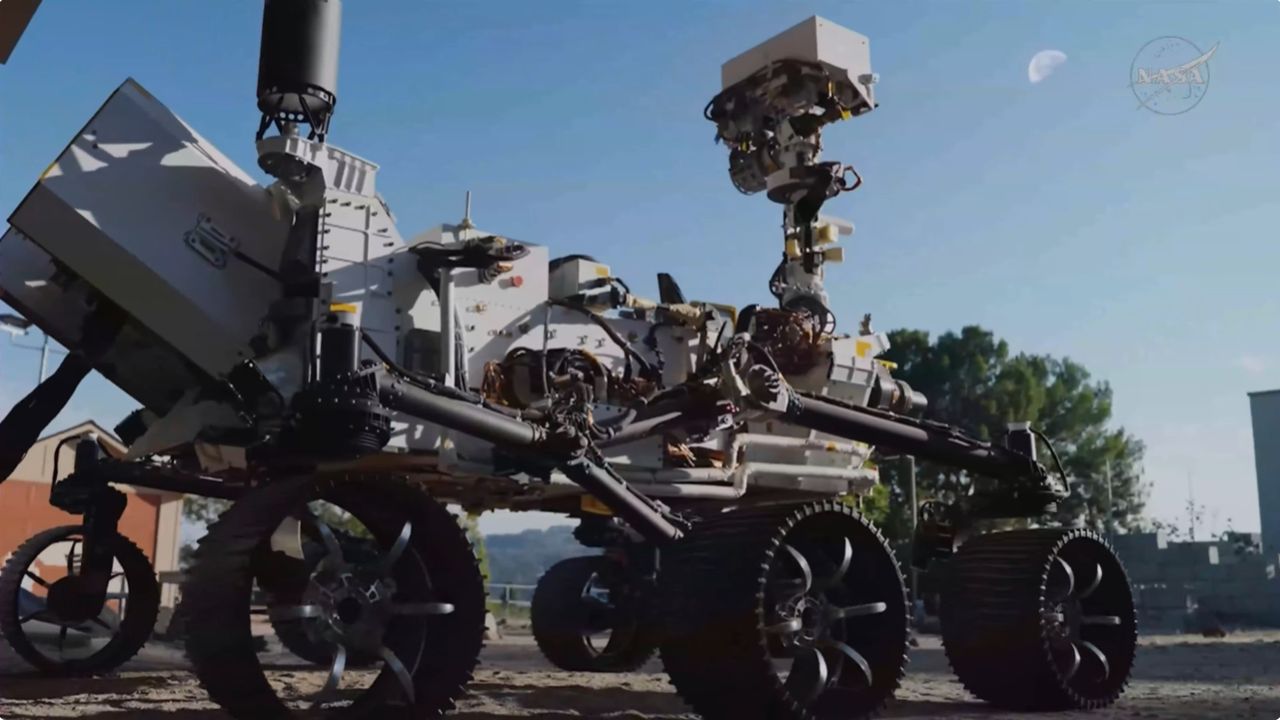
'PROMISE' me the moon? NASA wants to send spare nuclear-powered Mars rover to the lunar surface
NASA has announced new lunar landing contracts for its Artemis Moon Base program, as well as a potential new moon rover mission named PROMISE.