Bitcoin Policy Institute takes its AI foreign influence fight to Capitol Hill
The BPI's Capitol Hill engagement highlights the geopolitical stakes in AI infrastructure, potentially reshaping US tech policy and security. The post Bitcoin Policy Institute takes its AI foreign influence fight to Capitol Hill appeared first on Crypto Briefing.
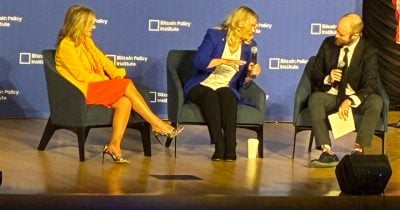
Via us-asean-dac.org Bitcoin Policy Institute takes its AI foreign influence fight to Capitol Hill The crypto-aligned think tank presented findings that CCP-linked operations have blocked or delayed $23.6 billion in US AI infrastructure projects across 14 states.
Share Add us on Google by Editorial Team Jul. 29, 2026 A think tank best known for advocating Bitcoin-friendly policy just held court in one of the most politically charged rooms on Capitol Hill, and the topic wasn’t crypto. It was China.
The Bitcoin Policy Institute hosted a fireside chat on July 29 in the House Select Committee on the CCP’s hearing room, presenting research that documents how foreign influence operations connected to the Chinese Communist Party have systematically targeted US AI infrastructure development. The conversation featured BPI Head of Research Sam Lyman and journalist Robby Soave. The numbers behind the influence campaign BPI’s research, published across two reports in May and June 2026, estimates that approximately $23.
6 billion in proposed AI infrastructure investments have been blocked or delayed as a result of these campaigns, spanning 21 separate campaigns across 14 different states. Advertisement BPI’s reports document that the influence operations are connected to 10 data center moratoria, one permanent ban on data center construction, and four proposals that were scrapped entirely. The initial report, released on May 18, 2026, zeroed in on two key vectors of influence.
First, CCP-affiliated state media amplifying opposition to AI infrastructure projects. Second, a nonprofit network funded by Neville Roy Singham, a Chicago-born tech entrepreneur whose financial ties to Beijing have drawn increasing scrutiny from lawmakers. A follow-up report released in late June detailed what BPI calls the “Singham ground game,” describing how organizations in his funding network, including the Party for Socialism and Liberation, have organized grassroots-style opposition to data center development in communities across the country.
Why a Bitcoin think tank cares about AI infrastructure Bitcoin mining and AI data centers share the same fundamental resource: cheap, abundant energy and physical infrastructure. The political and regulatory battles over where to build large-scale computing facilities affect both industries. A moratorium on data centers in a given county doesn’t distinguish between a facility training large language models and one mining Bitcoin.
Congressional interest in the Singham network has intensified, with lawmakers calling for deeper investigations into the funding flows and organizational connections. No cryptocurrency or digital asset was mentioned during the event or in the underlying reports. Disclosure: This article was edited by Editorial Team.
For more information on how we create and review content, see our Editorial Policy. MARKETS Bitcoin Policy Institute takes its AI foreign influence fight to Capitol Hill The crypto-aligned think tank presented findings that CCP-linked operations have blocked or delayed $23.6 billion in US AI infrastructure projects across 14 states.
by Editorial Team Jul. 29, 2026 Share Add us on Google Via us-asean-dac.org A think tank best known for advocating Bitcoin-friendly policy just held court in one of the most politically charged rooms on Capitol Hill, and the topic wasn’t crypto.
It was China. The Bitcoin Policy Institute hosted a fireside chat on July 29 in the House Select Committee on the CCP’s hearing room, presenting research that documents how foreign influence operations connected to the Chinese Communist Party have systematically targeted US AI infrastructure development. The conversation featured BPI Head of Research Sam Lyman and journalist Robby Soave.
The numbers behind the influence campaign BPI’s research, published across two reports in May and June 2026, estimates that approximately $23.6 billion in proposed AI infrastructure investments have been blocked or delayed as a result of these campaigns, spanning 21 separate campaigns across 14 different states. Advertisement BPI’s reports document that the influence operations are connected to 10 data center moratoria, one permanent ban on data center construction, and four proposals that were scrapped entirely.
The initial report, released on May 18, 2026, zeroed in on two key vectors of influence. First, CCP-affiliated state media amplifying opposition to AI infrastructure projects. Second, a nonprofit network funded by Neville Roy Singham, a Chicago-born tech entrepreneur whose financial ties to Beijing have drawn increasing scrutiny from lawmakers.
A follow-up report released in late June detailed what BPI calls the “Singham ground game,” describing how organizations in his funding network, including the Party for Socialism and Liberation, have organized grassroots-style opposition to data center development in communities across the country. Why a Bitcoin think tank cares about AI infrastructure Bitcoin m
Đọc thêm từ Tiền số / Crypto

Offchain Labs CEO makes the case for Arbitrum’s licensing model as Base walks away from Optimism revenue sharing
Arbitrum's licensing model may attract more developers, potentially shifting the competitive landscape in Layer 2 solutions and impacting market dynamics. The post Offchain Labs CEO makes the case for Arbitrum’s licensing model as Base walks away from Optimism revenue sharing app

Polymarket shows 53% odds of September rate hike while Fed futures markets sit at 32%
Divergent rate hike predictions highlight potential arbitrage opportunities and underscore the growing influence of crypto markets on financial forecasts. The post Polymarket shows 53% odds of September rate hike while Fed futures markets sit at 32% appeared first on Crypto Brief

Underdog’s UDX Hits $1.2M Day, About 5% of Estimated Companywide Flow
Underdog’s in-house UDX exchange recorded a reported $1.2 million in July 27 trading volume, reaching its first million-dollar day ten days after initial test trades. The result suggests Underdog avoided the usual cold-start problem for a new exchange, but UDX appears to be handl

Bank of Montreal completes $5B in synthetic risk transfers across two corporate loan portfolios
BMO's synthetic risk transfers highlight a growing trend among Canadian banks to optimize capital management amid rising investor demand. The post Bank of Montreal completes $5B in synthetic risk transfers across two corporate loan portfolios appeared first on Crypto Briefing.