Beyond the hyperscale cloud: DFINITY's vision for sovereign computing
As governments race to define digital sovereignty and enterprises reconsider their dependence on hyperscale cloud providers, most of the debate remains theoretical. Dominique Williams, founder and Chi...

As governments race to define digital sovereignty and enterprises reconsider their dependence on hyperscale cloud providers, most of the debate remains theoretical. Dominique Williams, founder and Chief Scientist of DFINITY, proposes a way forward. DFINITY has spent more than a decade building an alternative to the traditional cloud: a decentralised computing platform designed to let governments and enterprises retain control over where their applications run, who operates the infrastructure and how data is governed.
The concept moved beyond theory earlier this year. At the World Economic Forum in Davos, DFINITY launched the Swiss Subnet, a sovereign cloud deployment running entirely on 13 independent node providers located within Switzerland. Rather than relying on contractual assurances from a hyperscaler, the infrastructure is designed to provide cryptographically verifiable data sovereignty through an open protocol.
The approach is already attracting international interest. Pakistan is now building a national subnet based on the same architecture, becoming the first country to deploy a decentralised sovereign cloud platform at nation-state scale. Building a different kind of cloud DFINITY is attempting to build a decentralised alternative to traditional cloud infrastructure.
Rather than using blockchains to record transactions, the Internet Computer is designed to run complete software applications —including backend logic, data storage, APIs and, in some cases, frontend assets — across a distributed network. Williams says the idea for the Internet Computer came from viewing blockchain differently. "If you treat a blockchain as a system that can host tokens, then in principle it can also host code."
Traditional web applications typically have three layers: Frontend: the website or mobile interface. Backend: application logic running on cloud servers. Database: where data is stored.
With DFINITY, much of the backend and data storage can run on-chain inside "canis
Đọc thêm từ Công nghệ
ETN steps up bid to become Europe’s TBPN with $1.6m raise: ‘We’re taking this incredibly seriously’
Interview July 27, 2026 Martin Coulter 3 min read Less than a year ago, Luke Knight and Ronan Chambers were quietly scraping together cash to launch what they hoped would become Europe's answer to US tech media phenomenon TBPN. On Monday, the London-based founders of ETN announce

Apple overtakes Nvidia as world’s most valuable company as it barrels toward $5T
Update: 10 days later, Apple and Nvidia have once again swapped rankings with $AAPL overtaking $NVDA. Apple has yet to cross the $5T market cap threshold, though intraday trading has the company around $4.944T. Apple has officially reclaimed the world’s most valuable company titl

How TikTok, Reels, and Amazon storefronts enabled microinfluencers with less than 100K followers to earn middle-class salaries via brand and affiliate deals (Melos Ambaye/Bloomberg)
Melos Ambaye / Bloomberg: How TikTok, Reels, and Amazon storefronts enabled microinfluencers with less than 100K followers to earn middle-class salaries via brand and affiliate deals — A growing tier of microinfluencers is proving that loyal audiences, affiliate links and brand d
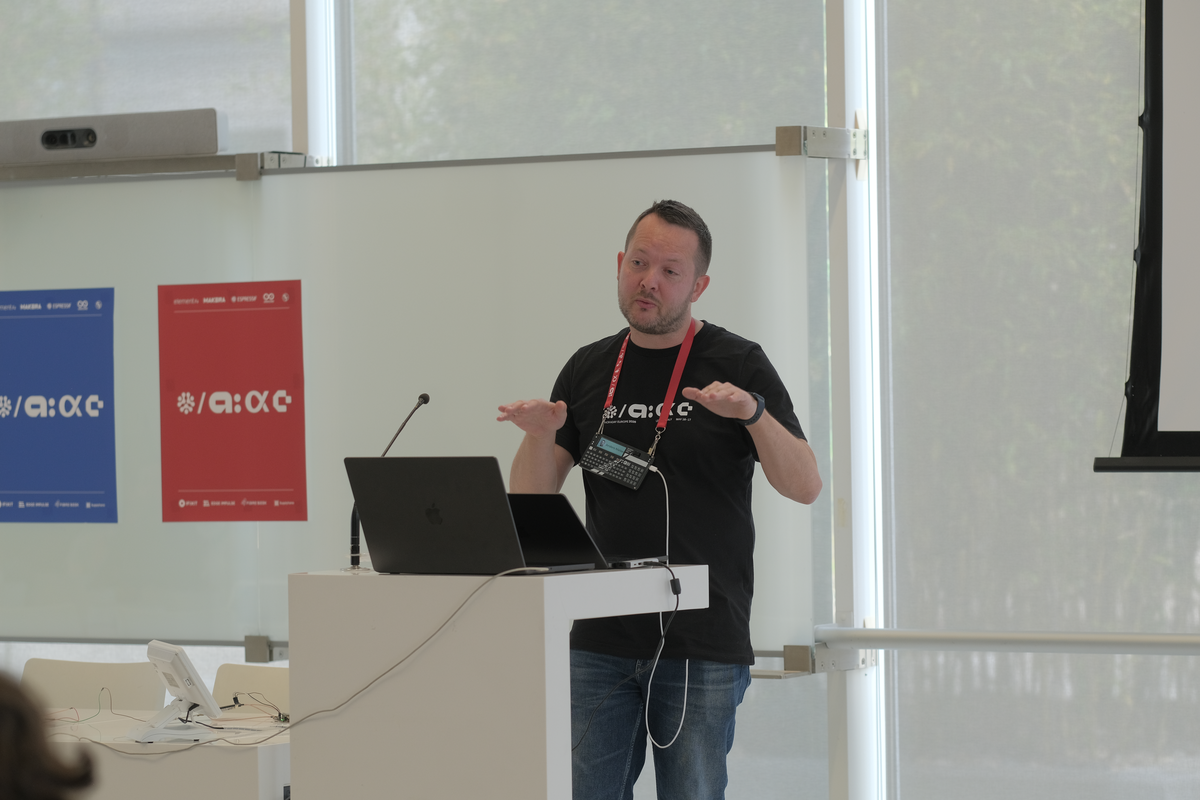
Hackaday Europe 2026: High Performance SDR On The Cheap
Radios were once big complicated appliances, full of warm valves and paper-wrapped capacitors, all humming and glowing to capture signals from the aether and spit them out of a speaker. …read more