Bats covered in pollen make tequila possible
Lesser long-nosed bats are powerful pollinators. The post Bats covered in pollen make tequila possible appeared first on Popular Science.
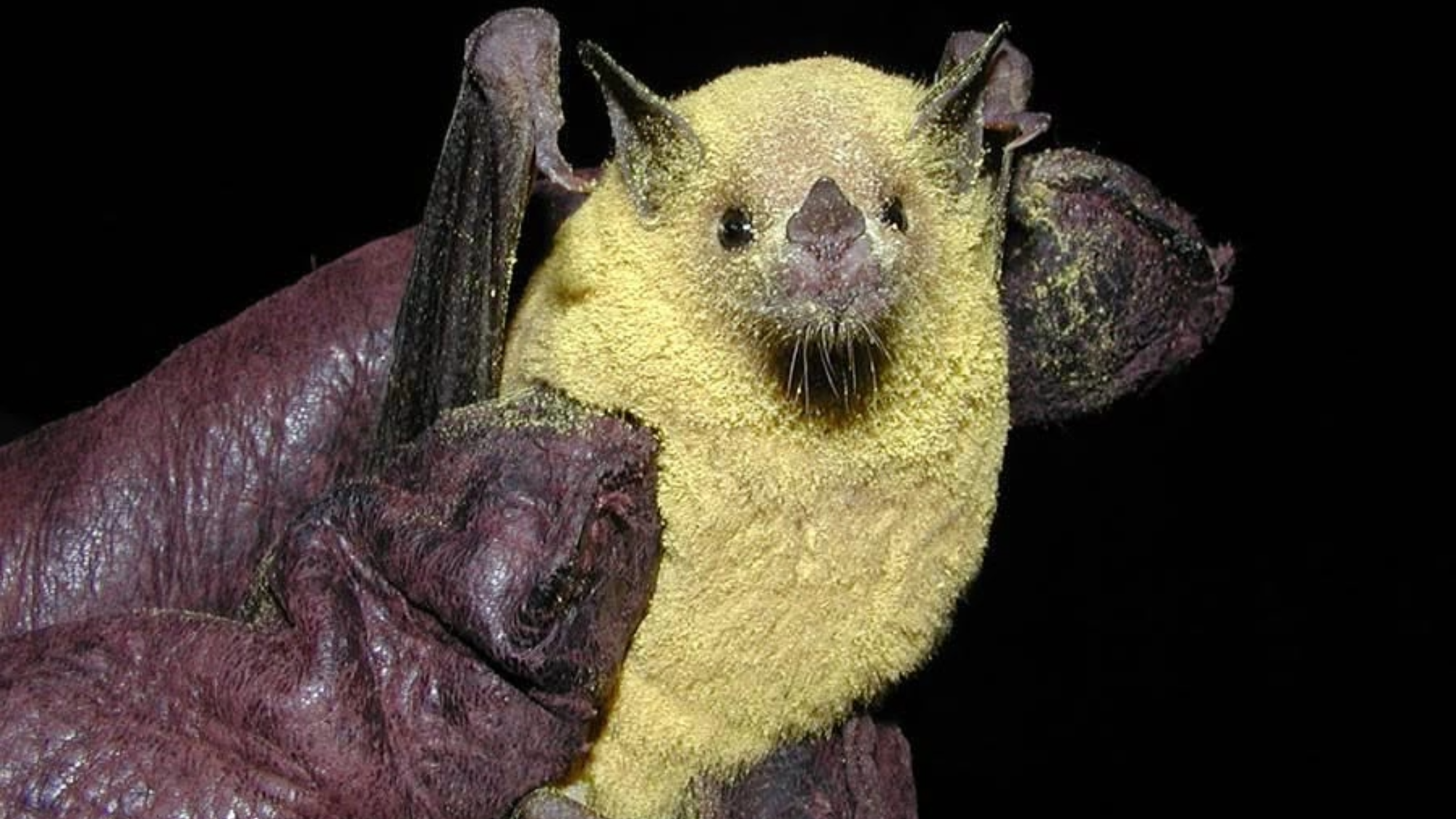
This fluorescent bat did not fly into bright yellow road paint or dive into a bowl of saffron. It’s covered in pollen. Lesser long-nosed bats (Leptonycteris yerbabuenae) are some of the animal kingdom’s lesser-known pollinators.
The medium-sized bats primarily live in arid grasslands, desert scrublands, and dry tropical forests. In North America, female lesser long-nosed bats migrate from south-central Mexico up to the southwestern United States in the spring. They follow “nectar corridors” of columnar cacti and agave plants.
From brush-tipped tongues to bodies covered in fine hair that gathers pollen, the lesser long-nosed bat is a perfectly-designed pollinator. Image: NPS. According to the United States Department of the Interior (DOI), this particular bat ended up covered in pollen after stopping on a blooming agave plant.
“As it travels from flower to flower, the bat helps pollinate the plants that support desert ecosystems and produce crops we rely on,” the DOI writes. “And yes, agave pollination also plays a role in helping make tequila possible.” Lesser long-nosed bats are so linked to tequila that they are commonly called the ‘tequila bat.’
They pollinate agave plants, which are then used to make tequila and mezcal. When they feed on cactus fruits and nectar, they may also help disperse cacti seeds. A lesser long-nosed bat sips nectar from a cactus flower.
Image: Bruce Taubert/Bat Conservation Inc. via USFWS. While the lesser long-nosed bats are considered near threatened, they are a conservation success story.
In 2018, it became the first bat species to be taken off of the Endangered Species Act, after 30 years of conservation efforts. These bats and other pollinators such as bees, butterflies, beetles, and moths are all being celebrated during National Pollinator Week (June 22–28, 2026). While critical to our entire ecosystem, habitat loss, pesticides, pathogens, and changes in land use among other impacts threaten the pollinators.
According to the USDA An
Đọc thêm từ Khoa học

Did NASA just find evidence of ancient life on Mars? Perseverance rover spots complex carbon in Red Planet rocks
"Measurements of two mudstones show hundreds of organic detections, making this the most robust organic detection in Jezero crater."

Asteroid as large as 5 cruise ships will soar past Earth this weekend
Skygazers can spot 1997 NC1 with strong binoculars. The post Asteroid as large as 5 cruise ships will soar past Earth this weekend appeared first on Popular Science.

Why Is Europe the Fastest-Warming Continent
The burning of fossil fuels is raising temperatures worldwide, but local factors, on land and at sea, determine which regions warm most rapidly.

Elon Musk loses trillionaire status as global tech rout hits SpaceX
Elon Musk lost his trillionaire status on Tuesday after a brutal global tech rout erased billions from his wealth.