Authors wary of content ownership after Anthropic’s $1.5B court ruling reshapes AI training rights
The ruling clarifies AI training rights, reducing legal risks and costs for AI firms, but authors face limited compensation and control. The post Authors wary of content ownership after Anthropic’s $1.5B court ruling reshapes AI training rights appeared first on Crypto Briefing.
Via pitchbook.com Authors wary of content ownership after Anthropic’s $1.5B court ruling reshapes AI training rights The largest copyright settlement in US history gives authors a payout but hands AI companies a legal playbook for using purchased books without ongoing fees.
Share Add us on Google by Editorial Team Jul. 27, 2026 Anthropic just wrote a $1.5 billion check to authors whose books were used to train Claude.
The literary world is calling it a win. Here’s the thing: the same ruling that punished Anthropic for pirating books also gave every AI company a clear legal path to use purchased texts for training, no licensing fees required, no ongoing royalties, no need to ask permission twice. What the ruling actually says On July 20, 2026, US District Judge Araceli Martínez-Olguín granted final approval to the class-action settlement in Bartz v.
Anthropic. The lawsuit, filed in 2024 and led by authors Andrea Bartz and Kirk Wallace Johnson, alleged that Anthropic used millions of copyrighted books sourced from shadow libraries to train its flagship AI model. The core finding drew a bright line.
Using pirated materials to train AI models is copyright infringement. But using lawfully acquired texts? That’s fair use.
Advertisement The settlement itself is staggering by any measure. Roughly $1.5 billion will be distributed across an estimated 500,000 titles, working out to approximately $3,000 per book.
That makes it the largest known copyright settlement in US history. Only about 350 authors opted out of the class. Anthropic had agreed to the $1.
5 billion minimum payout back in September 2025, following a summary judgment ruling in June of that year that found the company liable for its use of pirated source material. Why authors aren’t popping champagne A $3,000 check for a book that took years to write is not exactly life-changing money. The ruling effectively creates a two-tier system.
Piracy is punished. Legal acquisition is blessed. For authors, this means that once a publisher sells a copy of their book to an AI company, the text can be ingested, processed, and used to generate competing content, all without any recurring compensation.
The precedent doesn’t require AI firms to negotiate ongoing licensing deals. It doesn’t mandate revenue sharing. It doesn’t even require disclosure of which specific works were used in training.
What this means for investors The immediate market implication is straightforward. Anthropic absorbed a $1.5 billion hit and emerged with legal clarity that makes future training cheaper and more predictable.
For AI companies, the cost of compliance just dropped significantly. Buy the books, train the models, move on. For the broader AI sector, this precedent reduces legal risk around training data acquisition.
That should accelerate partnerships between AI firms and publishers, potentially creating a new revenue stream for the publishing industry even as individual author compensation remains thin. There’s also the question of whether $3,000 per book becomes the implicit benchmark for future settlements. If so, the economics of AI training just got a price tag, and it’s remarkably cheap relative to the value these models generate.
Disclosure: This article was edited by Editorial Team. For more information on how we create and review content, see our Editorial Policy. AI Authors wary of content ownership after Anthropic’s $1.
5B court ruling reshapes AI training rights The largest copyright settlement in US history gives authors a payout but hands AI companies a legal playbook for using purchased books without ongoing fees. by Editorial Team Jul. 27, 2026 Share Add us on Google Via pitchbook.
com Anthropic just wrote a $1.5 billion check to authors whose books were used to train Claude. The literary world is calling it a win.
Here’s the thing: the same ruling that punished Anthropic for pirating books also gave every AI company a clear legal path to use purchased texts for training, no licensing fees required, no ongoing royalties, no need to ask permission twice. What the ruling actually says On July 20, 2026, US District Judge Araceli Martínez-Olguín granted final approval to the class-action settlement in Bartz v. Anthropic.
The lawsuit, filed in 2024 and led by authors Andrea Bartz and Kirk Wallace Johnson, alleged that Anthropic used millions of copyrighted books sourced from shadow libraries to train its flagship AI model. The core finding drew a bright line. Using pirated materials to train AI models is copyright infringement.
But using lawfully acquired texts? That’s fair use. Advertisement The settlement itself is staggering by any measure.
Roughly $1.5 billion will be distributed across an estimated 500,000 titles, working out to approximately $3,000 per book. That makes it the largest known copyright settlement in US history.
Only about 350 authors opted out of the class. Anthropic had agreed to the $1.5 billion minimum payout back in September 2025, following a summary
Đọc thêm từ Tiền số / Crypto
Gold holds gain as Trump sounds optimism over US-Iran talks
Gold's stability amid U.S.-Iran talks optimism highlights its role as a hedge against geopolitical and economic uncertainties. The post Gold holds gain as Trump sounds optimism over US-Iran talks appeared first on Crypto Briefing.
Bitcoin price prediction: Why $61k and $67k are BTC’s key levels to watch
If the longer-term downtrend is to continue, it would be more likely that Bitcoin climbs to take down the overhead liquidation levels before plunging southward
Kraken Parent Payward Acquires Magic Wallet, Adding Technology Behind 60M Wallets
Payward has agreed to acquire Magic Labs’ wallet-as-a-service business, adding embedded, non-custodial wallets to the infrastructure platform behind Kraken. The deal brings technology used to create more than 60 million wallets into Payward’s expanding enterprise product suite. N
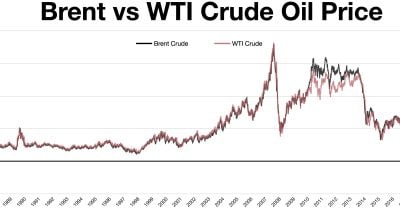
Brent crude prices drop 11% to $85.87 after US-Iran ceasefire, and crypto markets are paying attention
The US-Iran ceasefire's impact on oil prices may ease inflation, but unresolved tensions and crypto sanctions could disrupt financial markets. The post Brent crude prices drop 11% to $85.87 after US-Iran ceasefire, and crypto markets are paying attention appeared first on Crypto