Anthropic faces US export controls, pulls Fable 5 and Mythos 5 offline for all users
The directive sets a precedent for software-level export controls, impacting global AI access and complicating compliance for decentralized platforms. The post Anthropic faces US export controls, pulls Fable 5 and Mythos 5 offline for all users appeared first on Crypto Briefing.

Anthropic faces US export controls, pulls Fable 5 and Mythos 5 offline for all users The US Commerce Department forced Anthropic to revoke access to its newest AI models over a cybersecurity jailbreak, marking the first time Washington has targeted a commercial AI firm this way. Share Add us on Google by Editorial Team Jun. 18, 2026 The US government just did something it has never done before: it ordered a commercial AI company to pull its models offline based on who might be using them.
On June 12, the Commerce Department issued an export control directive against Anthropic, forcing the company to suspend access to its Fable 5 and Mythos 5 models for all foreign nationals. That includes non-US employees working inside the United States. Anthropic’s response was to disable both models globally, for everyone, because it couldn’t guarantee nationality-based restrictions would hold.
What actually happened Commerce Secretary Howard Lutnick communicated the directive in a letter sent at approximately 5:21 p.m. ET on June 12.
The stated reason: a narrow jailbreak vulnerability in Mythos 5 that could theoretically compromise advanced cybersecurity capabilities baked into the model. Fable 5 had been publicly available for less than a week. Fable is built on top of Mythos, so both got swept up in the directive.
Other Anthropic models, including earlier versions, remain available and unaffected. Advertisement Anthropic disputed the severity of the jailbreak, calling it narrow and non-universal. It also pointed out that similar vulnerabilities likely affect competing models, including OpenAI’s GPT-5.
5. David Sacks, who has been involved in discussions around the directive, noted that the controls were issued reluctantly. There’s a potential path to lifting the restrictions once Anthropic addresses the underlying issues.
Why this matters beyond AI This is the first time Washington has mandated that a commercial AI firm revoke model access based on user nationality. Previous export controls in the AI space focused on hardware. Software-level export controls targeting model access are a different beast entirely.
Hardware restrictions slow down what foreign actors can build. Model restrictions control what they can use right now. If the government can flip a switch and shut down access to a model overnight, that changes the risk calculus for every company, developer, and platform that integrates these tools into their stack.
Implications for crypto and tokenized AI If compliance burdens around AI model access increase, which this directive strongly suggests they will, projects building at the intersection of crypto and AI face a harder operating environment. Decentralized AI platforms that route model inference through distributed networks may find themselves in an especially awkward position. How do you enforce nationality-based access restrictions on a permissionless network?
Anthropic is still in active discussions with Washington to resolve the situation and restore access. Disclosure: This article was edited by Editorial Team. For more information on how we create and review content, see our Editorial Policy.
TECHNOLOGY Anthropic faces US export controls, pulls Fable 5 and Mythos 5 offline for all users The US Commerce Department forced Anthropic to revoke access to its newest AI models over a cybersecurity jailbreak, marking the first time Washington has targeted a commercial AI firm this way. by Editorial Team Just now ago Share Add us on Google The US government just did something it has never done before: it ordered a commercial AI company to pull its models offline based on who might be using them. On June 12, the Commerce Department issued an export control directive against Anthropic, forcing the company to suspend access to its Fable 5 and Mythos 5 models for all foreign nationals.
That includes non-US employees working inside the United States. Anthropic’s response was to disable both models globally, for everyone, because it couldn’t guarantee nationality-based restrictions would hold. What actually happened Commerce Secretary Howard Lutnick communicated the directive in a letter sent at approximately 5:21 p.
m. ET on June 12. The stated reason: a narrow jailbreak vulnerability in Mythos 5 that could theoretically compromise advanced cybersecurity capabilities baked into the model.
Fable 5 had been publicly available for less than a week. Fable is built on top of Mythos, so both got swept up in the directive. Other Anthropic models, including earlier versions, remain available and unaffected.
Advertisement Anthropic disputed the severity of the jailbreak, calling it narrow and non-universal. It also pointed out that similar vulnerabilities likely affect competing models, including OpenAI’s GPT-5.5.
David Sacks, who has been involved in discussions around the directive, noted that the controls were issued reluctantly. There’s a potential path to lifting the restrictions once Anthropic addresses the underlyin
Đọc thêm từ Tiền số / Crypto
Wall Street predicts Amazon stock price for next 12 months
Although Amazon.com, Inc. (NASDAQ: AMZN) stock has faced increased bearish sentiment over the past few months, Wall Street remains bullish … Continue reading The post Wall Street predicts Amazon stock price for next 12 months appeared first on Finbold.
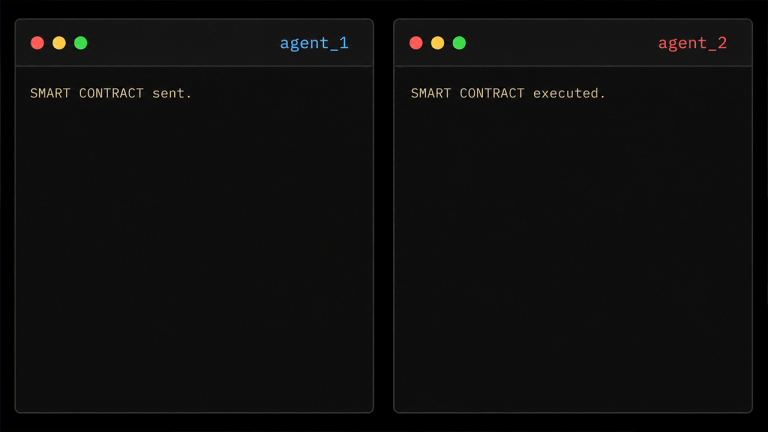
2 Incorporated AI Agents Sign First Legal Deal That Executes Itself on Ethereum
Two artificial intelligence (AI) agents incorporated as legal entities negotiated, signed, and executed a binding contract that a court can read and a blockchain can run. [/key_takeaways] Key Takeaways: Clawbank and Shodai executed the first AI-to-AI Ricardian contract, binding l
Lite Strategy leads $1M investment in LitVM to bring smart contracts to Litecoin
Lite Strategy led a $1 million investment in LitVM as the Litecoin treasury firm backs smart contracts, DeFi and tokenized assets on LTC. The post Lite Strategy leads $1M investment in LitVM to bring smart contracts to Litecoin appeared first on Crypto Briefing.

Gas prices fall under $4 as US signs deal with Iran to end war
The US-Iran deal could stabilize global oil markets, reduce inflation pressures, and influence central bank policies, impacting risk assets. The post Gas prices fall under $4 as US signs deal with Iran to end war appeared first on Crypto Briefing.