AMD chips power the AI brain inside humanoid war robots headed for the battlefield
Foundation Robotics integrates AMD Ryzen AI processors into its Phantom humanoid war robots, with $24M in DoD contracts and mass production The post AMD chips power the AI brain inside humanoid war robots headed for the battlefield appeared first on Crypto Briefing.
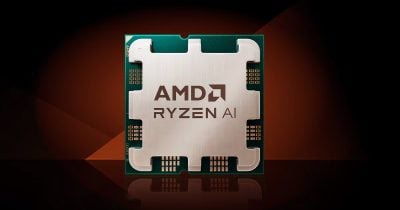
AMD chips power the AI brain inside humanoid war robots headed for the battlefield Foundation Robotics taps AMD's embedded processors for its Phantom line of military humanoid robots, with mass production slated for late 2026. Share Add us on Google by Editorial Team Jul. 24, 2026 The phrase “war robot” has officially graduated from science fiction shelf to defense procurement paperwork.
Foundation Future Industries, the company behind the Phantom line of humanoid robots, announced on July 23 that it’s integrating AMD Ryzen AI Embedded X100 Series processors as the core computing platform for its machines. In English: AMD chips are now the “brain” inside robots designed to walk into combat zones so humans don’t have to. What AMD brings to the fight The partnership centers on AMD’s embedded processor line, which Foundation Robotics claims delivers 2.
5 times faster inference and three times faster training compared to competing Nvidia chips. AMD isn’t shipping custom military-grade silicon. These are off-the-shelf embedded processors being repurposed for edge AI applications in robotics.
Advertisement The Phantom robots, from Ukraine to the factory floor Foundation’s Phantom MK-1 humanoid robot was first deployed for reconnaissance missions in Ukraine back in February 2026. The upcoming MK-2 variant will be the first model built around AMD hardware from the ground up, tailored for enhanced battlefield functionality. Foundation has already locked in $24 million in US Department of Defense contracts.
The company’s production ambitions are aggressive. A new factory is projected to open in October 2026 with capacity for 5,000 units annually. By early 2027, Foundation plans to have a facility capable of producing 50,000 units per year.
Co-founder Mike LeBlanc has framed the mission in stark terms, citing a “moral imperative” to replace soldiers with robots in combat areas. What this means for AMD investors AMD’s overall business generates tens of billions in annual revenue. A partnership with a startup that has $24 million in DoD contracts is, financially speaking, a rounding error.
Analysts have characterized the deal as primarily a public relations win rather than a material revenue driver. For crypto and tech investors watching the AI trade, the AI hardware race is expanding beyond cloud computing and into physical-world applications where latency, power efficiency, and on-device processing matter more than raw throughput. Investors should watch the October factory opening as the next real milestone.
Disclosure: This article was edited by Editorial Team. For more information on how we create and review content, see our Editorial Policy. AI AMD chips power the AI brain inside humanoid war robots headed for the battlefield Foundation Robotics taps AMD's embedded processors for its Phantom line of military humanoid robots, with mass production slated for late 2026.
by Editorial Team Jul. 24, 2026 Share Add us on Google The phrase “war robot” has officially graduated from science fiction shelf to defense procurement paperwork. Foundation Future Industries, the company behind the Phantom line of humanoid robots, announced on July 23 that it’s integrating AMD Ryzen AI Embedded X100 Series processors as the core computing platform for its machines.
In English: AMD chips are now the “brain” inside robots designed to walk into combat zones so humans don’t have to. What AMD brings to the fight The partnership centers on AMD’s embedded processor line, which Foundation Robotics claims delivers 2.5 times faster inference and three times faster training compared to competing Nvidia chips.
AMD isn’t shipping custom military-grade silicon. These are off-the-shelf embedded processors being repurposed for edge AI applications in robotics. Advertisement The Phantom robots, from Ukraine to the factory floor Foundation’s Phantom MK-1 humanoid robot was first deployed for reconnaissance missions in Ukraine back in February 2026.
The upcoming MK-2 variant will be the first model built around AMD hardware from the ground up, tailored for enhanced battlefield functionality. Foundation has already locked in $24 million in US Department of Defense contracts. The company’s production ambitions are aggressive.
A new factory is projected to open in October 2026 with capacity for 5,000 units annually. By early 2027, Foundation plans to have a facility capable of producing 50,000 units per year. Co-founder Mike LeBlanc has framed the mission in stark terms, citing a “moral imperative” to replace soldiers with robots in combat areas.
What this means for AMD investors AMD’s overall business generates tens of billions in annual revenue. A partnership with a startup that has $24 million in DoD contracts is, financially speaking, a rounding error. Analysts have characterized the deal as primarily a public relations win rather than a material revenue driver.
For crypto and tech investors watching the AI trade, the AI hardware race is expanding beyo
Đọc thêm từ Tiền số / Crypto

MARA CEO says AI data centers generate more revenue than Bitcoin mining, triggering major strategic pivot
MARA CEO Fred Thiel says AI data centers generate more revenue per unit of electricity than Bitcoin mining, partnering with Starwood Capital to The post MARA CEO says AI data centers generate more revenue than Bitcoin mining, triggering major strategic pivot appeared first on Cry
Audiera – THIS breakout could send BEAT to $4 ONLY IF…
BEAT can extend the rally into the new week, yet the downside liquidity keeps the risk in play.
100 Trillion Shiba Inu (SHIB)? That Threshold Is More Than a Reality Now
Shiba Inu is clearly struggling to recover and even worse, the huge surge of available volume might create serious issues.

Iran-aligned groups target Red Sea shipping, escalating US-Iran tensions
Iran-aligned groups escalate attacks on Red Sea shipping. Strait of Hormuz traffic returns to normal by August 31 at 10.5% YES. The post Iran-aligned groups target Red Sea shipping, escalating US-Iran tensions appeared first on Crypto Briefing.