Amazon’s Trainium and Inferentia chips gain traction as firms seek Nvidia alternatives
Amazon's custom silicon gains could reshape the AI hardware market, challenging Nvidia's dominance and prompting broader industry shifts. The post Amazon’s Trainium and Inferentia chips gain traction as firms seek Nvidia alternatives appeared first on Crypto Briefing.
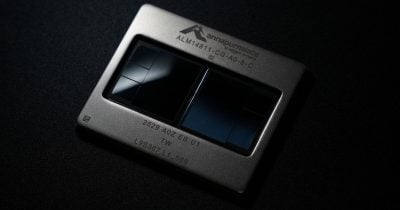
Amazon’s Trainium and Inferentia chips gain traction as firms seek Nvidia alternatives AWS custom silicon is quietly building momentum as companies chase dramatic cost savings on AI workloads Share Add us on Google by Editorial Team Jun. 17, 2026 AWS reports growing interest in its custom-designed Trainium and Inferentia chips as organizations look to cut costs and reduce their dependence on Nvidia GPUs. The numbers backing that interest are starting to look less like a side project and more like a real business.
Organizations migrating inference tasks from Nvidia GPUs to Inferentia instances are reporting cost reductions in the range of 80-90%. That’s not a marginal improvement. That’s the difference between a viable AI product and one that bleeds money at scale.
On the training side, Trainium chips are carving out their own niche. They lack the raw ecosystem depth of Nvidia’s CUDA platform, which remains the industry’s default software layer for GPU programming. But for organizations willing to optimize their workloads around Amazon’s hardware, the price-performance ratio is compelling enough to justify the switch.
Advertisement Anthropic, the AI safety lab behind the Claude model family, operates a cluster of roughly 500,000 Trainium chips as part of a project called Rainier. That deployment reportedly delivers a fivefold increase in compute capability compared to the company’s previous AI models. Amazon has invested a total of $8 billion in Anthropic, designating AWS as its primary cloud and training partner.
Then there’s OpenAI. The company behind ChatGPT is planning to implement approximately 2 gigawatts of Trainium capacity, with ramp-up expected to begin in 2027. AWS’s custom silicon business, which includes Trainium, Inferentia, and the Graviton processor line for general compute, surpassed a $20 billion annualized run rate by early 2026.
Nvidia still dominates AI training workloads and maintains a massive advantage through CUDA, its proprietary software ecosystem that developers have spent years building around. Nvidia’s latest GPU architectures also continue to push the ceiling on peak performance, which matters enormously for frontier model training where raw throughput is the bottleneck. The broader pattern here is that all three major cloud providers, Amazon, Google, and Microsoft, are investing heavily in custom silicon.
Google has its TPU line, now in its sixth generation. Microsoft is developing its Maia chips. Major capacity ramp-ups are planned for 2027, which means the next 18 months will determine whether Amazon’s custom silicon ambitions translate into sustained market share gains or hit manufacturing and software bottlenecks.
Disclosure: This article was edited by Editorial Team. For more information on how we create and review content, see our Editorial Policy. TECHNOLOGY Amazon’s Trainium and Inferentia chips gain traction as firms seek Nvidia alternatives AWS custom silicon is quietly building momentum as companies chase dramatic cost savings on AI workloads by Editorial Team Just now ago Share Add us on Google AWS reports growing interest in its custom-designed Trainium and Inferentia chips as organizations look to cut costs and reduce their dependence on Nvidia GPUs.
The numbers backing that interest are starting to look less like a side project and more like a real business. Organizations migrating inference tasks from Nvidia GPUs to Inferentia instances are reporting cost reductions in the range of 80-90%. That’s not a marginal improvement.
That’s the difference between a viable AI product and one that bleeds money at scale. On the training side, Trainium chips are carving out their own niche. They lack the raw ecosystem depth of Nvidia’s CUDA platform, which remains the industry’s default software layer for GPU programming.
But for organizations willing to optimize their workloads around Amazon’s hardware, the price-performance ratio is compelling enough to justify the switch. Advertisement Anthropic, the AI safety lab behind the Claude model family, operates a cluster of roughly 500,000 Trainium chips as part of a project called Rainier. That deployment reportedly delivers a fivefold increase in compute capability compared to the company’s previous AI models.
Amazon has invested a total of $8 billion in Anthropic, designating AWS as its primary cloud and training partner. Then there’s OpenAI. The company behind ChatGPT is planning to implement approximately 2 gigawatts of Trainium capacity, with ramp-up expected to begin in 2027.
AWS’s custom silicon business, which includes Trainium, Inferentia, and the Graviton processor line for general compute, surpassed a $20 billion annualized run rate by early 2026. Nvidia still dominates AI training workloads and maintains a massive advantage through CUDA, its proprietary software ecosystem that developers have spent years building around. Nvidia’s latest GPU architectures also continue to push the ceiling on peak performance, which m
Đọc thêm từ Tiền số / Crypto

Portugal urged to increase intensity in World Cup clash against DR Congo
Portugal's need for increased intensity highlights the challenges of relying on star players and the unpredictability of World Cup matches. The post Portugal urged to increase intensity in World Cup clash against DR Congo appeared first on Crypto Briefing.

Kaito expands into new verticals after successful airdrop, launching Studio marketplace for brands
Kaito's expansion into diverse sectors could significantly enhance token utility and market reach, but execution and platform reliance pose risks. The post Kaito expands into new verticals after successful airdrop, launching Studio marketplace for brands appeared first on Crypto

Morgan Stanley outlines options for Fed’s upcoming FOMC statement
The Fed's shift to a neutral, data-driven stance may prolong tighter liquidity, impacting risk assets and economic forecasting strategies. The post Morgan Stanley outlines options for Fed’s upcoming FOMC statement appeared first on Crypto Briefing.
VeChain price prediction 2026-2032: What’s the growth potential of VET?
Key takeaways VeChain initially marketed itself as a blockchain network to provide transparency and efficiency to real-world applications enhancing customer trust, providing real-time tracking of goods and items across supply chains and preventing counterfeiting. The main focus o