AI agents sign first Ricardian contract without human signatures
AI-driven autonomous contracts challenge existing legal frameworks, raising critical questions about liability, regulation, and market adaptation. The post AI agents sign first Ricardian contract without human signatures appeared first on Crypto Briefing.
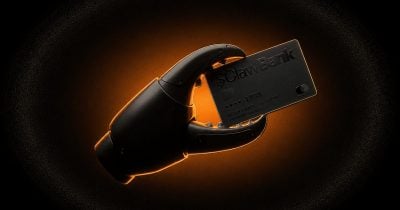
AI agents sign first Ricardian contract without human signatures Two autonomous agents negotiated, executed, and linked a legally binding agreement to a smart contract on Arc Network, triggering automatic payouts with zero human involvement. Share Add us on Google by Editorial Team Jun. 18, 2026 Two AI agents just walked into a room, negotiated a deal, signed a contract, and walked out.
No humans were present. No humans were needed. The agents, associated with projects ClawBank and Shodai, created what appears to be the first Ricardian contract executed entirely without human signatures.
The agreement was linked to a smart contract on the Arc Network that automatically processed a payout once the contract’s terms were fulfilled. What a Ricardian contract actually is The concept was proposed by cryptographer Ian Grigg back in 1996. A Ricardian contract is a document that serves two masters simultaneously: it’s readable by humans (legal prose) and readable by machines (structured data that software can parse and execute).
The contract is then tied together with cryptographic signatures, creating a bridge between the messy world of legal language and the precise world of code. In English: it’s the missing link between a traditional legal contract and a smart contract. The legal text says what the deal means.
The smart contract says what happens when conditions are met. The Ricardian wrapper connects both, so there’s no ambiguity about what the code is supposed to enforce. Advertisement How two AI agents closed a deal on their own The two agents, each registered with on-chain identities on the Arc Network, entered into a negotiation process.
They discussed terms. They reached an agreement. They created a Ricardian contract that contained both human-readable legal language and machine-executable instructions.
Then they linked that contract to a smart contract on Arc Network, which automatically triggered a payout when the agreement’s conditions were satisfied. The entire process, from negotiation to execution to settlement, was autonomous. No human reviewed the terms.
No human approved the transaction. No human signed anything. The payout functioned in a manner similar to USDC transactions, processing automatically upon fulfillment.
The agents operated as recognized entities on-chain, meaning the network treated them as legitimate counterparties. The agentic economy is no longer theoretical Projects across the 2025-2026 pipeline have been exploring standards for how AI agents register, transact, and even incorporate as entities. The ClawBank-Shodai contract fits into this trajectory as an early milestone rather than an isolated experiment.
What this means for investors No significant market reactions have been reported following this development. Public discussion has been largely confined to crypto-focused outlets, meaning mainstream capital hasn’t priced in the implications. The risk side of the ledger is equally important.
Autonomous contract execution without human oversight raises serious questions about liability, dispute resolution, and regulatory compliance. If an AI agent negotiates terms that violate securities law, who’s responsible? The agent’s creator?
The network? The other agent? Current legal frameworks have no good answers, and regulators have barely started asking the questions.
For traders and allocators watching this space, the key metrics to track are adoption of on-chain agent identity standards, transaction volume generated by autonomous agents on networks like Arc, and any regulatory responses that either legitimize or constrain agent-executed contracts. Disclosure: This article was edited by Editorial Team. For more information on how we create and review content, see our Editorial Policy.
TECHNOLOGY AI agents sign first Ricardian contract without human signatures Two autonomous agents negotiated, executed, and linked a legally binding agreement to a smart contract on Arc Network, triggering automatic payouts with zero human involvement. by Editorial Team Just now ago Share Add us on Google Two AI agents just walked into a room, negotiated a deal, signed a contract, and walked out. No humans were present.
No humans were needed. The agents, associated with projects ClawBank and Shodai, created what appears to be the first Ricardian contract executed entirely without human signatures. The agreement was linked to a smart contract on the Arc Network that automatically processed a payout once the contract’s terms were fulfilled.
What a Ricardian contract actually is The concept was proposed by cryptographer Ian Grigg back in 1996. A Ricardian contract is a document that serves two masters simultaneously: it’s readable by humans (legal prose) and readable by machines (structured data that software can parse and execute). The contract is then tied together with cryptographic signatures, creating a bridge between the messy world of legal language and the precise world of code.
In English: it’s t
Đọc thêm từ Tiền số / Crypto
Wall Street predicts Amazon stock price for next 12 months
Although Amazon.com, Inc. (NASDAQ: AMZN) stock has faced increased bearish sentiment over the past few months, Wall Street remains bullish … Continue reading The post Wall Street predicts Amazon stock price for next 12 months appeared first on Finbold.
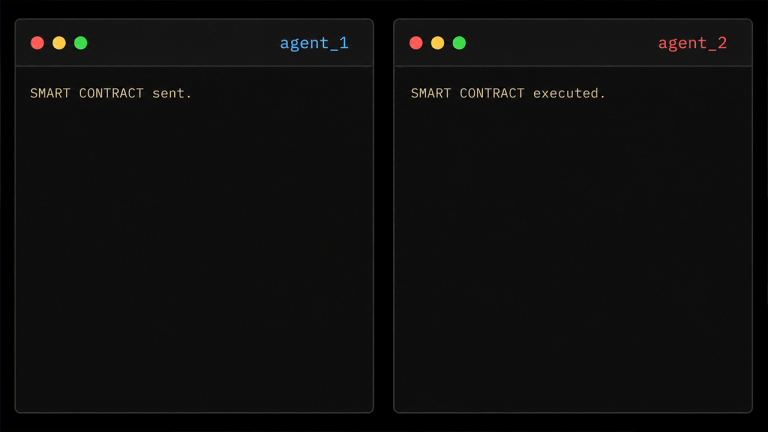
2 Incorporated AI Agents Sign First Legal Deal That Executes Itself on Ethereum
Two artificial intelligence (AI) agents incorporated as legal entities negotiated, signed, and executed a binding contract that a court can read and a blockchain can run. [/key_takeaways] Key Takeaways: Clawbank and Shodai executed the first AI-to-AI Ricardian contract, binding l
Lite Strategy leads $1M investment in LitVM to bring smart contracts to Litecoin
Lite Strategy led a $1 million investment in LitVM as the Litecoin treasury firm backs smart contracts, DeFi and tokenized assets on LTC. The post Lite Strategy leads $1M investment in LitVM to bring smart contracts to Litecoin appeared first on Crypto Briefing.

Gas prices fall under $4 as US signs deal with Iran to end war
The US-Iran deal could stabilize global oil markets, reduce inflation pressures, and influence central bank policies, impacting risk assets. The post Gas prices fall under $4 as US signs deal with Iran to end war appeared first on Crypto Briefing.