Aaron lost three fingertips because of eczema. One injection could have spared him
The life-changing medication was recommended for children aged six to 11 in March 2022. Kids are still waiting.
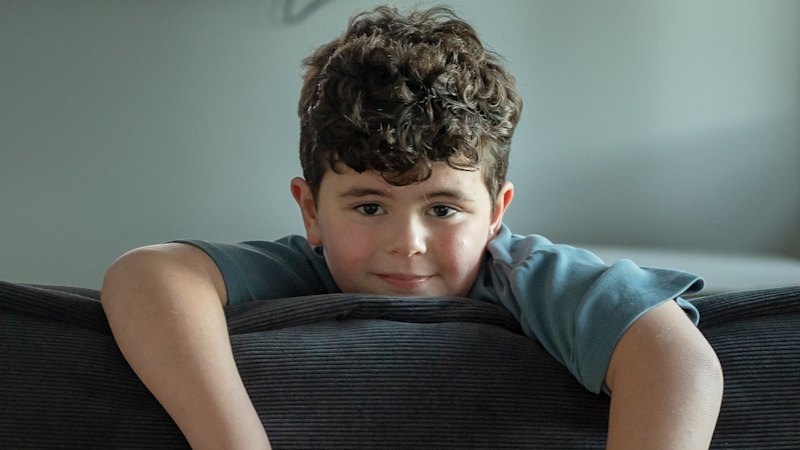
Warning: graphic content Most parents bring spare nappies and snacks on a day trip. Rebecca Cookson used to pack a full change of clothes in case her son was covered in blood by the time they arrived. “He was constantly scratching – it consumed him,” Cookson said of her son Aaron’s severe eczema.
“People don’t understand how debilitating it actually is.” Aaron was hospitalised 10 times before he turned five, needed regular bleach baths and was on a suite of medication. After he had three fingertips removed due to the condition, a dermatologist recommended dupilumab, a life-changing treatment for severe eczema that the family couldn’t access.
“I felt like everything just drained out of me,” Cookson said. “I was like, I know [about dupilumab], but we can’t have it because he’s not 12. I almost felt like she was taunting me.”
Also known by its brand name, Dupixent, the injection has been available through the Pharmaceutical Benefits Scheme for the treatment of severe eczema in Australians aged over 12 since 2021 and costs eligible patients $25 a month. Younger children do not have funded access to the medicine, which costs about $20,000 a year without a PBS subsidy. This is despite the medicine previously being recommended by the Pharmaceutical Benefits Advisory Committee for children aged six to 11 years in March 2022.
A spokesperson for the Department of Health, Disability and Ageing said Dupixent’s pharmaceutical company, Sanofi, “has not provided the required documentation for the PBS listing to progress”. On Wednesday, the PBAC will consider an updated proposal outlining the benefits of a subsidy for younger children, this time from six months to 12 years, at the request of Sanofi. “The government is committed to listing every medicine that is recommended by the PBAC where the pharmaceutical company agrees to the terms of listing,” the department said in a statement.
Sanofi did not respond to this masthead’s inquiries. Eczema Support Australia managing director Melanie Funk said the delay has had a profound impact. “Families of these children have effectively had to wait four years for a recommendation that’s already been made,” she said.
“Our frustration is that children only get one childhood – they can’t put their disease on hold while the negotiations continue.” Funk said that thousands of children are affected by severe eczema, which is “completely different” to mild eczema: “Children can have relentless itch, bleeding skin, repeated infection, sleep deprivation, hospital admissions, and it really significantly impacts their mental health and development as well. It’s a very serious chronic inflammatory disease.”
Hospitalisations due to severe eczema are “very costly” to the health system, she said. Dermatologist Dr Stephen Shumack said clinicians had already noted a reduction in hospital admissions among the age groups eligible for the dupilumab subsidy. He said that published research on the drug found it was “absolutely effective” in young children, with results “substantially life-changing in that age group”.
When Aaron, now eight, was offered compassionate access through The Children’s Hospital at Westmead, “it gave him his life back”. “I bought him shorts for the first time – he’d never worn shorts until he was five,” his mother said. “He can go swimming now – he can do things that other kids can do.
It’s been life-changing.” Six-year-old Ally North, of Kerang, near the border of NSW and Victoria, has not been able to secure compassionate access. Her mum, Melanie, said Ally had never slept through the night as she itched in her sleep until she bled: “It looks like a murder scene some mornings.”
The year 1 pupil has missed weeks of school this year due to eczema flare-ups and complications. Her teachers have raised concerns that she will soon fall behind, and her mother said that staying home with her daughter is difficult as she and her husband both run businesses. “She’ll come home from school and say, ‘why is my skin like this?
Why can’t I have normal skin? Why am I the only one?’ And it breaks your heart,” North said.
“She’s got so much scarring on the back of her legs from the last really bad flare-up. How is this going to impact her physical appearance by the time she’s 12?” North treats the flare-ups with antibiotics or steroids and worries about future health impacts of so much medication.
“Knowing that there’s something so close that could essentially change everything for her, but either you can’t afford it or you can’t get access to it … I’d like the politicians to spend a week with all these kids that go through this.” The PBAC is expected to publish its findings in August.
Start the day with a summary of the day’s most important and interesting stories, analysis and insights. Sign up for our Morning Edition newsletter. You have reached your maximum number of saved items.
Remove items from your saved list to add more. More:
Đọc thêm từ Thế giới

Etterlyst: Vi dreper Trump. 120.000.000 dollar belønning.
TEHERAN, IRAN: Sørgemarsjen fortsetter. Flere ber om blodhevn.
Hamas announces dissolution of Gaza Strip governing body after almost two decades in control
Officials for the militant organization have confirmed the move, which was agreed to earlier this year in a peace deal with Israel.
ロシア、キーウに再び大規模攻撃 15人死亡 NATOサミット前日
ロシア軍は5日夜から6日未明に、ウクライナの首都キーウと周辺に対して大規模な攻撃を実施した。キーウ市・州の当局者によると、午後1時(日本時間午後7時)までに、計15人の死亡と計75人の負傷が確認された。 ウクライナ空軍によると、ロシア軍はドローン(無人機)351機とミサイル68発を発射。このうち弾道ミサイルは23発だったが、ウクライナ側は1発も迎撃できなかった。 ウクライナのゼレンスキー大統領は6日、SNSで「迎撃ミサイルの供給が不十分だ」と改めて強調。トルコの首都アンカラで7、8日に行われる北大西洋条約機構首脳会議(NATOサミット)において、防空体制

Ukraine Rewrote Air Defense Tactics. Against Russia, It’s Still Not Enough.
Ukraine has changed how militaries use Patriot systems. But recent attacks prove that clever adaptations cannot overcome a shortage of interceptors.