75% of workers ask AI questions instead of colleagues - with potentially serious consequences
A series of studies revealed that employees are spending less time asking their coworkers for help. Here's how that tactic could backfire and how organizations need to adapt.
Innovation Home Innovation Artificial Intelligence 75% of workers ask AI questions instead of colleagues - with potentially serious consequences A series of studies revealed that employees are spending less time asking their coworkers for help. Here's how that tactic could backfire and how organizations need to adapt. Written by Erin Carson, Managing Editor, News & FeaturesManaging Editor, News & Features July 29, 2026 at 5:19 a.
m. PT Written by Erin Carson, Managing Editor, News & FeaturesManaging Editor, News & Features July 29, 2026 at 5:19 a.m.
PT Jorg Greuel/PhotodiscFollow ZDNET: Add us as a preferred source on Google.ZDNET's key takeawaysAI could be replacing certain workplace interactions.Researchers worry that talking less to coworkers could make us lonelier.
AI can also be used to encourage interactions.When Maria Goyal has a question, her coworkers typically meet her with one answer: Ask Claude. The 25-year-old works at a marketing agency in Colorado.
In the year she's been there, she's witnessed a creep where AI has become more ingrained into every aspect of the work, and this shift makes her feel isolated and self-conscious about turning to one of her more experienced coworkers for help or to brainstorm ideas."It prevents me from like learning more in depth rather than just having like a robot do it for me," she told ZDNET over the phone.Goyal isn't the only one who feels like AI is inhibiting human interaction at work.
A handful of recent studies show that AI is changing how people communicate at work, and often replacing everyday exchanges. Also: 73% of tech job listings require AI skills now: How to show off yoursData from a July survey from cognitive assessment platform MyIQ found that three-quarters of people who use AI now ask their chatbots questions instead of colleagues. In May, Workday found that Gen Z is 12 times more likely than Gen X to feel "completely disconnected" from their coworkers.
Also in July, Adobe for Business reported that 68% of workers said they'd be more comfortable asking a chatbot an obvious question than a coworker. "AI presents a really big opportunity, but it also presents a challenge in that we absolutely need to ensure that we surround ourselves with other human beings, and as leaders, we need to create opportunity for more human connection," said Adam Mendler, a leadership expert, University of California, Los Angeles leadership instructor, and host of the "Thirty Minute Mentors" podcast.Also: The 3 types of people who will excel in the AI agent era, according to tech leadersThe rash of survey data comes at a time when Americans have never been lonelier.
The CDC estimates that about one in three adults feels lonely, a trend linked to factors such as social isolation. At work, that figure is one in five worldwide. The post-COVID rise of remote work hasn't helped.
While it's too early to say whether this shift in how workers relate to each other and their bosses will create a lonelier, less supported, or less productive workforce, researchers warn that the time to prevent such effects is now. Good chatGoyal's experience illustrates one of the biggest concerns some experts have about the loss of everyday interactions with colleagues -- the missed opportunities to build the trust and knowledge vital for well-functioning teams. Constance Noonan Hadley, founder and chief scientist at the Institute for Life at Work, has been studying topics like the future of work, employee loneliness and burnout, and team dynamics for more than 20 years.
She said the act of asking a coworker a question, getting a friendly, helpful response, and maybe being able to return the favor is valuable. The MyIQ study also unpacked all the additional information baked into such an interaction.Also: Companies embracing AI the most are hiring more people - including entry-level, report finds"A question could solve an immediate problem, but it could also reveal who had expertise, how another person approached uncertainty, and which colleagues were willing to help.
AI can preserve the practical answer while removing much of that social information," the report said.Goyal, for example, is concerned that she doesn't have the chance to show what she does know, and that she's not learning as much from her colleagues as she could."I think it's an underestimation of how much those moments matter, and it's hard to convince people they matter until they don't have them anymore," Hadley said.
Stalling out in professional growth can also create anxiety among workers who may feel their own expertise is fragile and possibly easy to replace with AI."If more of those questions go to AI now instead of their more experienced colleagues, then organizations may need to think differently about how they support workplace learning," said Sophie de Villiers, PR manager for MyIQ.And for team leaders, stanching the flow of questions from their reports can also have an isolating effect, Hadley said, while also limiting th
Đọc thêm từ Công nghệ

Bloomberg: Moonshot AI closes $3.5bn round at $35bn valuation
Moonshot AI is now aiming to raise new funds at a $50bn pre-money valuation. Read more: Bloomberg: Moonshot AI closes $3.5bn round at $35bn valuation

DoorDash says the FAA granted it Part 135 air carrier certification to operate a drone delivery service and it plans to launch drone deliveries in the fall (Natalie Lung/Bloomberg)
Natalie Lung / Bloomberg: DoorDash says the FAA granted it Part 135 air carrier certification to operate a drone delivery service and it plans to launch drone deliveries in the fall — DoorDash Inc. is building its own delivery drones and has gained the necessary approvals to oper
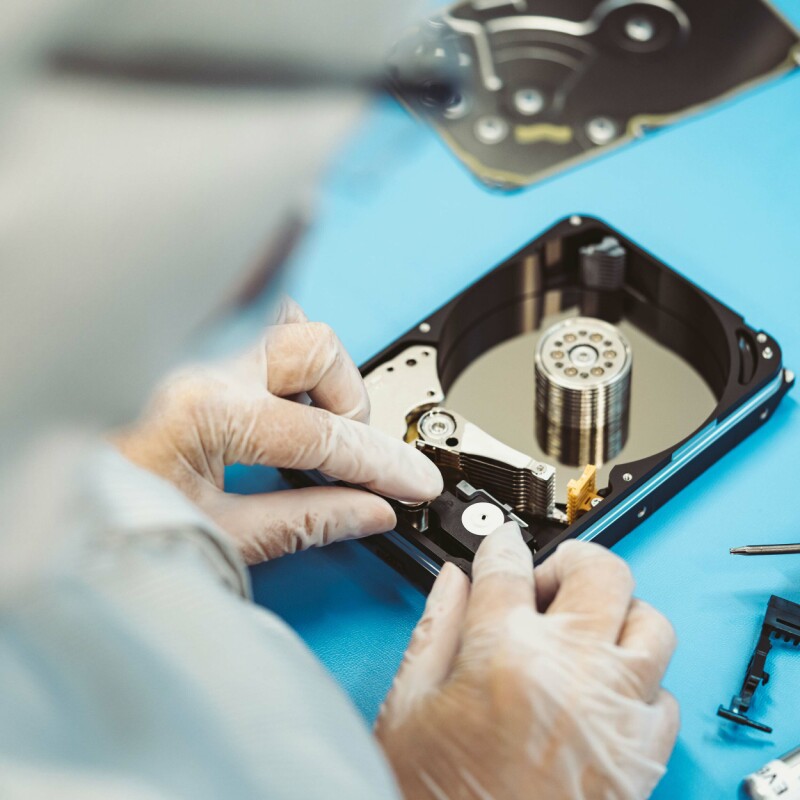
AI storage boom is keeping Seagate's hard drives spinning
Cloud operators have already claimed most of its nearline capacity through 2028

Source: OpenRouter was recently generating ~$140M in annualized revenue, or ~$12M per month, up nearly 3x since April, making Stripe's $10B offer a big premium (The Information)
The Information: Source: OpenRouter was recently generating ~$140M in annualized revenue, or ~$12M per month, up nearly 3x since April, making Stripe's $10B offer a big premium — If Stripe ends up buying three-year-old startup OpenRouter for close to $10 billion, the payments fir