Chinese Scientists Develop ContactSeek AI Framework Based on AlphaFold3 Contact Probability: A New Precision Paradigm for Gene Editing Tool Design Published in Nature
Peking University team led by Yi Chengqi and East China Normal University develop ContactSeek using AlphaFold3 contact probability to identify key amino acids for precision base editing tool engineering.
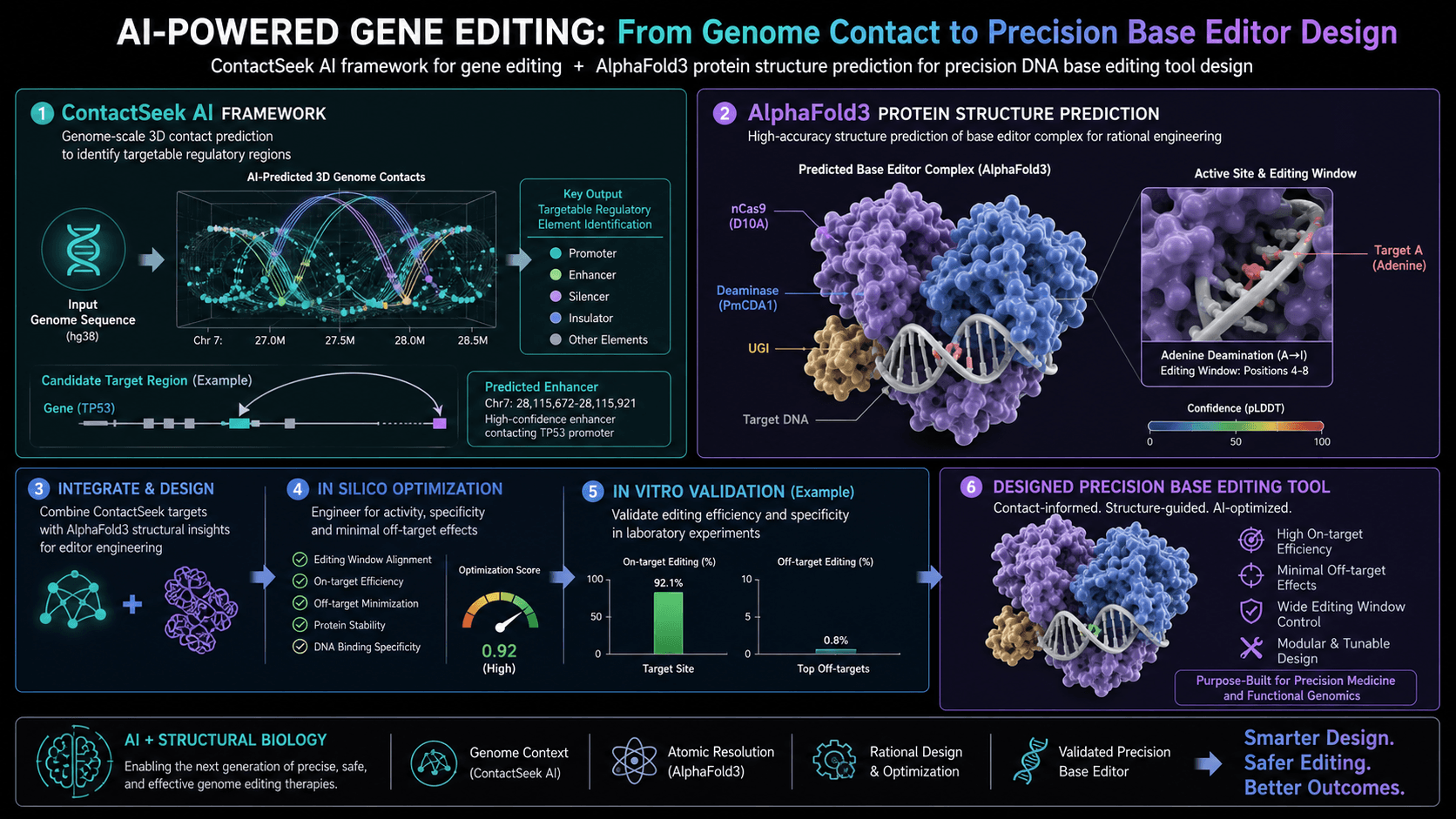
A research team led by Professor Yi Chengqi at Peking University School of Life Sciences, in collaboration with Professor Li Dali team at East China Normal University, has published a breakthrough paper in Nature titled Precise DNA Base Editing Using AlphaFold3-Based Contact Modelling, introducing ContactSeek an AI framework that leverages AlphaFold3 contact probability to systematically engineer gene editing tools with significantly improved precision. The paper represents a convergence of AI structural biology and gene editing, demonstrating how protein structure prediction models can directly guide the engineering of therapeutic tools.The ContactSeek framework addresses the fundamental challenge in base editing: maintaining high on-target editing activity while minimizing off-target effects.
Base editors combine a Cas protein with a deaminase enzyme to directly convert one DNA base to another without requiring double-strand breaks, making them critical tools for both basic research and gene therapy development. However, off-target editing where the editor modifies unintended genomic sites has limited clinical application. The team used AlphaFold3, the DeepMind AI model for protein structure prediction extended to protein-nucleic acid complexes, to predict on-target and off-target DNA-RNA-protein ternary complexes and systematically compare their interaction differences.
The key insight: AlphaFold3 contact probability, not structural prediction, proved most valuable. Contact probability sensitively captures changes from single-base-pair mismatches and single-amino-acid mutations that predicted structures miss.Integrating contact probability with high-throughput off-target editing sequencing data, ContactSeek systematically identified key amino acid residues in both Cas proteins and deaminases that determine editing specificity.
Based on this framework, the team engineered a series of novel Cas9 variants for adenine base editors that maintain efficient on-target edi
Đọc thêm từ Công nghệ

Elio, which is developing a new type of image sensor designed for AI rather than human vision, raised a $21M Series A led by Innovation Endeavors and Xora (Meir Orbach/CTech)
Meir Orbach / CTech: Elio, which is developing a new type of image sensor designed for AI rather than human vision, raised a $21M Series A led by Innovation Endeavors and Xora — Elio's founders, Nadav Grossinger and Nitay Romano, spent seven years developing physical sensing syst
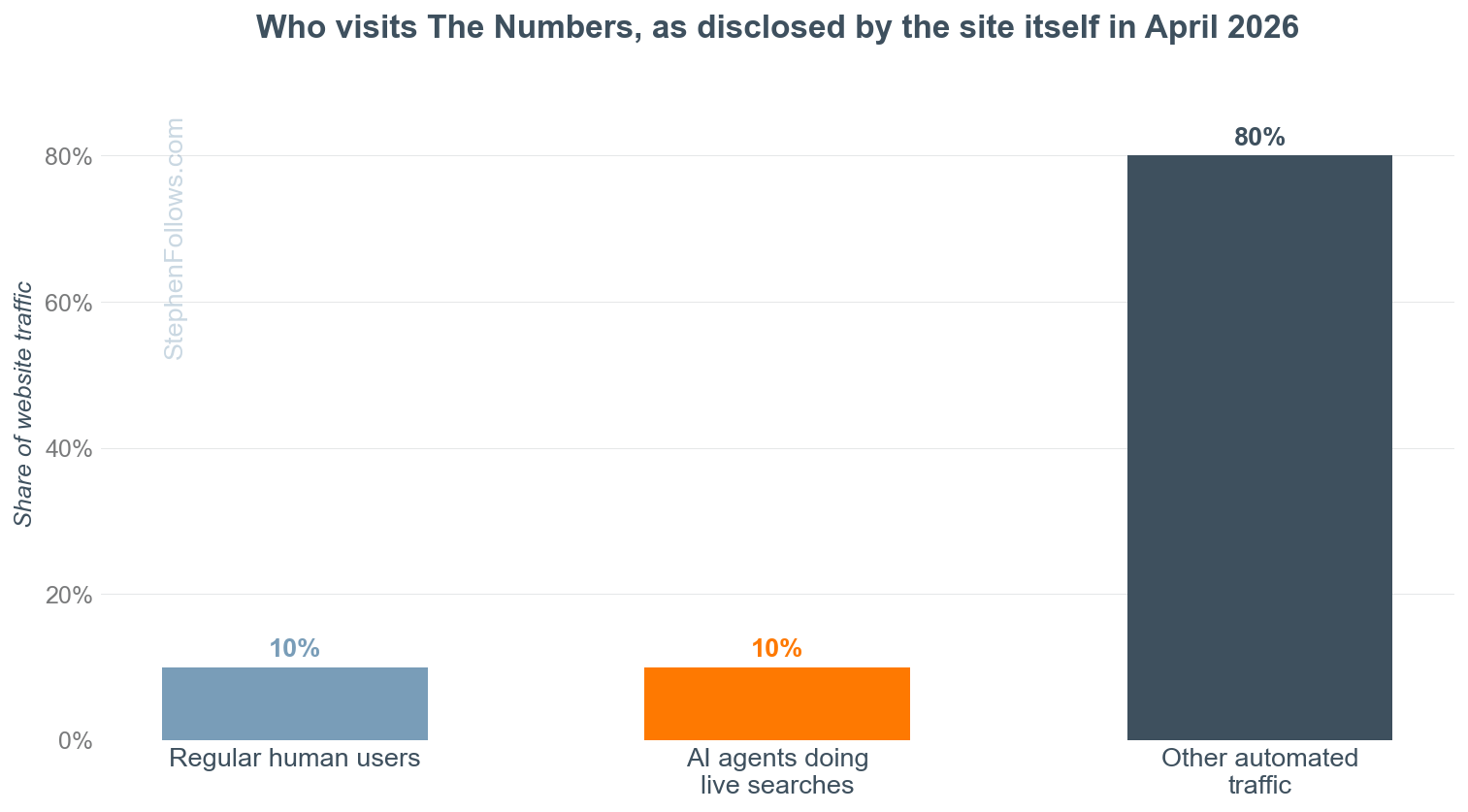
How Film Industry Data Website The-Numbers.com got Mauled by Bots
A lot has been made about the increase of automated traffic on the Internet, with the past years LLM-related crawlers having quite literally swarmed the picture here. Not only does …read more

AI khiến doanh nghiệp tính lại bài toán hạ tầng CNTT
Sự phát triển của AI khiến nhiều doanh nghiệp chuyển sang đầu tư hạ tầng riêng nhằm kiểm soát dữ liệu, tối ưu chi phí, theo dự báo của Gartner.

Samsung Electronics, Broadcom sign AI chip partnership
Samsung shipped commercial HBM4 and is expanding capacity for AI computing.